
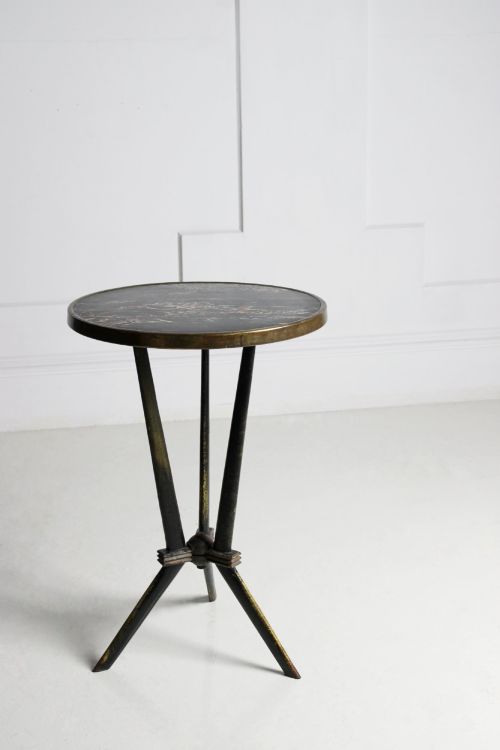
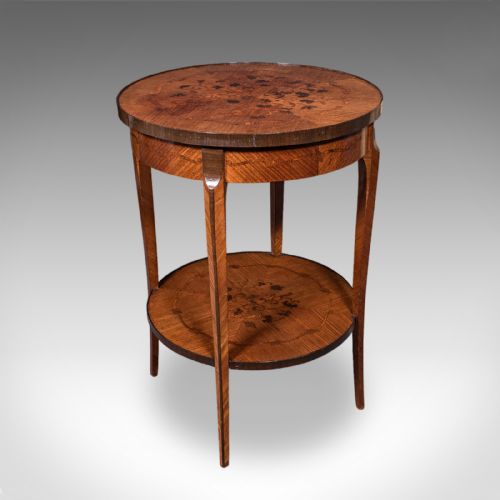
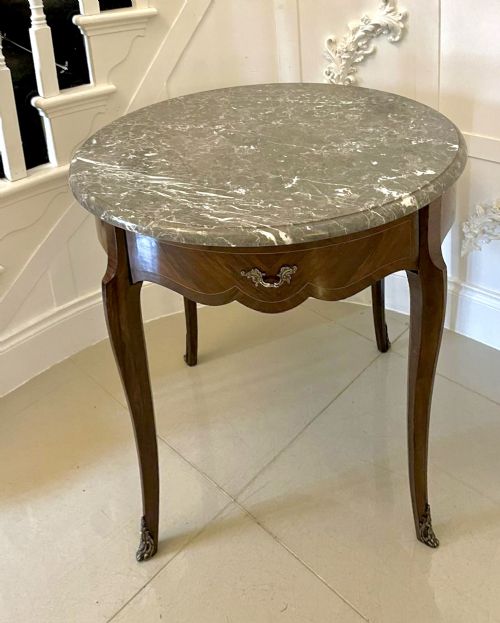

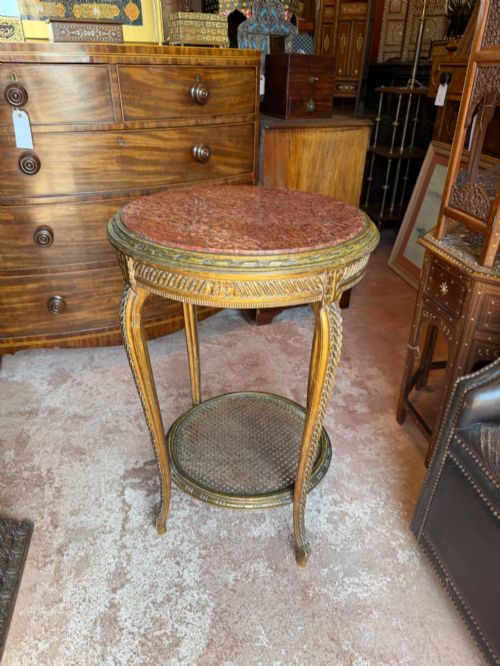


Vintage French Gueridon Table
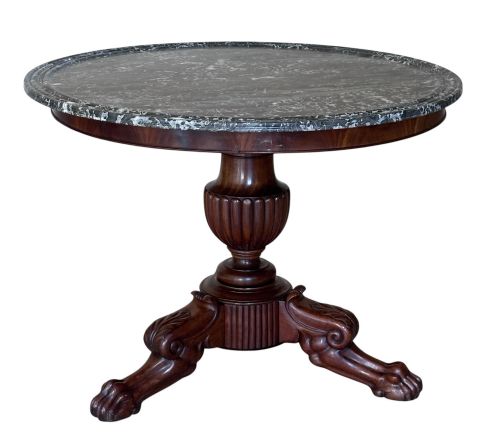
A vintage french gueridon table brings unmistakable continental elegance to a room, offering a round surface supported by a central pedestal.
Vintage French Gueridon Table
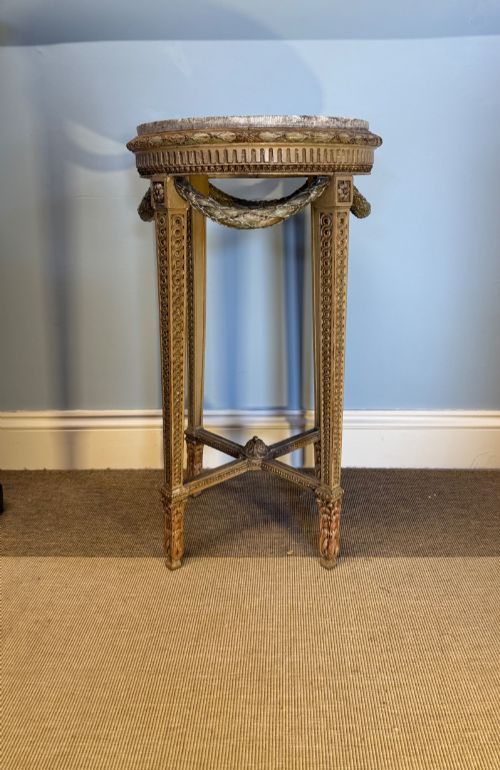
When searching for a vintage french gueridon table, buyers encounter round occasional surfaces designed around a central column or pillar rather than traditional four-legged frames. The pieces on this page span the nineteenth century through the early twentieth century, taking forms such as centre tables, lamp tables, bistro tables and plant stands.
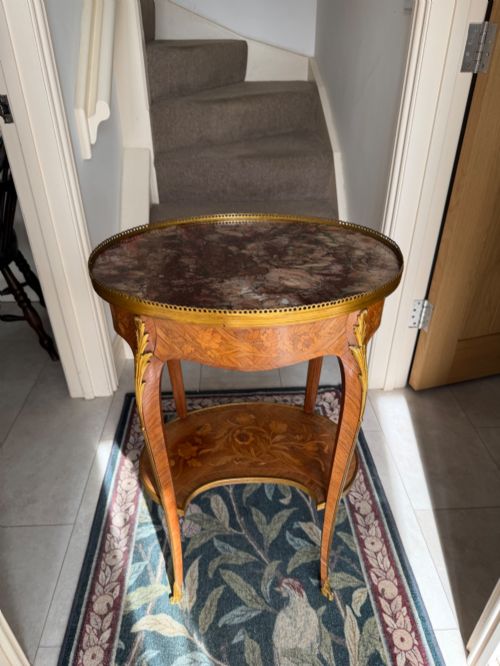
The most common versions met here feature inset marble tops framed by wood, brass or ormolu mounts. Makers utilised styles ranging from Louis XV and Louis XVI to French Empire, applying classical decorative vocabularies to compact domestic furniture.
Materials and construction methods
Construction relies upon cabinet timbers including mahogany, kingwood, walnut, burr elm and satinwood, frequently enhanced by marquetry, parquetry or painted finishes. Metal components in brass, giltwood, cast iron and chased ormolu provide structural mounts and decorative highlights.
Tops of white marble or onyx sit neatly within wooden rims or cast metal galleries. Joinery employs sturdy central pedestals, occasionally with tripod or multi-footed bases to support heavier stone surfaces.
Cast iron green-painted versions bring a robust garden sensibility indoors, proving that even formal French furniture occasionally likes to get its boots muddy.
Distinctions in quality
The standard of a gueridon rests in the crispness of its metal mounts and the precision of its wood veneers. Fine examples display finely chased ormolu, intricate marquetry patterns and well-fitted marble or onyx tops without gaps.
Simpler versions rely on cast iron frames, plain mahogany or painted timber surfaces. The depth of the carving, the selection of figured timbers and the integration of secondary tiers dictate where a piece sits within the range.
Francois Linke
The Vintage French Gueridon Table Glossary
- Gueridon
- A small round French table supported by a single central pillar or pedestal. Originally introduced in the seventeenth century, these pieces evolved through various revivals.
- Ormolu
- Gilt bronze mounted onto furniture as decorative enrichment. This technique involves applying a gold amalgam to bronze.
- Marquetry
- Decorative veneer patterns assembled from thin slices of wood to form pictorial or geometric designs. Craftsmen arranged contrasting timbers to create visual depth.
- Parquetry
- Geometric wood inlay forming repeating patterns such as cubes or chequers. This technique decorates table tops and surfaces.
- Galleries
- Raised metal or wooden rims encircling the edge of a table top. These borders prevent items from sliding off the surface.
Vintage French Gueridon Table: Frequently Asked Questions
What is a gueridon table used for?
These round tables serve as versatile accent pieces for lamps, plants, drinks or decorative objects. Their compact footprint allows them to fit easily beside seating or in small hallways.
Historically, they functioned as portable surfaces for lighting or intimate dining, adapting readily to modern living spaces.
How do I identify French Empire style?
French Empire pieces draw heavily on classical Roman, Greek and Egyptian motifs. Look for strong architectural forms, dark timbers and restrained classical mounts.
Ormolu details frequently feature military trophies, laurel wreaths and classical deities, reflecting the aesthetic of the early nineteenth century.
Are marble tops original to these tables?
Many nineteenth-century gueridons were designed specifically to house inset marble or onyx slabs. These stone surfaces provided a cool, durable top resistant to spills and heat.
Matching the stone to the era of the base involves examining the thickness of the marble and how it sits within the wooden or metal rebate.
How do I care for antique wood and marble?
Maintain wooden surfaces with appropriate wax polishes applied sparingly and buffed gently. Avoid placing untreated wood directly against strong heat sources or moisture.
Clean marble tops using damp cloths with mild soap, avoiding acidic cleaners that can etch or dull the polished stone finish.