

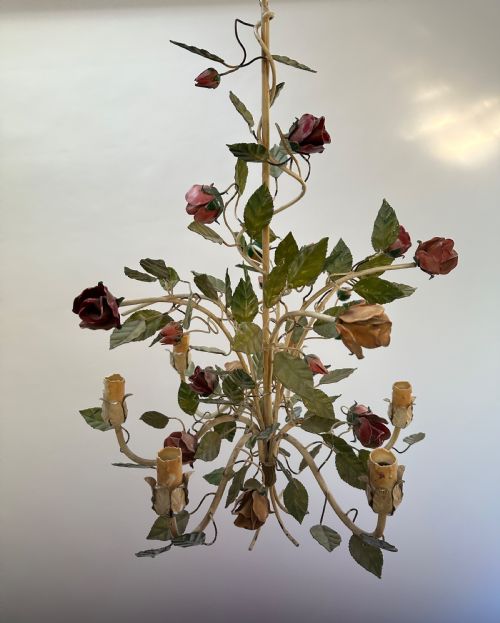


Vintage French Floral Chandelier
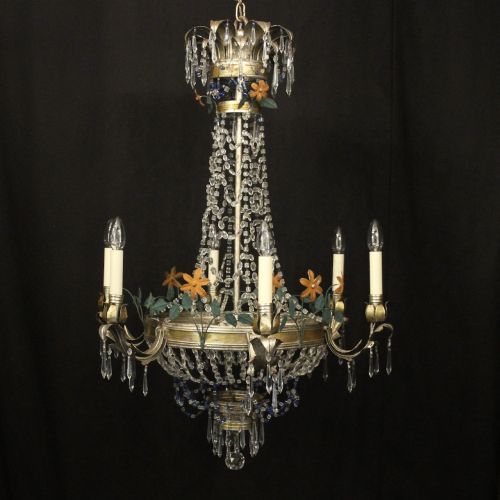
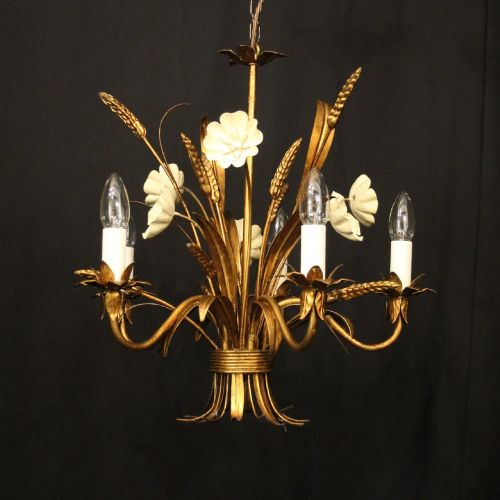
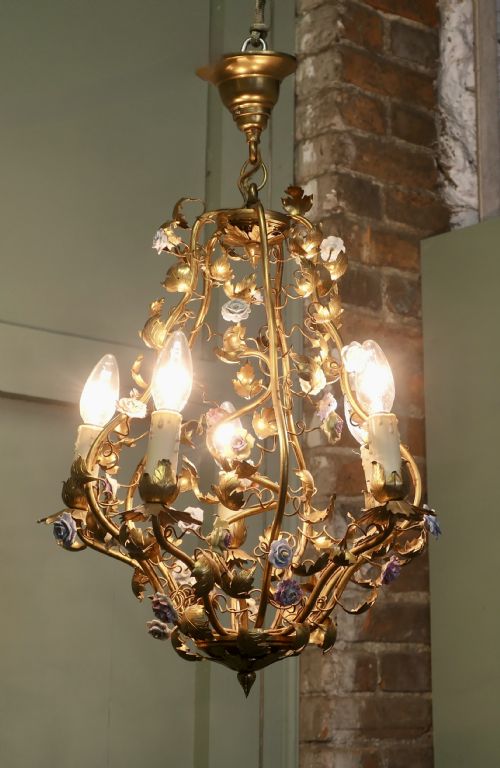
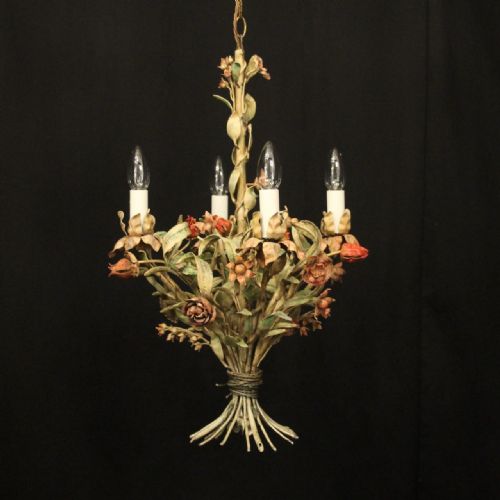
These vintage french floral chandelier pieces bring a delicate botanical atmosphere to a room through painted metal blooms and glass leaves.
Vintage French Floral Chandelier
A vintage french floral chandelier brings together botanical forms and ceiling lighting, mostly originating from the early twentieth century around 1900, 1920, and 1930. These pieces typically take the form of multi-branch ceiling lights adorned with porcelain or metal flowers.
The styles range across French Country, French Chateau, and French Rococo Revival, alongside Florentine and Art Nouveau influences. Buyers encounter forms featuring ceramic floral elements, gilt metal branches, and polychrome painted finishes.
Beyond standard ceiling fixtures, the selection includes smaller wire variants and table chandelier adaptations. Many examples incorporate glass drops or crystal accents alongside their floral ornamentation.
Materials and construction
Construction relies heavily on metals such as brass, gilt metal, wrought iron, and painted toleware to form the structural branches and stems. Artisans shaped these materials into scrolling arms and wire frames designed to support multiple bulb holders.
Floral details are rendered in ceramic, porcelain, and painted metal, often fixed directly to the metal framework. Glass and crystal components, including opaque grapes and hanging drops, complete the assembly by catching and diffusing the light.
Vintage French Floral Chandelier Retail Price Guide 2026
Typical asking prices for vintage french floral chandelier among the pieces listed under this phrase on Sellingantiques today, from the lower quarter to the upper quarter. They describe what is for sale here now, not the wider market.
Look closely for tiny opaque glass grapes hiding among the porcelain petals on the Continental pieces.
Assessing quality in floral lighting
Quality reveals itself in the hand-painted detail of the polychrome finishes and the delicacy of the ceramic or porcelain petals. Superior examples display intricate shaping in the metalwork and careful integration of the floral elements along the branches.
The richness of the gilding and the clarity of the glass or crystal drops distinguish finer pieces from simpler utilitarian designs. The weight of the brass and the structural integrity of the wire or wrought iron armature also indicate higher grade manufacturing.
Schneider
The Vintage French Floral Chandelier Glossary
- Toleware
- Painted or lacquered metalware, typically steel or tin, used extensively for decorative floral components and chandelier bodies.
- Gilt metal
- Metal treated with a gold-coloured finish or leaf to simulate solid gold, common in French lighting design.
- Polychrome
- Decorated in multiple colours, frequently seen on the hand-painted flowers and leaves of these chandeliers.
- Tent and waterfall
- A specific lighting configuration featuring an upper tent-like arrangement of crystals flowing down into a cascading waterfall effect.
Vintage French Floral Chandelier: Frequently Asked Questions
What periods do these chandeliers come from?
The available lighting primarily spans the early twentieth century, including Edwardian examples and pieces dated from 1900, 1920, and 1930.
These dates reflect the prevalence of French Country, Art Nouveau, and Rococo Revival styles from that era.
How were these floral chandeliers used?
They served as primary overhead illumination in principal rooms, combining practical lighting with decorative botanical sculpture.
Smaller variants and table versions were also produced for more intimate spaces or tabletop placement.
What materials make up the flowers?
The floral elements are constructed from ceramic, porcelain, and painted metal or toleware.
These are integrated into brass, gilt metal, or wire frameworks alongside glass leaves and crystal drops.
Are all the pieces from France?
While the dominant styles draw from French Chateau, Country, and Rococo traditions, the selection also includes Continental and Italian Florentine pieces.
This reflects a broader European adoption of similar floral and gilt lighting designs during the early twentieth century.