


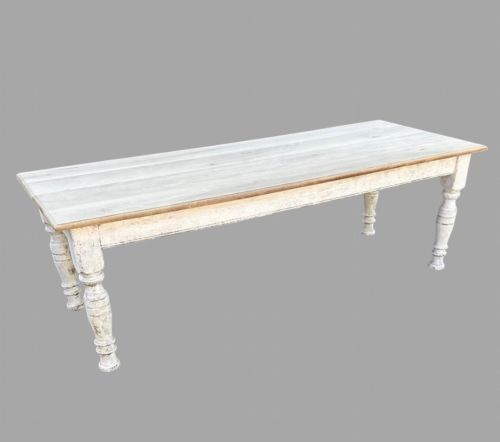


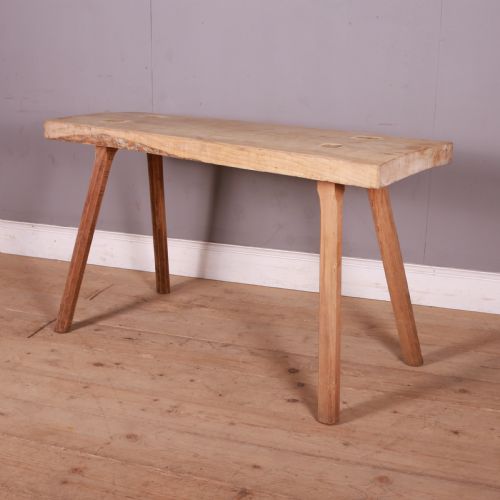
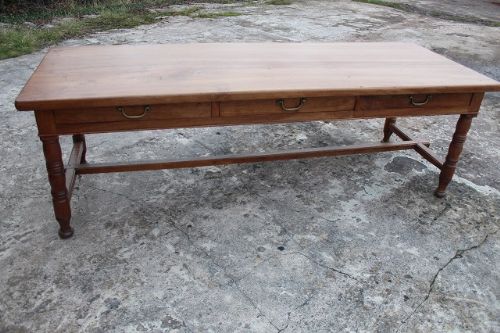
Vintage French Farm Table
A vintage french farm table brings genuine working utility and provincial character into a modern dining space.
Vintage French Farm Table
A vintage french farm table represents the robust dining and kitchen furniture used in provincial homes, frequently constructed during the nineteenth century and the early decades of the twentieth century. These pieces appear primarily as large dining tables, refectory styles, and trestle tables designed for daily domestic service.
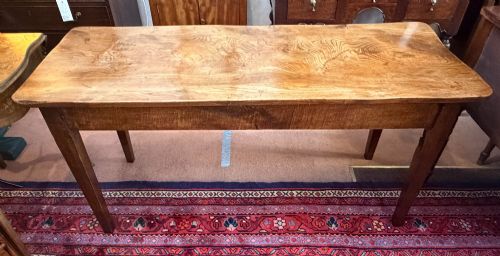
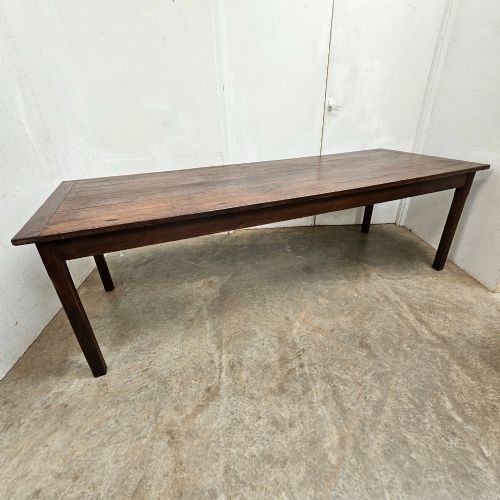
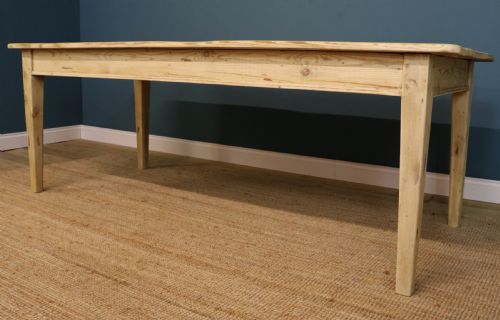
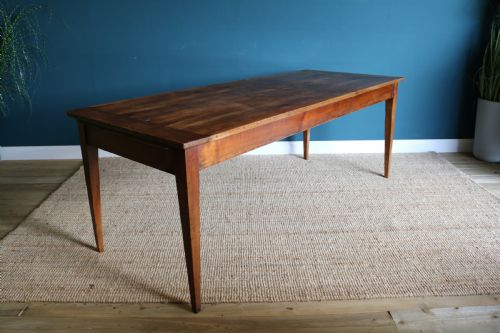
The assortment includes regional variations featuring oak, pine, cherry, and elm timber, often exhibiting the marks of heavy past use on their broad tops. Alongside standard four-leg formats, extendable variants with bread slides or draw leaves and sturdy trestle bases occur regularly across the selection.
Buyers also encounter occasional smaller forms, such as coffee tables derived from larger timbers and complementary provincial sculptures in bronze depicting country figures.
Materials and construction methods
Carpenters built these tables using domestic hardwoods and softwoods like solid oak, cherry, pine, sycamore, and elm, selecting timbers suited to the heavy demands of rural households. Boards were joined to create thick tops capable of enduring daily kitchen labour and food preparation.
Frames utilise traditional joinery techniques, supporting massive wooden surfaces without relying on metal fasteners. Scrubbed finishes and bleached treatments on pine, oak, and sycamore highlight the natural grain and texture of the wood.
Listings feature timbers including oak, pine, elm, sycamore, cherry wood, and walnut across nineteenth-century and early twentieth-century periods.
Assessing quality and proportion
Quality rests upon the integrity of the primary timber and the retention of original structural elements, such as bread slides and operating draw leaves on extendable variants. Tables possessing untouched patination on scrubbed sycamore, oak, or cherry display superior character compared to heavily refinished surfaces.
Proportion and stability dictate the usefulness of each piece, with well-balanced trestle structures and refectory frames offering greater legroom and seating capacity. The depth of the timber top and the crispness of provincial turning determine the overall refinement of the construction.
The Vintage French Farm Table Glossary
- Bread slide
- A pull-out wooden board mounted beneath the main tabletop, historically used for slicing bread or expanding the surface area.
- Draw leaf
- An extension mechanism featuring secondary leaves hidden beneath the main top that pull out to lengthen the table.
- Refectory table
- A long, narrow dining table traditionally built for communal dining, supported by substantial legs connected with stretchers.
- Trestle table
- A table comprising a horizontal beam supported by two vertical feet or frames at either end.
- Scrubbed finish
- A weathered surface treatment resulting from repeated washing and scouring of the bare wood.
Vintage French Farm Table: Frequently Asked Questions
How do I clean a vintage timber top?
Wipe the surface regularly with a slightly damp cloth and dry it immediately to prevent moisture damage.
Avoid harsh chemical cleaners that strip the historic patination from the oak, pine, or cherry wood.
Are these tables suitable for daily dining?
These pieces were originally constructed for heavy kitchen and farmhouse use, making them exceptionally sturdy for modern family meals.
Their robust timber construction accommodates daily wear while developing further character over time.
What is a bread slide used for?
Historical users pulled out this secondary wooden shelf beneath the main top to slice bread or place hot dishes.
Modern owners utilise the feature as an auxiliary surface when seating extra guests around the table.
How do I identify a trestle base?
A trestle format uses two vertical feet or uprights connected by a central stretcher beam rather than four corner legs.
This design provides increased stability and uninterrupted legroom along the length of the table.