

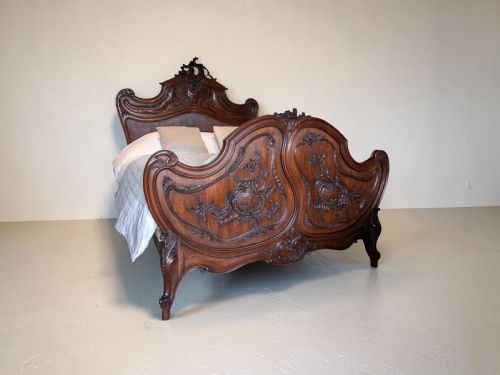


Vintage French Double Bed
A vintage french double bed brings continental elegance to a bedroom, offering a generous sleeping frame shaped by classic design traditions.
Vintage French Double Bed
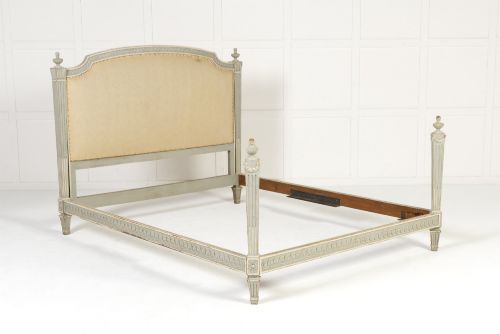
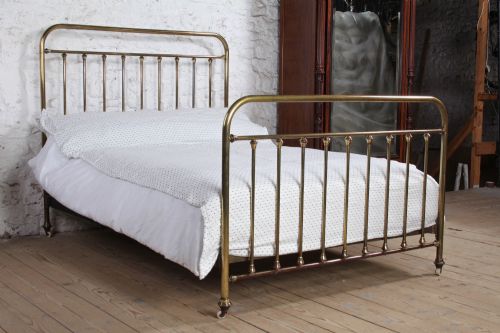
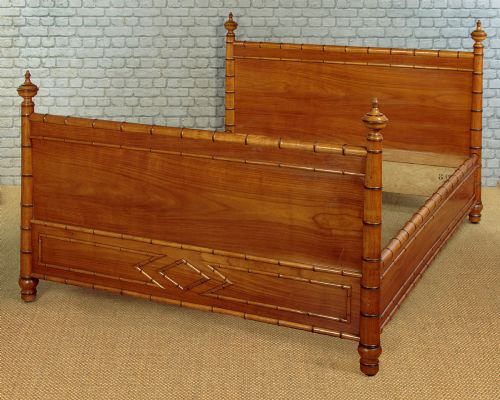
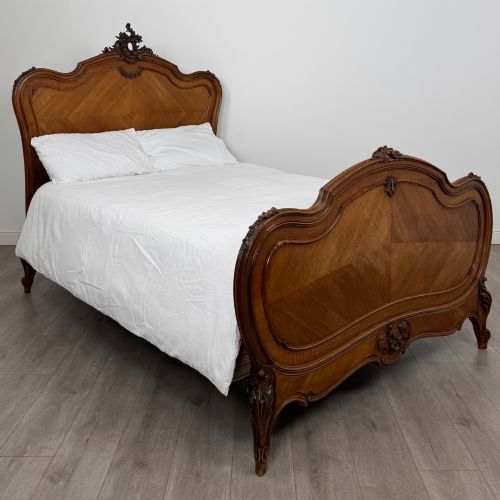
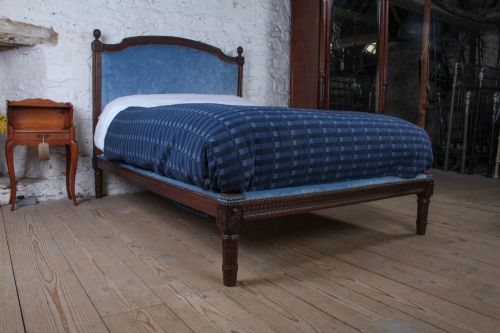
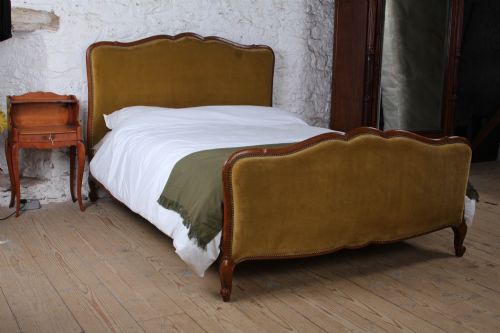
When buyers search for a vintage french double bed, they encounter a diverse selection of frames spanning the nineteenth and early twentieth centuries. These pieces reflect historical periods such as the Victorian and Edwardian eras, alongside stylistic revivals like Louis XVI and Art Deco.
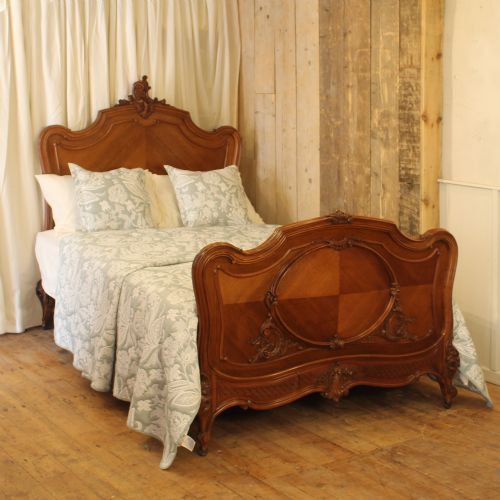
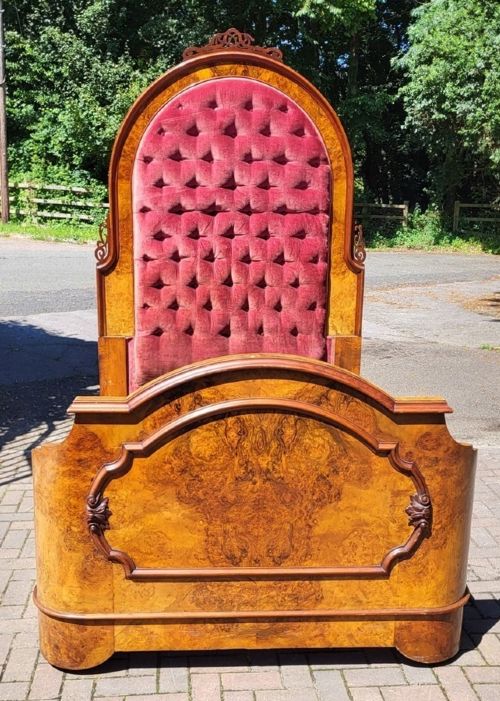
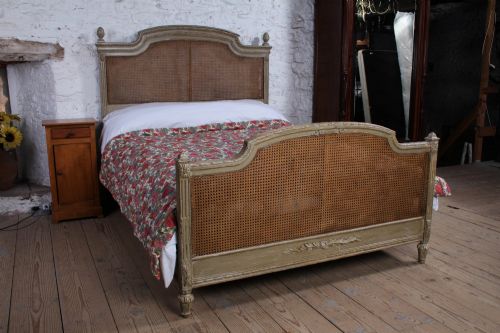
The options range from substantial carved walnut and mahogany bedsteads to painted wooden frames and gleaming brass structures. Many pieces incorporate upholstered elements, caning, or parcel gilt detailing, demonstrating the varied craftsmanship of French provincial and chateau aesthetics.
Materials and Construction Techniques
Cabinetmakers utilised dense timbers including walnut, mahogany, burr walnut, and fruitwood, often applying careful carving and parquetry to the exposed wooden surfaces. Metal frames combine forged iron and brass components, sometimes featuring brass embellishments or painted finishes.
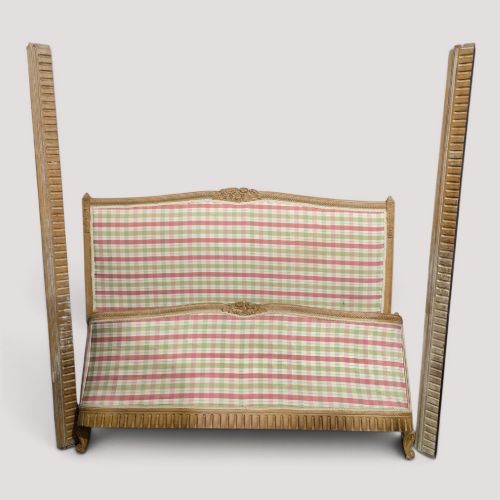
Upholstery techniques involve traditional stuffing and fabric or tapestry coverings, occasionally finished with button backing. Caning is woven directly into shaped wooden headboards and footboards to provide texture and lightness of form.
Design styles span from French Provincial and Country to formal Louis XVI and Art Deco movements.
Distinctions in Quality
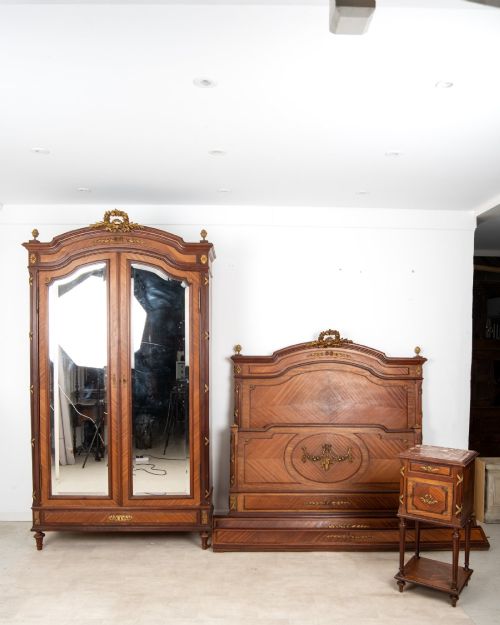
The distinction between standard examples and the finest pieces lies in the depth and crispness of the hand-carved ornamentation on the timber frames. Superior items display harmonious proportions, sophisticated wood selections like plum pudding mahogany or burr walnut, and integrated decorative mounts in ormolu or brass.
Construction integrity also separates grades, with finer beds utilising solid hardwoods and precise joinery rather than simpler assembly methods. The execution of auxiliary details, such as neatly fitted cane panels or high-grade upholstery work, elevates the status of a bedstead.
The Vintage French Double Bed Glossary
- Louis XVI Style
- A neoclassical design movement characterised by straight lines, symmetry, and classical motifs such as fluting and ribbons. It contrasts with the more exuberant curves of earlier rococo furniture.
- Caning
- A method of weaving rattan or reed material to create an open, patterned panel. It frequently appears on the headboards and footboards of lighter French beds.
- Ormolu
- Gilded bronze applied as a decorative mount on furniture. It adds metallic contrast to polished wooden bedframes.
- Parquetry
- Geometric wood inlay work used to create decorative patterns on flat surfaces. This technique highlights the natural grain of fine timbers like mahogany.
- Burr Walnut
- Timber taken from a walnut tree growth, featuring swirling, highly figured grain patterns. It is prized for its decorative appearance on prominent panels.
Vintage French Double Bed: Frequently Asked Questions
What mattress size fits a vintage french double bed?
Older French frames often measure slightly differently from modern standard UK dimensions, varying between standard double and king sizes. Measuring the internal clearance of the rails before sourcing a mattress ensures a correct fit.
Some antique frames accommodate custom mattress dimensions or require minor adjustments to the slat system. Consulting the specific measurements in the listing prevents compatibility issues.
How do I care for a polished walnut bed?
Maintaining wooden surfaces involves regular dusting with a soft, dry cloth to prevent particulate accumulation. Avoiding harsh chemical cleaners preserves the aged patina of the original polish.
Applying a traditional beeswax periodically nourishes the timber and protects the finish from moisture. Direct sunlight should be avoided to prevent fading of walnut and mahogany veneers.
Are these beds easy to dismantle and assemble?
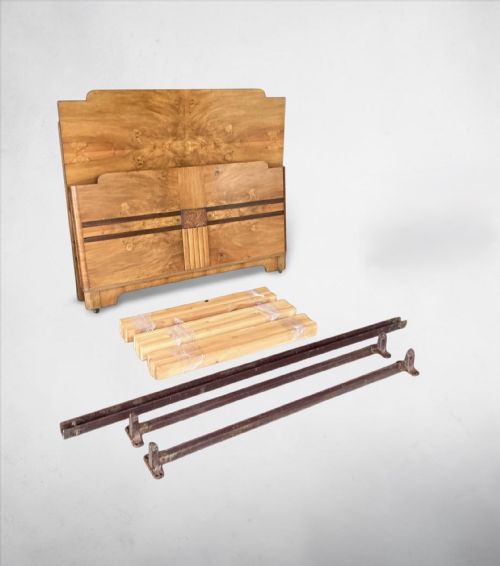
Most antique bedsteads utilise traditional bolt-in side rails or slotted fixtures designed for straightforward dismantling. This modular construction facilitates transport and movement through narrow doorways.
Care must be taken with vintage metal threads and old wood during the assembly process. Using appropriate tools prevents damage to original structural components.
How do I identify a Louis XVI style bed?
Louis XVI pieces are recognised by their rectilinear geometry, tapered fluted legs, and restrained classical ornamentation. They stand apart from curved rococo designs through their emphasis on symmetry and proportion.
Carved details on these frames often include rosettes, laurel leaves, and urn motifs. The presence of these specific elements points directly to late nineteenth-century revival craftsmanship.