

Vintage French Ceiling Fitting
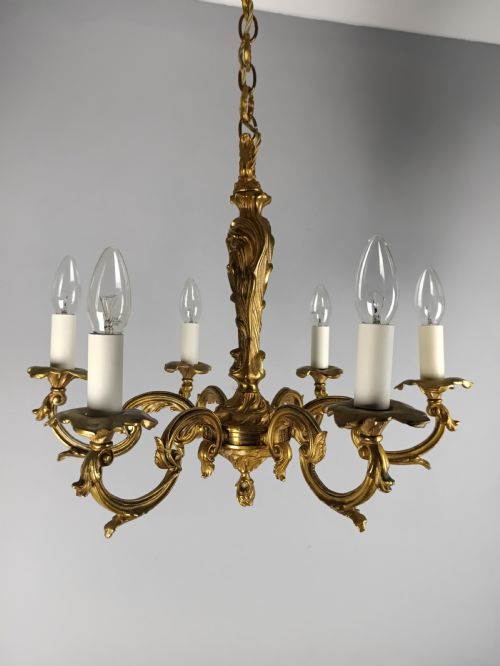
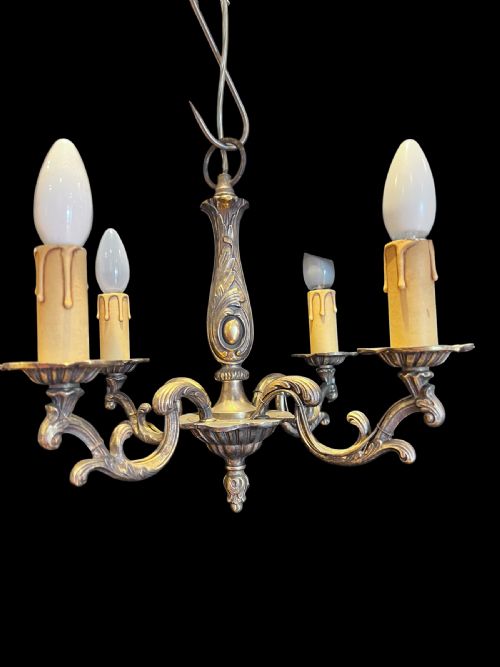
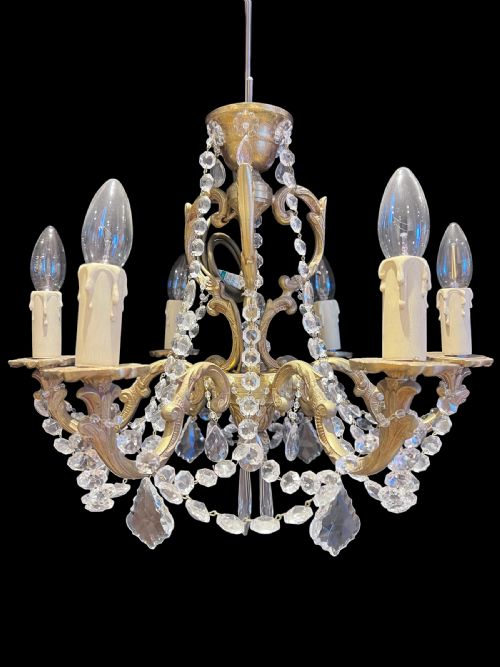
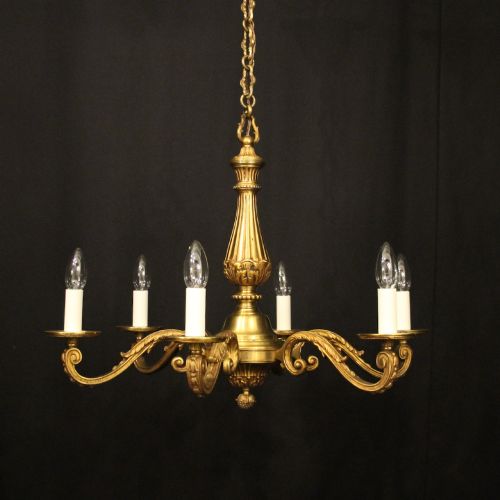
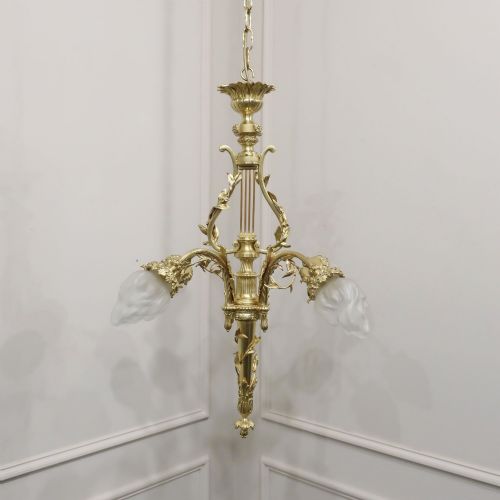
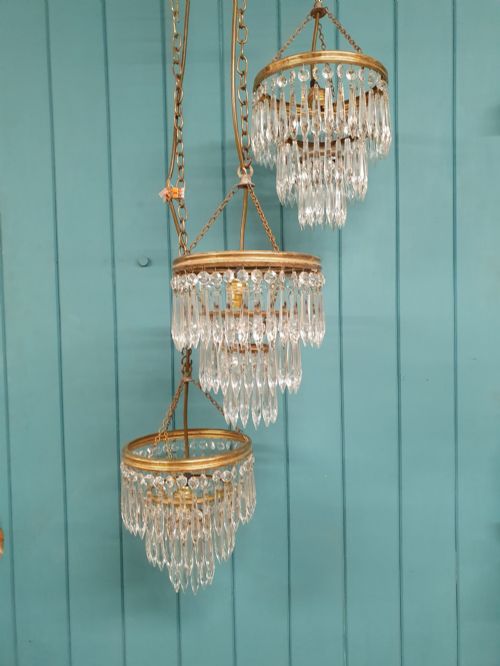
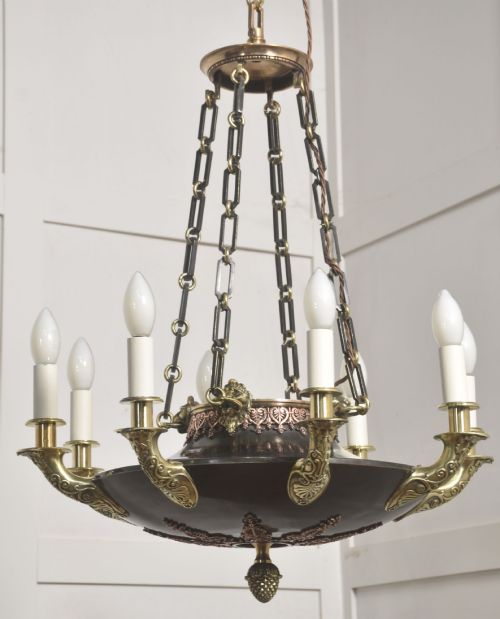
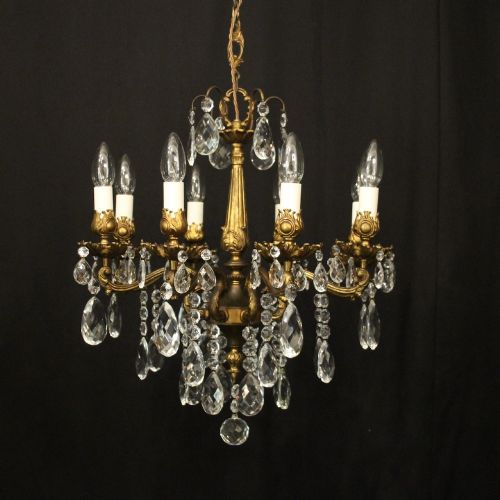
These vintage french ceiling fitting examples bring heavy cast brass, gilt bronze and cascades of cut glass crystals together overhead.
Vintage French Ceiling Fitting
When you search for a vintage french ceiling fitting, you enter a field populated by multi-light chandeliers, hall lanterns and plafonieres. These overhead fixtures originate from periods spanning the late nineteenth century through to the 1930s, encompassing Edwardian designs alongside earlier nineteenth-century works.
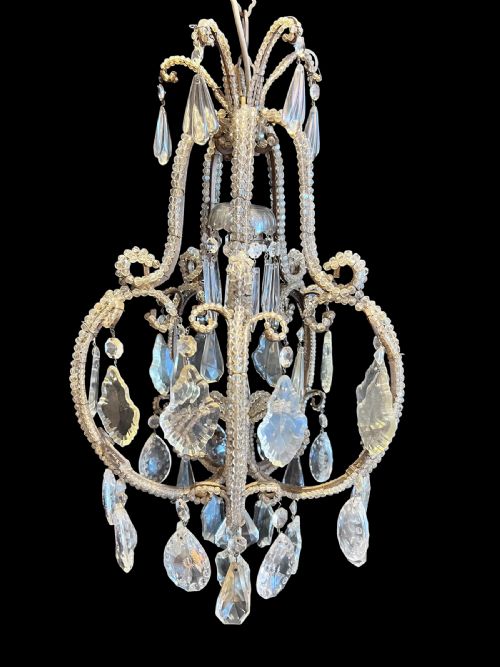
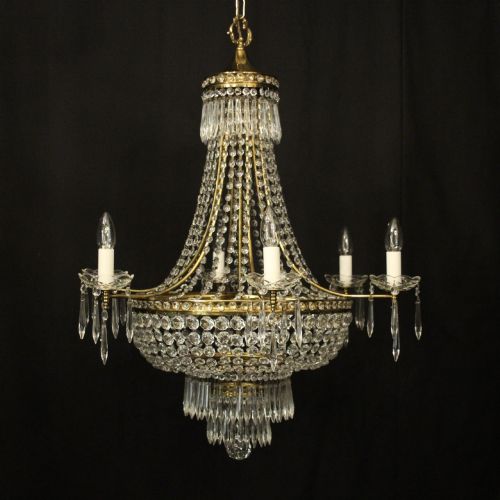
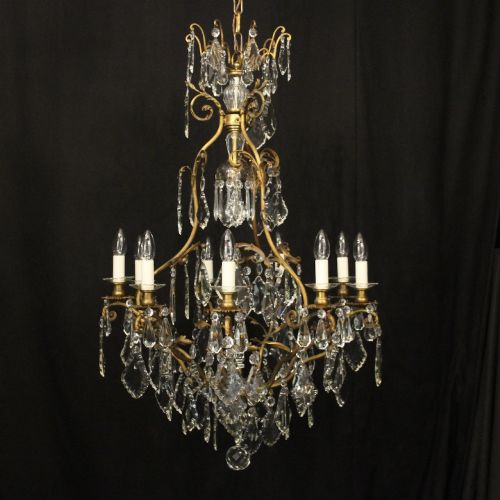
The most common examples on this page take the form of chandeliers styled in French Empire, Rococo or Neoclassical traditions. They deploy brass, bronze and gilded metal frames suspending drops of cut glass crystal.
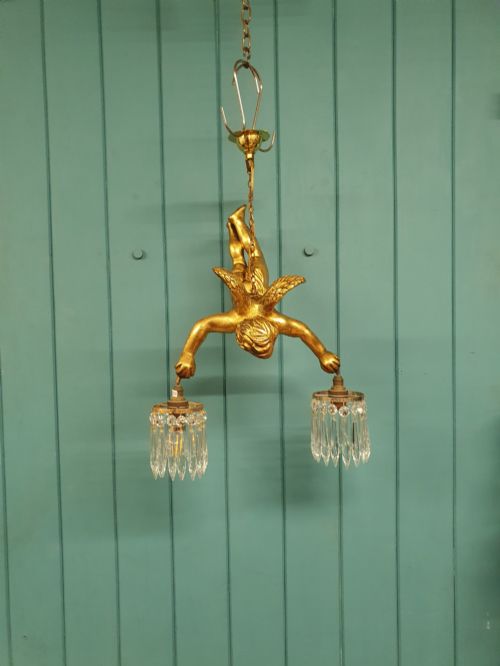
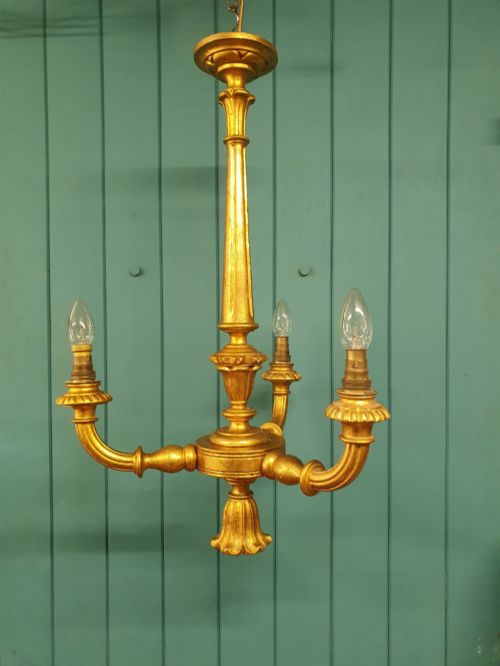
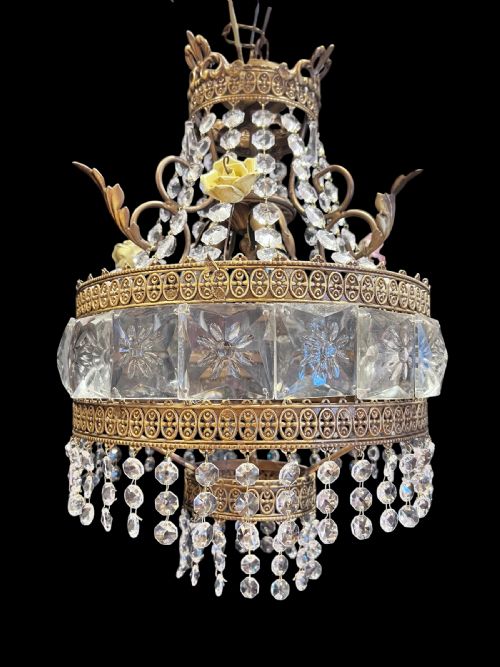
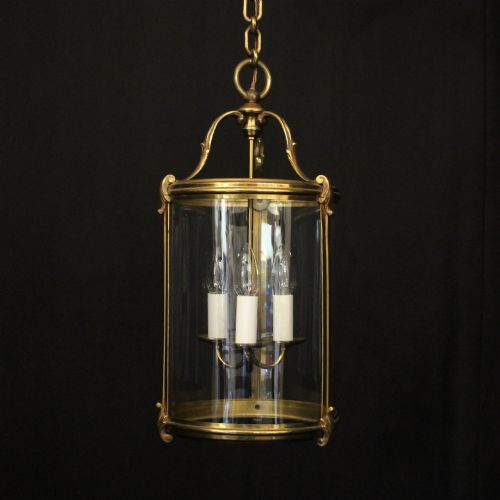
Alongside standard branch chandeliers, the selection includes tent and waterfall configurations, flush-mounted plafonieres and convex hall lanterns. Many pieces incorporate specific decorative motifs such as flying cherubs, porcelain flowers or carved giltwood.
How they were made
Maker workshops constructed the primary structural frames of these fixtures from cast brass, bronze, gilt bronze and carved giltwood. Metal components were shaped through casting and chasing before receiving applications of gold leaf or surface gilding.
Illumination relied upon multiple candle arms or wired light points arranged across branches, rings and sconces. Cut glass and crystal components, including spikes, coffin prisms and tent drops, were hand-wired into place to refract the light.
Secondary materials appear in specific forms, such as alabaster bowls, ceramic flowers, tolewear elements and porcelain details integrated into the metal framework.
At least one gilded metal chandelier on this page chooses to suspend its crystal spikes directly below a flying cherub.
What varies in quality
The standard of a vintage french ceiling fitting rests upon the weight and crispness of its metal casting. Finer pieces display sharply defined chased details on bronze and brass mounts, whereas simpler iterations rely on smoother, unadorned profiles.
Quality also shows in the composition of the glass and crystal elements. Superior fixtures utilise heavy cut glass with precise facets that catch the light effectively, paired with secure original pin-wiring rather than modern replacements.
The Vintage French Ceiling Fitting Glossary
- Plafoniere
- A ceiling light fitted flush or close to the ceiling surface. These fixtures often feature a glass or crystal bowl held within a metal mount.
- Tent and waterfall
- A chandelier style featuring strings of beads forming an upper tent shape above a wider cascading tier of crystals. This configuration creates a dense curtain of reflective glass.
- Gilt bronze
- Bronze metal treated with a thin layer of pure gold or gold leaf. Also known as ormolu, this finish provides a warm, durable metallic sheen.
- Coffin prisms
- Long, flat-backed crystal drops with pointed ends, shaped like coffins. They hang from the arms and rings of early twentieth-century chandeliers.
- Tolewear
- Painted or lacquered sheet metal used for decorative components. It frequently appears shaped into floral or foliate forms on mid-period fittings.
Vintage French Ceiling Fitting: Frequently Asked Questions
How do I hang a heavy bronze chandelier?
These heavy brass and bronze fixtures require direct attachment to a ceiling joist or a substantial structural nogg. A qualified electrician should install a steel ceiling hook rated to bear the full weight of the metal and crystal.
Connecting the electrical wiring safely involves matching the fixture's internal leads to the domestic supply. Given the age of these fittings, rewiring with modern cable ensures safety during suspension.
What is an Empire style ceiling light?
Empire style lighting draws on neoclassical motifs from the early nineteenth century, favouring symmetrical forms, classical proportions and military or imperial symbols. They often incorporate tent-and-waterfall crystal arrangements suspended from a central crown.
Brass, copper and gilt bronze dominate these designs, frequently featuring laurel leaves, urns or classical figures. This aesthetic re-emerged strongly in revival pieces produced during the early twentieth century.
How do I clean cut glass crystals?
Cleaning delicate crystal drops requires a gentle approach using warm water and a mild washing solution. Removing the crystals from the bronze frame allows each piece to be washed and dried individually before reattachment.
Leaving the crystals in place while cleaning demands a hand-held spray bottle and a catching cloth underneath. Wiping each prism dry prevents water spots from dulling the cut glass facets.
Are these lights wired for modern bulbs?
Most vintage fittings retain internal wiring that requires updating to meet current electrical standards. Electricians can easily adapt the original brass candle tubes to accept standard modern lamp holders.
Smaller fixtures, such as hall lanterns or single-bulb plafonieres, accommodate standard LED or incandescent bulbs. The process preserves the antique exterior while ensuring the internal electrical components function safely.