




Vintage French Butcher Table
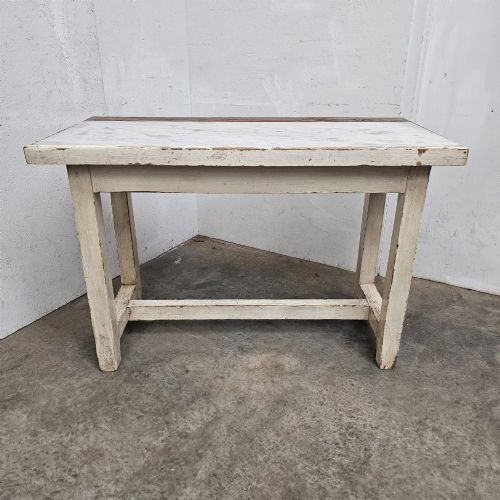
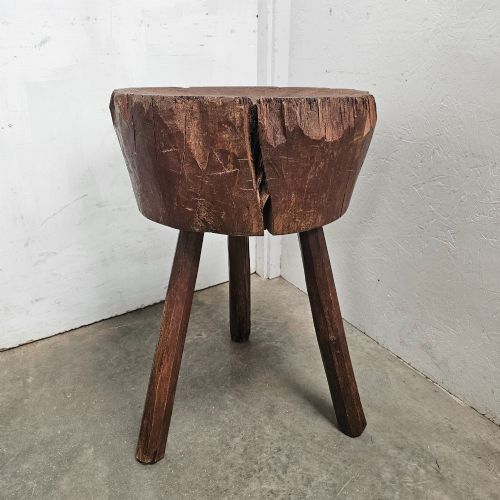
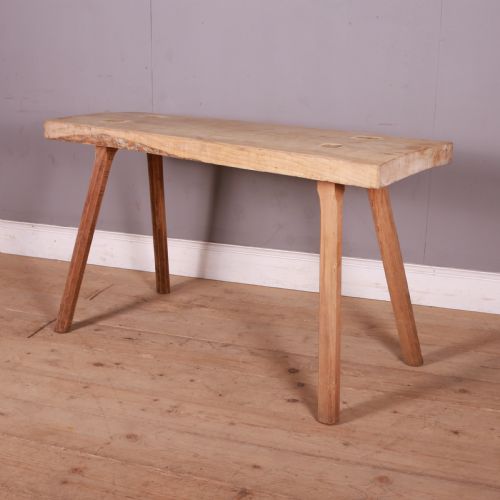
These vintage french butcher table pieces are heavy working surfaces built to last, offering rustic character and practical utility for modern kitchens.
Vintage French Butcher Table
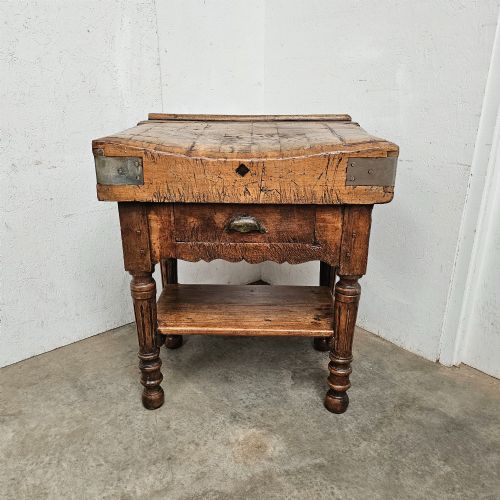
A vintage french butcher table brings heavy timber utility and provincial character into domestic spaces, serving primarily as prep tables, kitchen islands or standalone chopping blocks. These items bridge utilitarian purpose and decorative appeal, developed from hardworking preparation counters found in European food shops.
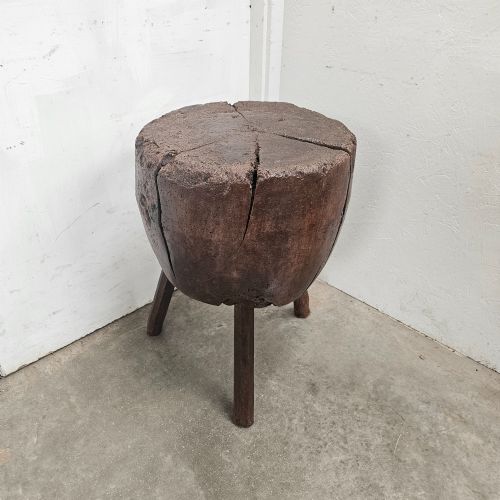
Most examples appearing on this page span the nineteenth century through the early twentieth century, taking forms such as game blocks, charcuterie prep surfaces and kitchen islands. Beech and oak form the core of these constructions, often supported by sturdy wooden stands, metal frames or decorative bases.
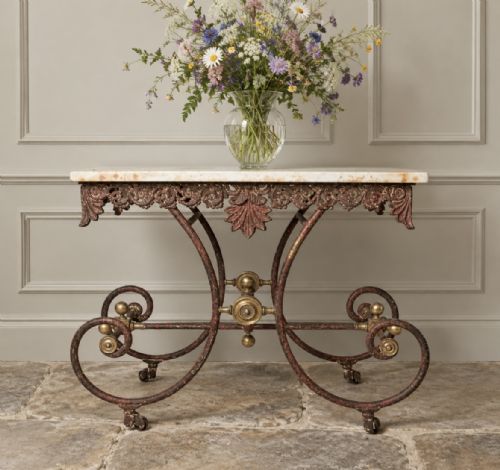
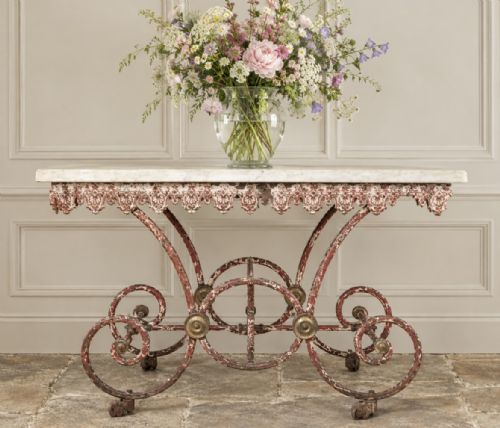
Regional styles range from simple primitive country designs to more ornate provincial and industrial interpretations. Buyers encounter everything from thick sycamore and elm trestle tables to marble-topped preparation counters.
Materials and construction
Construction relies heavily on dense hardwoods like beech, oak, elm and sycamore, selected for their ability to withstand heavy chopping and daily preparation work. These thick wooden tops are frequently joined to robust timber frames or iron and metal supports.
Additional materials such as marble provide cool, hygienic surfaces for charcuterie and pastry work, while bronze mounts and brass details appear on select refined examples. Iron and cast iron components reinforce the structural integrity of industrial and provincial stands.
Listings feature items dated across the nineteenth century and early twentieth century, utilising beech, oak, elm, sycamore, marble, iron and brass.
Judging quality
Quality rests upon the integrity and thickness of the primary timber block, where deep patination from actual working use distinguishes superior pieces. The relationship between the top and its original base determines the overall balance and authenticity of the piece.
Fine craftsmanship shows in the dovetail joinery, the stability of the support structure and the retention of original hardware such as brackets and mounts. Secondary materials like intact marble slabs or original metal framing elevate the stature of a table.
Trussant & Cie·Hennes France
The Vintage French Butcher Table Glossary
- Butchers block
- A thick wooden working surface designed for meat preparation and chopping. These heavy blocks show deep surface wear accumulated from years of practical commercial use.
- Charcuterie prep table
- A specialised counter featuring a stone or marble top. This surface provided a cool, clean area for preparing cured meats and small provisions.
- Trestle table
- A table construction where the top rests on two or more supporting frames. This design offers maximum legroom and structural stability.
- Game block
- A heavy timber section utilised specifically for dressing game. These pieces often utilise thick trunk sections of oak or beech.
- Provincial style
- Design characteristics originating from the French regions outside Paris. These items emphasise practical durability and regional materials over formal ornamentation.
Vintage French Butcher Table: Frequently Asked Questions
How do I clean a vintage french butcher table?
Maintain wooden surfaces by scraping away debris and applying food-safe mineral oils regularly to prevent drying and cracking.
Avoid harsh chemical cleaners and excessive water immersion to preserve the historic timber and natural patination.
Can I use a vintage french butcher table for daily cooking?
These robust surfaces remain entirely functional for food preparation, chopping and general kitchen tasks.
Many owners utilise the thick wooden blocks as central kitchen islands for cooking and serving.
How do I identify a nineteenth century piece?
Look for dense end-grain timber construction, hand-cut joinery and heavy iron or wooden underframes typical of older French workshops.
Deep surface patination and authentic wear patterns provide strong indicators of nineteenth century origin.
Are marble top tables good for kitchens?
Marble surfaces offer a naturally cool area ideal for pastry making, dough rolling and charcuterie preparation.
Seal the stone periodically to protect against staining from acids and oils during everyday kitchen use.