


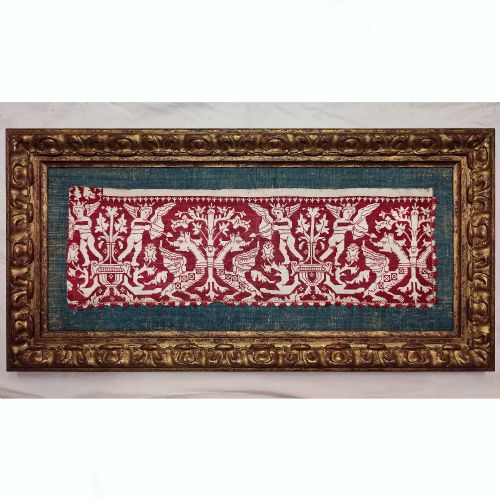
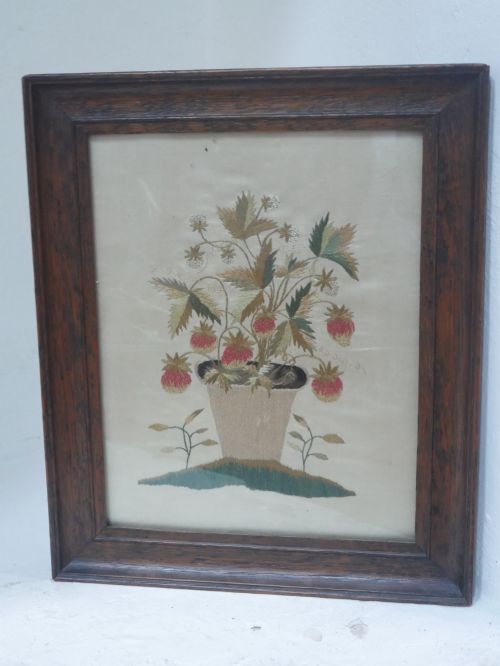

Vintage Framed Embroidery
These vintage framed embroidery pieces bring historical needlework into modern interiors through preserved textiles, samplers, and pictorial scenes.
Vintage Framed Embroidery
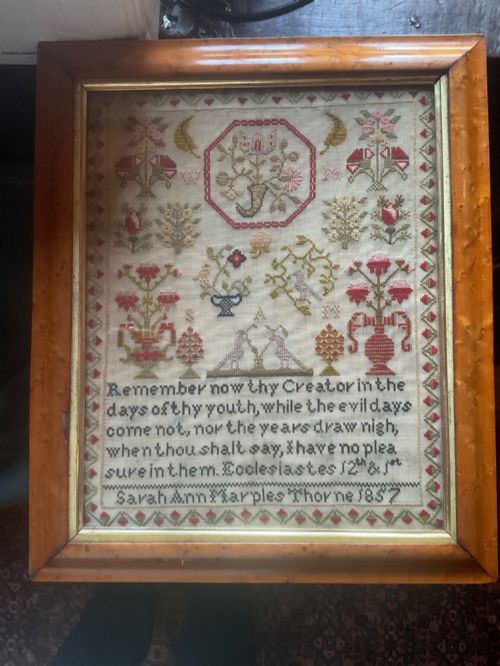
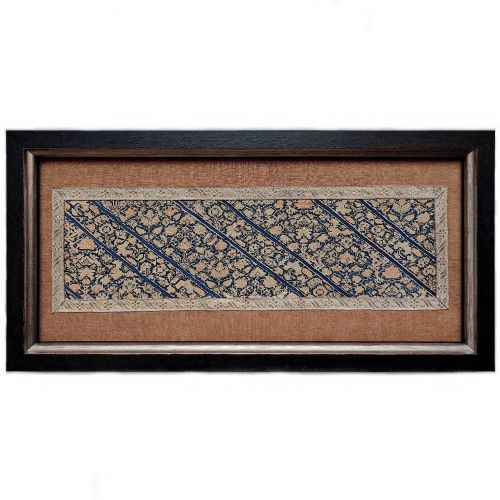
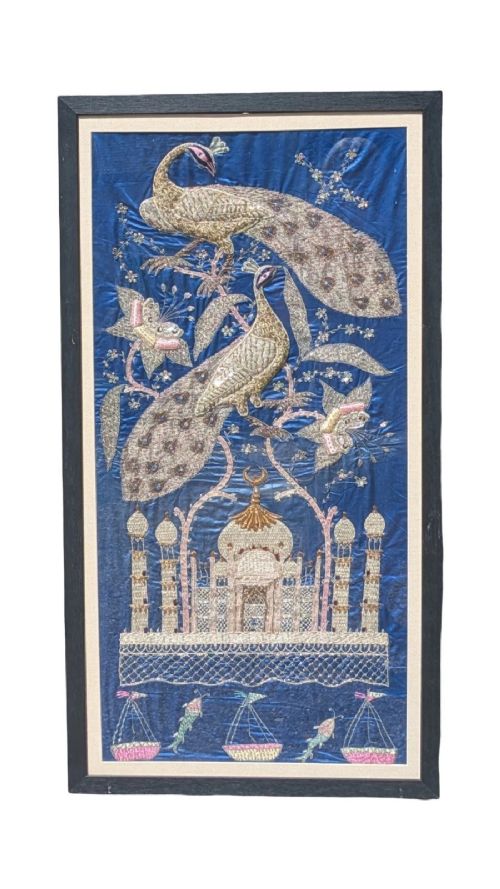
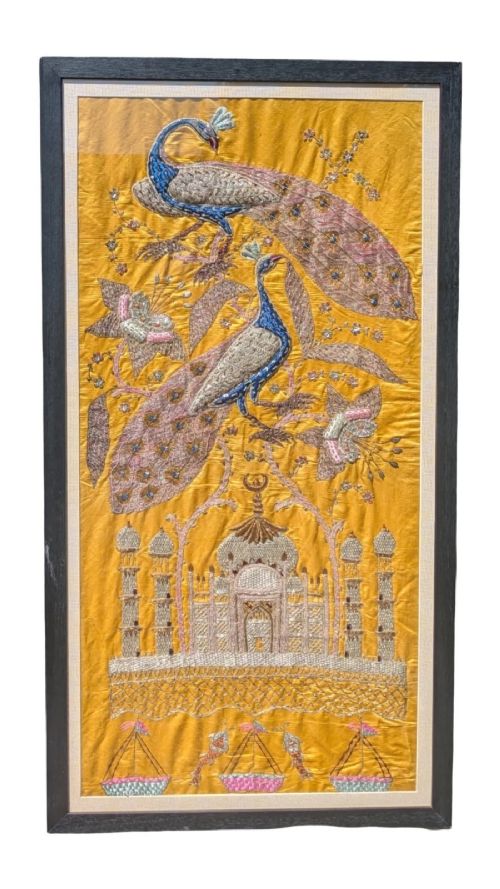
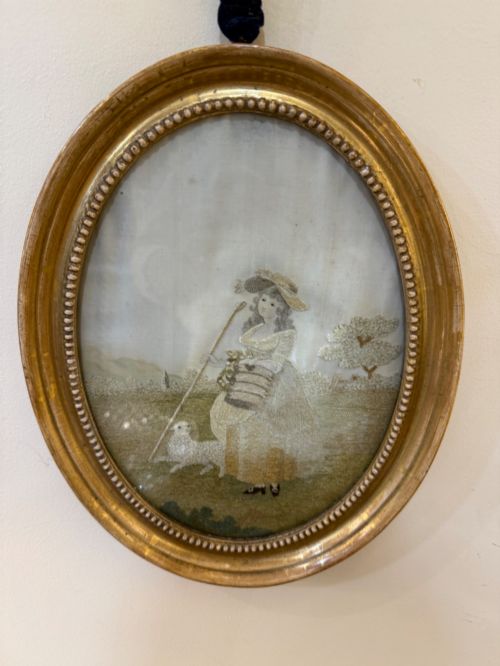
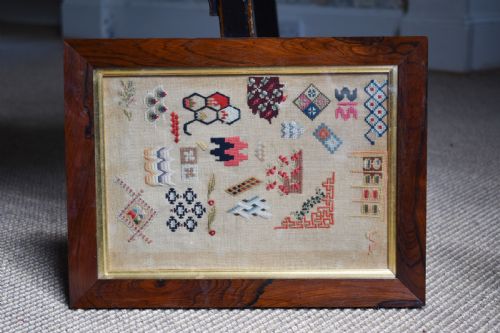
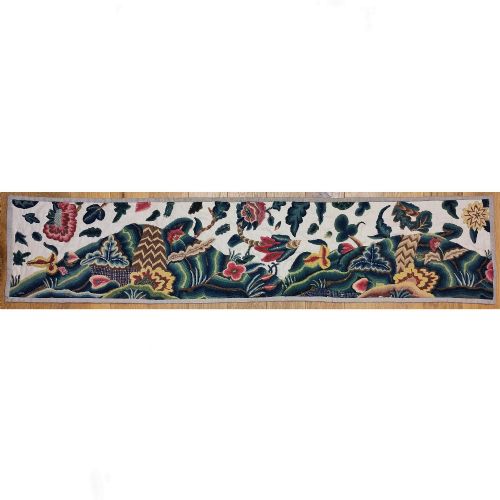
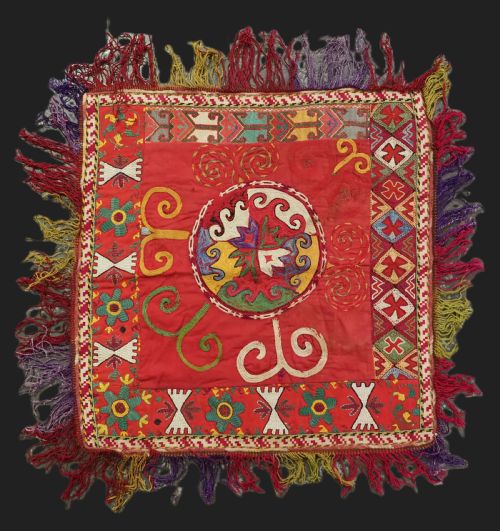
Vintage framed embroidery comprises needlework pictures, samplers, and textile panels originating from periods spanning the seventeenth century to the mid-twentieth century. Buyers seeking vintage framed embroidery encounter diverse regional forms, ranging from English crewelwork and samplers to Indian silk pictures and Chinese silk panels.
The selection includes framed wool work pictures, maps, beadwork fragments, and maritime woolies alongside European tapestries and Greek island embroideries. Most examples serve as wall art, preserved behind glass within wooden or gilt frames that protect the aged fabric and thread.
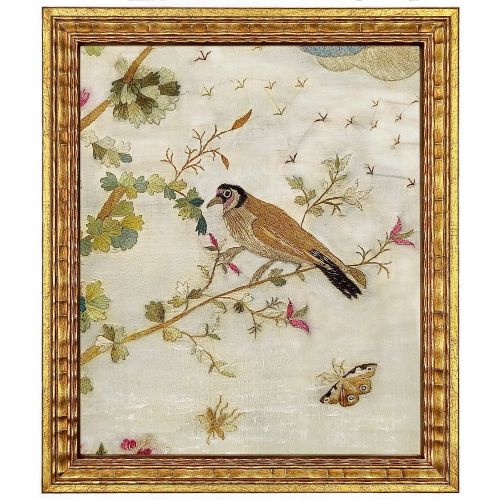
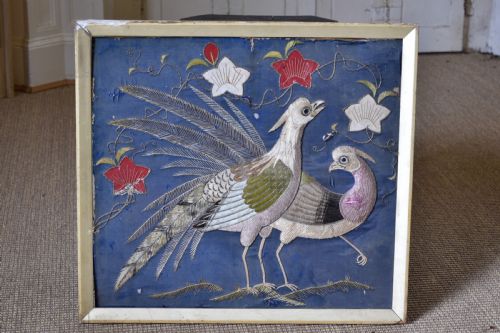
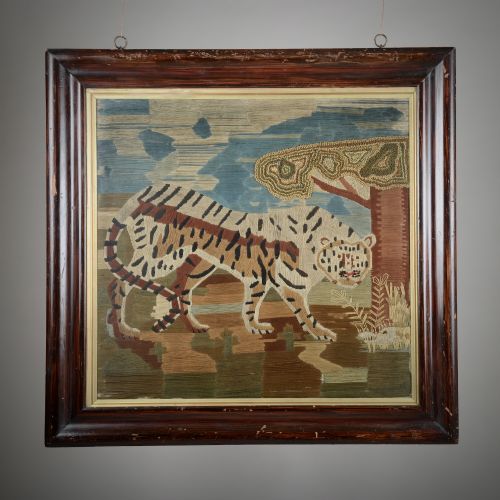
Domestic samplers worked by young makers sit alongside professional needlework pictures depicting literary scenes, architecture, and wildlife such as tigers and pheasants. These objects reflect both amateur household handiwork and skilled workshop traditions across multiple centuries.
How they were made
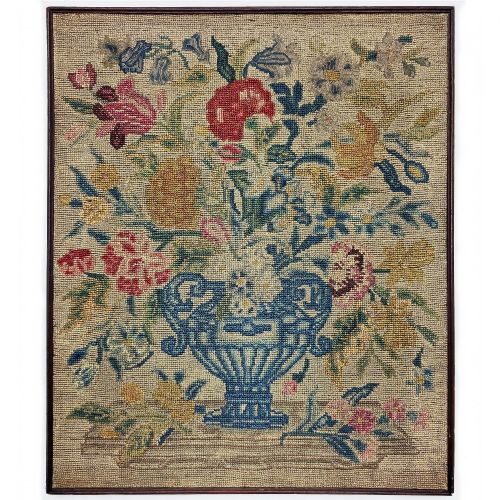
Maker construction relies on base textiles such as linen, canvas, and silk stitched with wool, silk, and metallic thread. Crewelwork and needlepoint employ specific stitching densities, while gros-point and specialised embroidery techniques build pictorial depth and texture.
Materials include imported glass and carved wooden frames designed to secure fragile historical fragments. Silk backgrounds frequently host intricate needle painting, whereas wool work utilises heavier yarn to create tactile, dense surfaces.
Vintage Framed Embroidery Retail Price Guide 2026
Typical asking prices for vintage framed embroidery among the pieces listed under this phrase on Sellingantiques today, from the lower quarter to the upper quarter. They describe what is for sale here now, not the wider market.
Materials documented in the inventory span silk, wool, metallic thread, canvas, and glass within period wooden and gilt frames.
What varies in quality
Quality differentiates by the precision of the stitching and the complexity of the pictorial composition. Masterly needlework displays tight, uniform tension and nuanced colour shading, whereas simpler pieces show broader, more folky execution.
The preservation state of the underlying textile and metallic thread dictates desirability, alongside the originality of the historic frame and protective glass. Works retaining documented maker details, such as named samplers with dates, command distinct historical interest.
Mary Greening·Ann Hodson·Margaret Ann Blackow·J Constable
The Vintage Framed Embroidery Glossary
- Sampler
- A piece of needlework produced by a maker to demonstrate proficiency in various stitches and patterns. These often include alphabets, numerals, and moral verses.
- Crewelwork
- Embroidery executed with wool yarn on a linen or cotton twill fabric. This technique produces textured, flowing floral and faunal designs popular in seventeenth and eighteenth-century English textile art.
- Woolie
- A embroidered textile picture created by nineteenth-century sailors using coloured wool yarn. These works commonly depict maritime scenes and ships.
- Gros-point
- A type of needlepoint stitch worked on coarse canvas to create a durable, textured tapestry surface. It appears frequently in nineteenth-century pictorial panels.
- Band sampler
- An elongated rectangular embroidery format featuring horizontal rows of diverse geometric and floral patterns. These historical pieces originate primarily from the seventeenth and eighteenth centuries.
Vintage Framed Embroidery: Frequently Asked Questions
How should I clean vintage embroidered textiles?
Historical textiles require minimal intervention and professional conservation rather than standard domestic cleaning methods. Dust should be gently brushed away from the protective glass.
Opening antique frames risks damaging fragile silk, wool, and linen fibres inside. Direct moisture or chemical cleaners will permanently ruin aged threads and grounds.
Are these samplers original eighteenth-century work?
Dating relies on material analysis, including the type of linen ground, hand-spun thread characteristics, and framing methods. Many pieces bear stitched dates or names that anchor their production period.
Stylistic conventions in lettering and motif design help differentiate authentic historical samplers from later reproductions. Specialist examination of the reverse side often reveals period stitch work.
How do I hang needlework safely?
These framed textiles require placement away from direct sunlight to prevent silk and wool threads from fading. UV-filtering glass provides essential protection for exposed historical colorants.
Stable indoor humidity prevents the wooden frames and organic textiles from warping or developing mould. Secure picture hooks matched to the weight of the frame ensure safe wall mounting.
What does a woolie depict?
Sailor woolies represent nineteenth-century maritime embroidery created by naval personnel during long voyages. They typically portray sailing ships at sea using textured wool yarns.
These pieces often incorporate raised stitch elements to render waves and rigging with tactile depth. Their folk art character records maritime history through the eyes of the makers.