

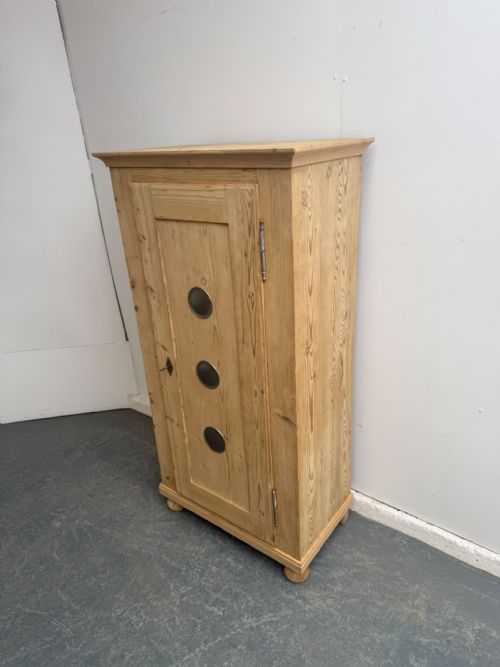
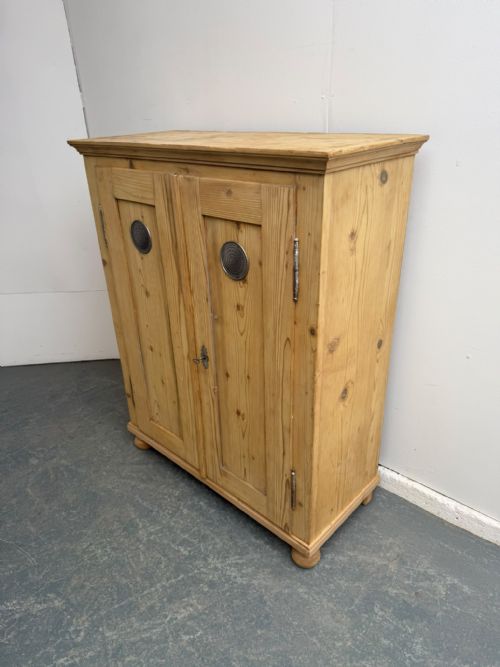
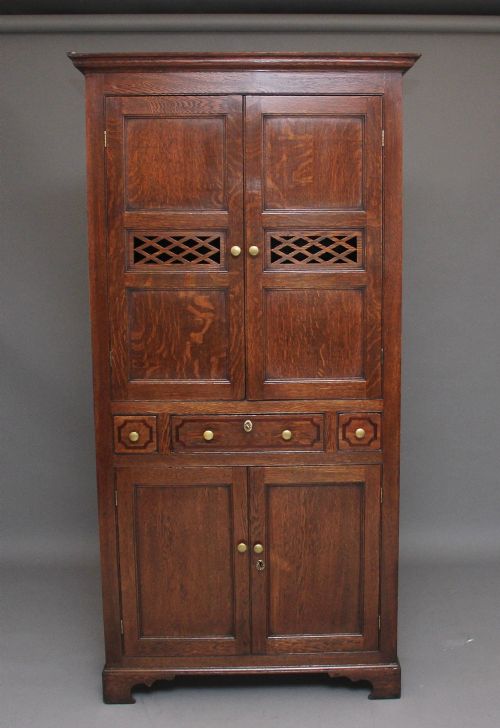


Vintage Food Larder
A vintage food larder is a practical storage piece built for domestic provisioning, offering generous timber shelving and ventilated doors to keep provisions fresh.
Vintage Food Larder
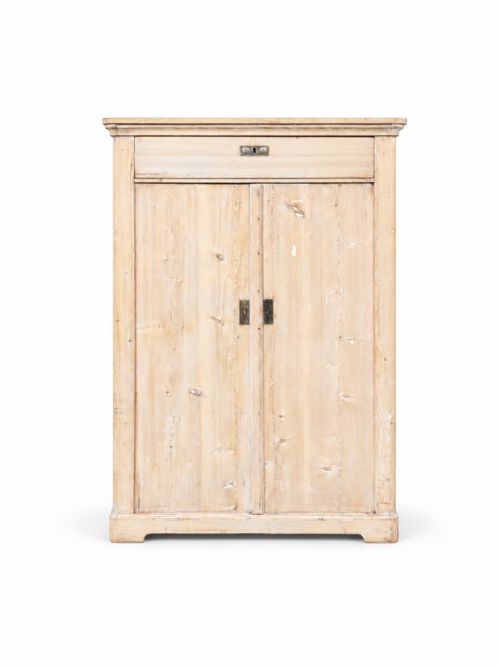
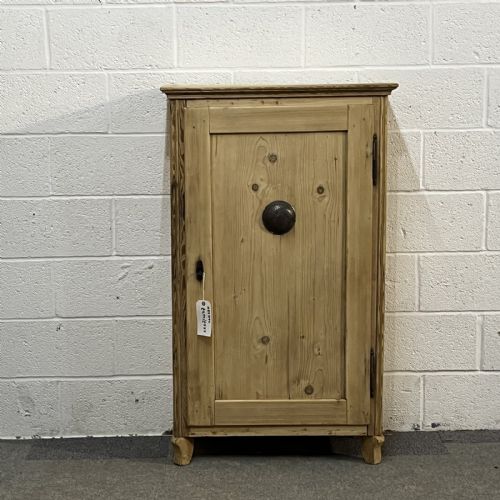
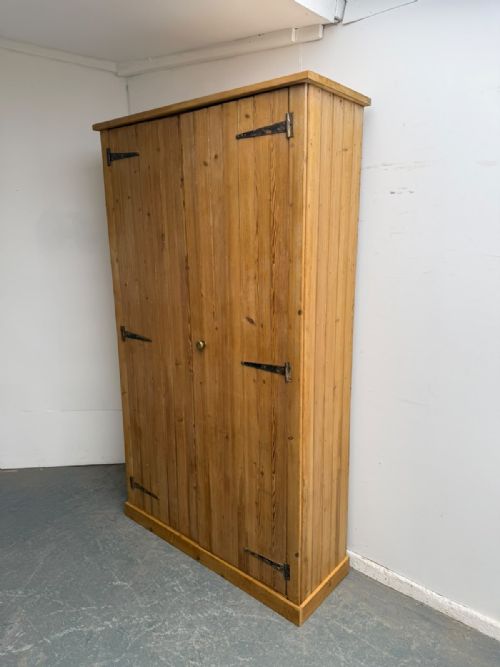
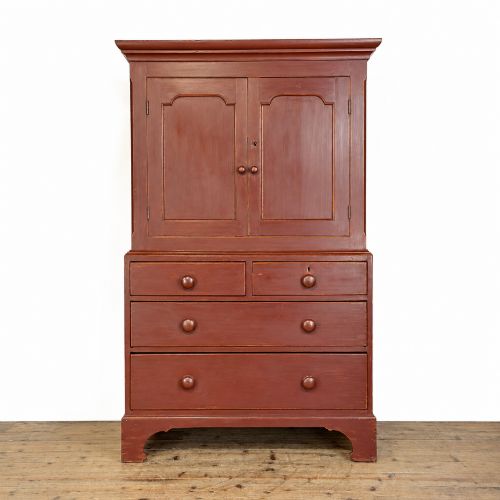
A vintage food larder appears in several forms across this selection, ranging from single door cupboards and housekeeper's cupboards to two door kitchen storage units. These pieces trace their origins through the Georgian, Victorian, and 19th Century periods, reflecting traditional rural domestic needs.
The versions you are most likely to meet on this page are constructed from solid pine, often retaining old painted finishes or prepared in bare timber ready to wax or paint. Regional examples include Scottish and East European pieces alongside English country furniture.
Form follows function closely in these designs, which serve as pantry cupboards, linen cupboards, and general storage cabinets. Their proportions vary from small housekeepers' cupboards to tall single and double door formats intended for heavy daily use.
Construction and materials
Makers built these larders primarily using solid pine and oak, relying on durable timber capable of withstanding heavy kitchen use. Construction methods focus on sturdy joinery designed to support deep shelving and large cabinet doors.
Metal hardware plays a functional role, with iron and brass fittings securing the doors and ventilation points. Many examples incorporate vented panels or pierced doors to allow air circulation around stored provisions.
Surfaces show a history of working finishes, including original paint and bare wood intended for waxing. Cabinet makers utilised straightforward construction techniques appropriate for utilitarian farmhouse and country furniture.
Vintage Food Larder Retail Price Guide 2026
Typical asking prices for vintage food larder among the pieces listed under this phrase on Sellingantiques today, from the lower quarter to the upper quarter. They describe what is for sale here now, not the wider market.
Several Victorian pine cupboards arrive ready for you to wax or paint, preserving the custom of finishing furniture at home.
Assessing quality and character
The character of the surface finish also distinguishes individual items, whether through undisturbed early paint or clean, solid pine timber ready for treatment. Proportion and scale dictate the visual weight of the cupboard within a room.
The Vintage Food Larder Glossary
- Housekeeper's cupboard
- A large storage cabinet traditionally used for storing linens, dry goods, and household provisions. These pieces often feature multiple doors and internal shelving.
- Pine
- A softwood commonly utilised for country and farmhouse furniture throughout the nineteenth century. It accepts paint and wax finishes readily.
- Vented cupboard
- A storage piece featuring pierced or mesh panels in the doors to allow air circulation. This design kept stored food items cool and fresh.
- Georgian country
- A style of vernacular furniture produced during the Georgian period in regional workshops. These items prioritise robust utility over formal ornamentation.
Vintage Food Larder: Frequently Asked Questions
What is a vintage food larder?
A vintage food larder is a tall wooden storage cabinet designed for keeping provisions, dry goods, or household linens.
These pieces date from periods such as the Georgian and Victorian eras, originating primarily from British and East European rural workshops.
How were larder cupboards used?
Historically, these cupboards stored perishable food, dry goods, and household textiles before modern refrigeration.
Their enclosed shelving and ventilated doors helped protect contents from pests while maintaining airflow around provisions.
How do I date a pine larder?
Dating relies on examining construction methods, timber characteristics, and hardware such as iron or brass hinges.
Listings from this selection span the Georgian period, the Victorian era, and the wider nineteenth century.
What materials are these cupboards made from?
The primary material across these listings is solid pine, with occasional examples built in oak.
Fittings typically include iron and brass hardware, while surfaces feature old paint or bare wood.
Are these cupboards painted or bare wood?
The selection includes pieces with original painted surfaces alongside items in bare pine ready to wax or paint.
Some cabinets retain early or original paint finishes reflective of their working country origins.