





Vintage Folding Plant Stand
A vintage folding plant stand brings warmth and practicality to any room, offering a clever way to display greenery while folding flat when not in use.
Vintage Folding Plant Stand
A vintage folding plant stand represents a practical intersection of furniture design and botanical display, emerging through various periods from the nineteenth century into the twentieth. When searching for a vintage folding plant stand, buyers encounter pieces that function equally well as occasional surfaces, side tables, and tiered stands.
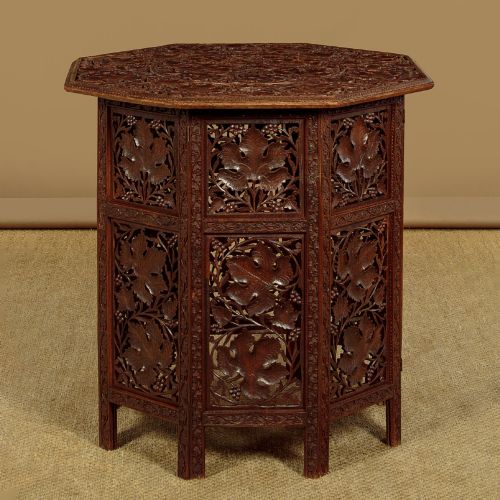
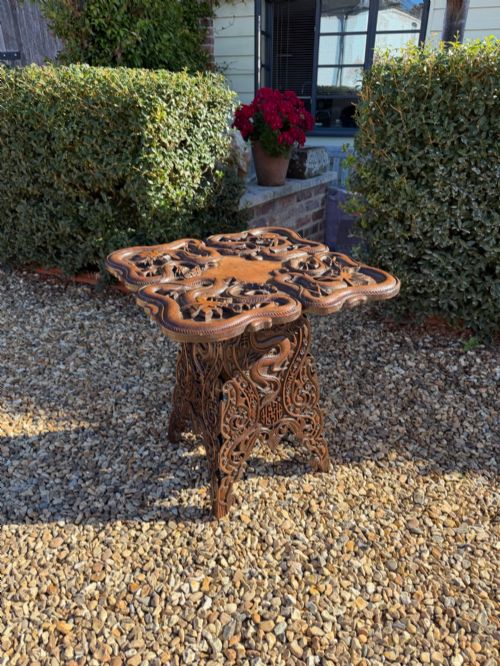
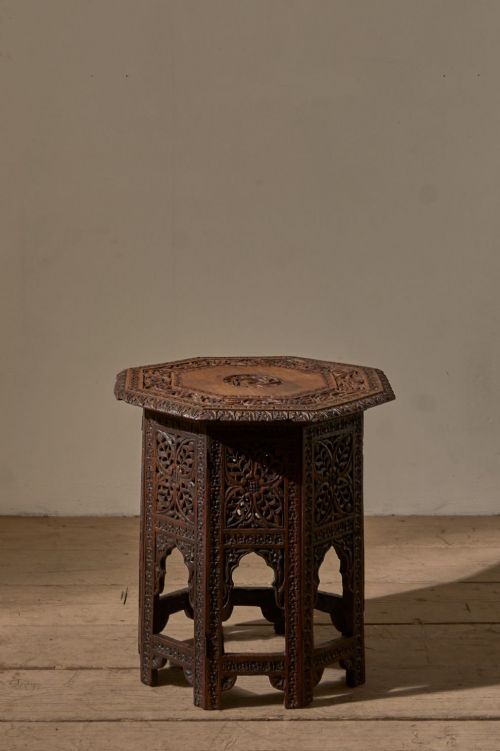
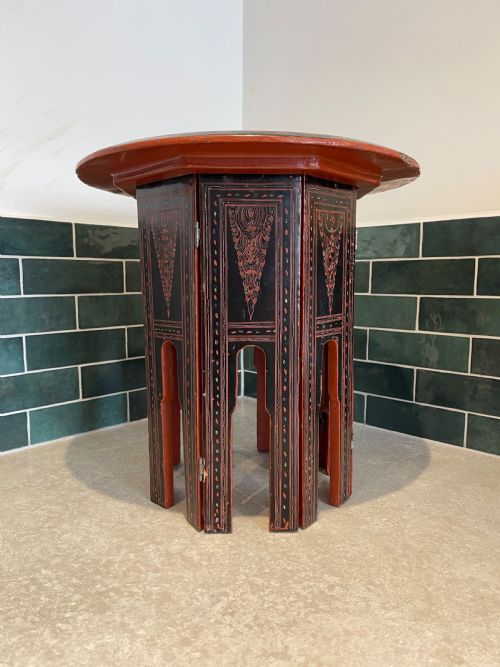
The selection on this page leans heavily toward intricately carved regional pieces, particularly Anglo-Indian designs from the Victorian era up through the nineteen-thirties. Forms range from octagonal tables and side lamps to metamorphic mahogany occasional tables and carved teak structures.
Makers utilised a variety of woods and decorative surfaces, producing items that combine portability with elaborate craftsmanship. These pieces suit modern interiors seeking character, offering versatile display spaces that collapse easily for storage.
How they were made
Construction relies heavily on dense timbers such as teak, mahogany, padauk wood, and walnut, paired with contrasting decorative elements. Artisans employed traditional joinery alongside intricate surface embellishments including brass inlay, bone inlay, and hand-beaten copper tops.
Carving defines many of the pieces, featuring dense floral or zoomorphic motifs associated with Anglo-Indian and Anglo-Burmese workshops. The folding mechanisms depend on clever hinges and pivoting wooden frames designed to collapse smoothly without sacrificing stability when open.
Vintage Folding Plant Stand Retail Price Guide 2026
Typical asking prices for vintage folding plant stand among the pieces listed under this phrase on Sellingantiques today, from the lower quarter to the upper quarter. They describe what is for sale here now, not the wider market.
Listings span from the nineteenth century through the nineteen-thirties, featuring regional styles like Anglo-Indian, Edwardian, and rustic country.
What varies in quality
Quality rests primarily in the crispness and depth of the wood carving, alongside the precision of the inlay work. Pieces displaying sharp, deeply undercut foliage or intricate bone and brass placement demonstrate superior craftsmanship compared to simpler, softer toolwork.
The integrity of the folding mechanism also separates standard examples from finer specimens. Smooth operation of the pivot points, tight joints when assembled, and the selection of richly figured hardwoods indicate higher standards of production.
The Vintage Folding Plant Stand Glossary
- Anglo-Indian
- Pertains to furniture made in India during the British period, frequently combining British form with traditional Indian carving. These items often feature dense botanical motifs executed in exotic hardwoods.
- Hoshiarpur
- Refers to a distinct regional style of wood carving and inlay originating from Punjab, notable for complex geometric patterns. Pieces from this tradition frequently incorporate delicate brass or bone wire into teak surfaces.
- Metamorphic
- Describes furniture engineered to transform from one form or shape into another, such as an occasional table converting into a tiered structure. This clever design maximises utility in domestic spaces.
- Campaign table
- Portable furniture designed to fold or dismantle easily for transport by travellers or military officers. These items prioritise robust joints and compact storage.
- Padauk wood
- A dense, durable timber prized for its rich reddish-brown tone and fine grain. Artisans selected it for pieces requiring strong structural support and fine carving detail.
Vintage Folding Plant Stand: Frequently Asked Questions
Are these stands sturdy enough for heavy plants?
Most of these pieces function well for moderate house plants, lamps, or decorative objects. Their folding frames are engineered for stability when fully locked or opened into position.
Buyers should check the specific footprint and weight distribution of each stand, particularly octagonal and tiered models, to ensure proper balance for larger pots.
How do I care for inlaid wooden tables?
Maintain the timber and metal inlay by dusting regularly with a dry cloth and avoiding excessive moisture. Occasional application of suitable wax helps preserve the finish of hardwoods like teak and mahogany.
Keep these pieces away from direct heat sources and strong sunlight to prevent the wood from drying and the bone or brass inlay from loosening.
What periods do these pieces span?
The selection encompasses items from the nineteenth century, including Victorian examples, alongside pieces created across the early twentieth century up to the nineteen-thirties.
Stylistic influences range from rustic country designs to elaborate Anglo-Indian, Edwardian, and Anglo-Burmese traditions.
How do folding mechanisms operate on older tables?
These tables typically utilise interlocking wooden crosses, pivoting hinges, or hinged leg assemblies that collapse inward when lifted. The clever geometry allows the surface and base to fold flat against one another.
Care should be taken when opening or closing them to guide the joints naturally without forcing the wood.