
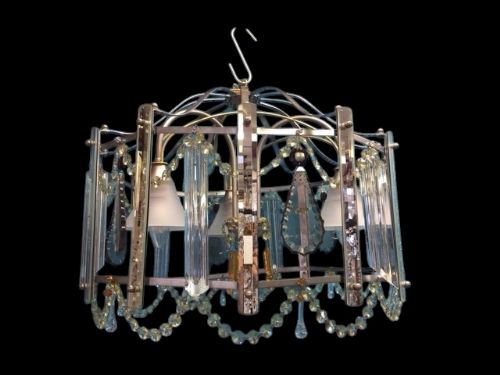
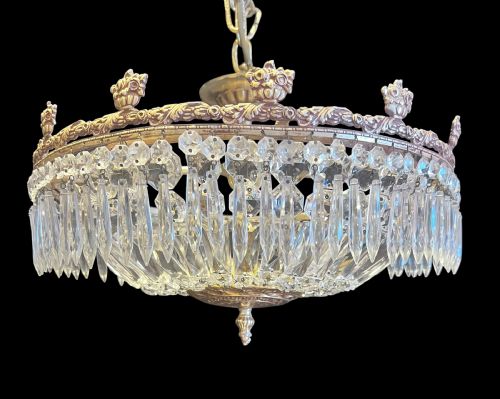
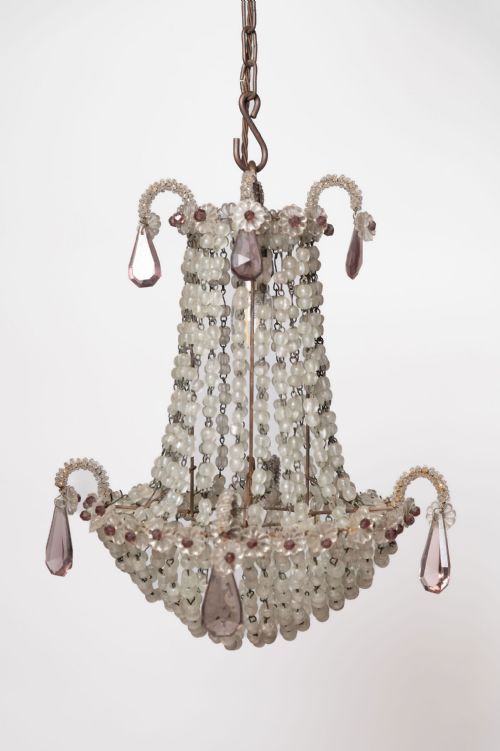


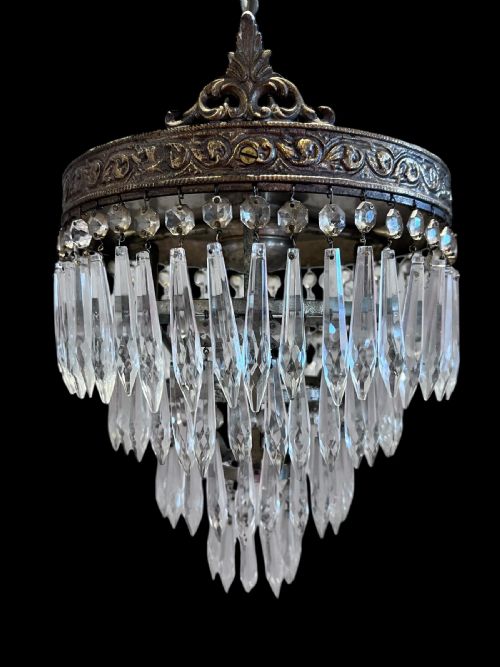


Vintage Flush Ceiling Fitting
These vintage flush ceiling fitting examples bring period character directly to low rooms, hugging the plaster with brass, glass and crystal.
Vintage Flush Ceiling Fitting
A vintage flush ceiling fitting sits tight to the ceiling line, offering a practical lighting solution for spaces with restricted headroom. The selection spans the 1910s, 1920s, 1930s and the Victorian era, bringing authentic historical illumination directly into domestic settings.
Buyers encounter diverse stylistic interpretations here, ranging from clean Art Deco geometric lines to ornate French Empire and Italian Venetian designs. Common formats include compact plafonieres, bag chandeliers, slip shade ceiling lights and opaline dish lights.
The primary origins recorded in these pieces are French, Italian and British, reflecting strong European manufacturing traditions of the early twentieth century. Each object type serves rooms where hanging pendants would otherwise hang too low for comfort.
How they were made
Metalwork forms the structural backbone of these fixtures, utilising cast and spun brass, bronze, chrome and copper to secure the glass components. Mounts and frames are engineered to bear the weight of heavy crystal drops and decorative shades close to the ceiling joists.
Glass production techniques define the decorative surfaces, featuring mould-blown opaline glass, acid-etched crystal, and precision-cut beads wired onto brass frames. Art Deco pieces frequently employ pressed slip shades or thick frosted glass bowls signed by prominent glasshouses.
Some Art Deco shades required French pressing techniques so hot that workers wore heavy asbestos gloves just to turn the molten bowls.
What varies in quality
Material density and clarity set the standard across the range, distinguishing simple pressed glass from hand-cut crystal and heavy bronze castings. The weight and thickness of the brass mounts reveal the underlying manufacturing investment of the period.
Intricacy of surface decoration also dictates tier, evident in deeply etched motifs on slip shades or complex threading on beaded bag chandeliers. Original metal patination and signature marks from named designers elevate specific examples above standard production items.
René Lalique·Jean Gauthier
The Vintage Flush Ceiling Fitting Glossary
- Plafonier
- A bowl-shaped ceiling light that mounts directly against the plaster without a drop chain. This French term describes shallow glass or crystal fixtures designed to sit flush.
- Slip shade
- A moulded piece of glass that slots directly into a metal frame to form a shade. These are characteristic of Art Deco lighting designs from the 1920s and 1930s.
- Bag chandelier
- A light fixture featuring a flattened backing and a cascading mass of crystal beads shaped like a small pouch. They hug the ceiling while catching and refracting light through numerous small glass drops.
- Opaline
- A type of semi-opaque glass with a milky appearance, popular for soft and diffused interior illumination. It often appears in dish lights and shades from the early twentieth century.
- Beaded glass
- Small drilled glass elements strung together on wire to form curtains or decorative swags around a metal frame. They add textural sparkle to compact ceiling fixtures.
Vintage Flush Ceiling Fitting: Frequently Asked Questions
How do I install a vintage flush ceiling fitting?
These fixtures mount directly to standard electrical ceiling boxes using their existing metal brackets and brass screws. Professional wiring checks are recommended to ensure safe connection of historical brass and copper components.
Because they sit flat against the plaster, ceiling clearance is rarely an issue, though heavy crystal variants require secure anchoring into wooden joists.
What rooms suit a flush ceiling light?
Low-ceilinged hallways, compact bedrooms, and period bathrooms benefit greatly from these fittings because they provide strong illumination without taking up vertical space. Their decorative glass and metalwork also add focal interest to smaller domestic areas.
Larger multi-tiered or wide dome options work effectively in reception rooms where hanging chandeliers would hang too low for daily movement.
How do I clean antique glass shades?
Remove delicate glass bowls or slip shades from their brass mounts and wash them gently in lukewarm soapy water using a soft cloth. Avoid harsh chemical cleaners that can damage vintage frosted finishes or etchings.
Crystal beads and bag chandeliers can often be cleaned in place using a specialist spray and a microfiber cloth placed beneath to catch drips.