


Crystal Prism Ceiling Light
These crystal prism ceiling light fixtures bring brilliant illumination and period elegance to a room, driven by cut glass and polished metal.
Crystal Prism Ceiling Light
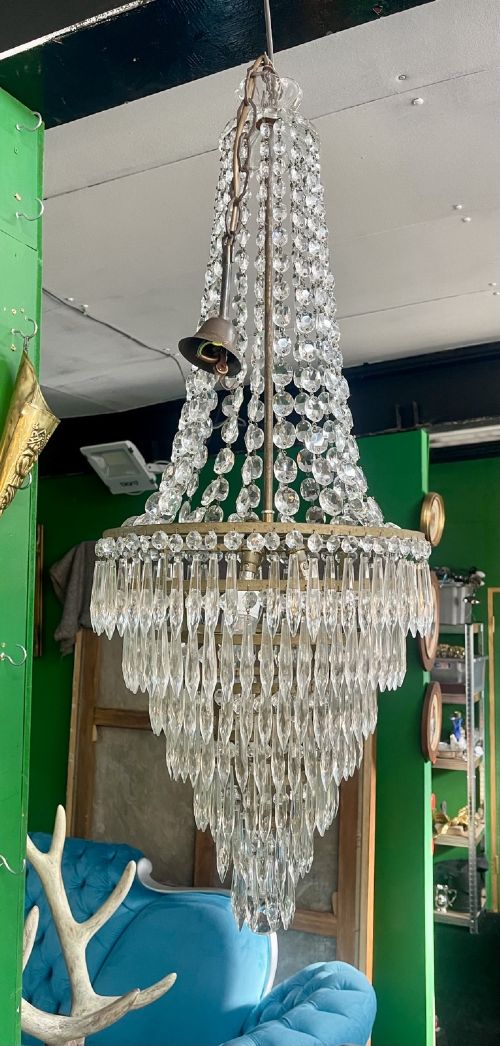
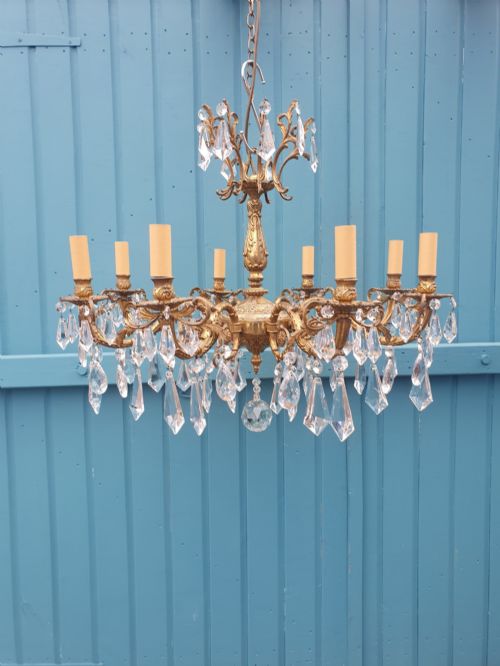
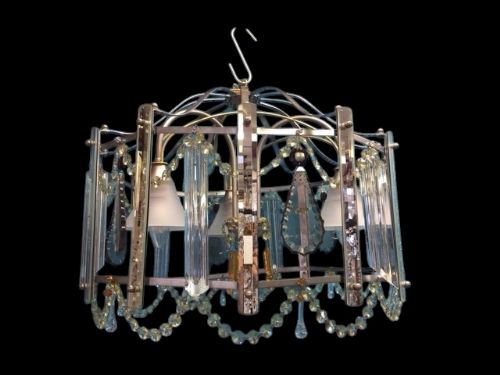
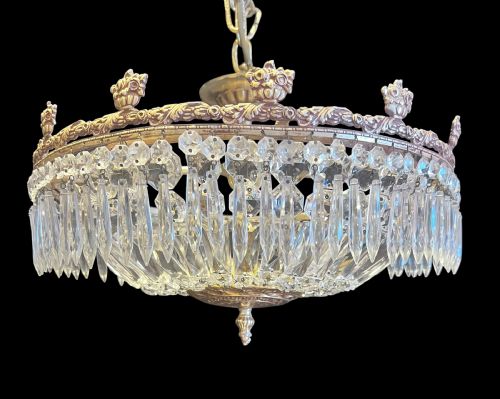
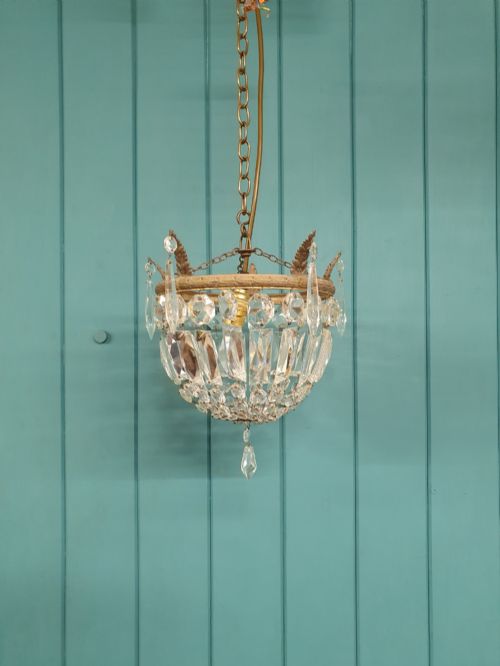
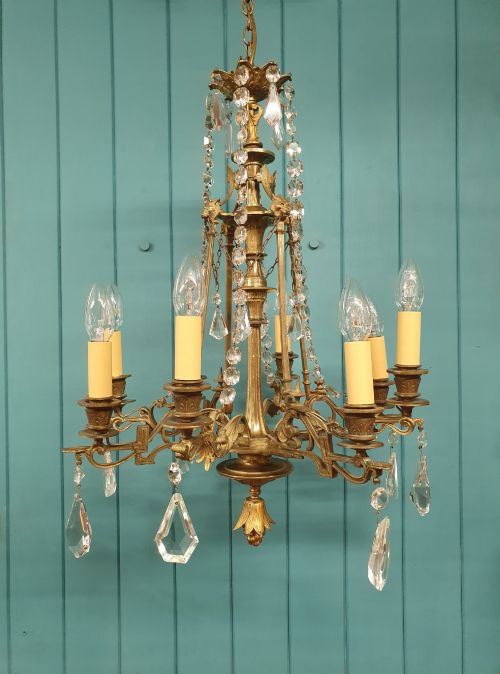
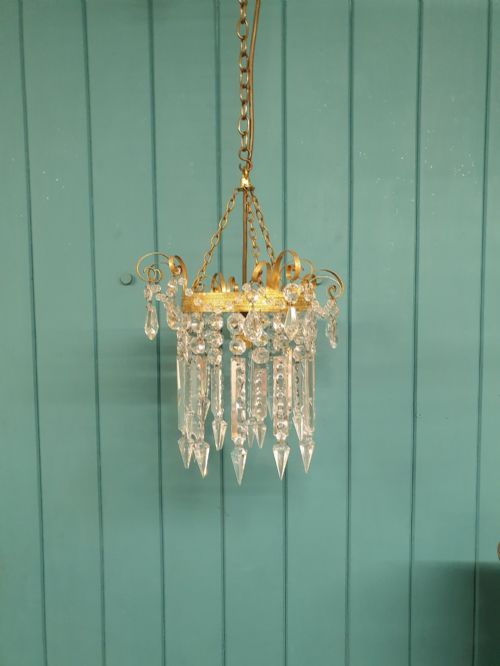
A crystal prism ceiling light is a hanging fixture designed to refract and scatter light through glass drops, beads, and pendants. When you search for a crystal prism ceiling light, you encounter diverse forms ranging from compact single-tier bag chandeliers to multi-arm French fixtures. The examples seen on this page span the nineteenth century, the Edwardian era, and the early twentieth century up to nineteen thirty.
The prevalent configurations include basket chandeliers, cage designs, tent and waterfall styles, and smaller spike or drop fixtures. French influences appear frequently through styles such as Empire, Rococo, Beaux-Arts, and Classical, alongside English basket forms. These pieces function primarily as statement ceiling lighting for halls, bedrooms, and reception rooms.
Materials and construction
The structural framework relies predominantly on brass, gilded bronze, and gilt metal to support the weight of the glass components. Frames are cast, chased, and joined to hold multiple arms, rings, or baskets designed for candles or electric lamps.
The optical elements consist of lead crystal, cut glass, and crystal glass formed into coffin prisms, spike drops, beads, lustres, and oblong drips. These glass pieces are hand-wired or pinned with metal links to the metal armature, creating layered cascades that catch and disperse light.
The listings on this page span from the nineteenth century through the Edwardian period and into nineteen thirty, incorporating brass, gilded bronze, and lead crystal.
Factors of quality
Quality in these fixtures rests upon the clarity and cutting of the glass and the weight of the metal frame. Heavy cast brass or gilded bronze frameworks provide structural integrity that lighter pressed metal alternatives lack.
The standard of the glass cutting directly influences light refraction. Deeply cut crystal prisms with sharp facets and high lead content produce superior brilliance compared to simpler moulded glass drops.
The Crystal Prism Ceiling Light Glossary
- Plafoniere
- A ceiling-mounted light fixture fitted flush or close to the ceiling rather than hanging on a long chain. These often feature glass bowls or mounted prisms held in metal frames.
- Coffin prism
- A long, flat-backed glass pendant with a pointed tip resembling a wedge or coffin shape. They are frequently suspended from the outer rims of early twentieth-century chandeliers.
- Bag chandelier
- A light fixture featuring a flattened hemispherical or bag-shaped lower section formed by dense vertical strands of glass beads. They direct light outward through a tight mesh of crystal drops.
- Tent and waterfall
- A chandelier style characterised by an upper tent of strung crystals leading down to a wider ring, from which cascading tiers of drops fall like water. This design creates substantial visual volume.
- Lustre
- A glass pendant or hanging drop used to decorate lighting fixtures and mantel ornaments. They capture and reflect ambient light from candles or bulbs.
Crystal Prism Ceiling Light: Frequently Asked Questions
How do I clean a crystal chandelier?
Cleaning requires removing dust with a soft brush and wiping individual glass prisms with a diluted specialist glass cleaner. Care must be taken not to strain the wire pins holding the drops to the frame.
Leaving the components attached while cleaning prevents misplacement of delicate glass drops and brass connectors. Ensure the power is completely isolated before undertaking any maintenance.
Are these lights wired for modern electricity?
Most antique ceiling fixtures arrive with legacy wiring or require rewiring to meet current electrical standards. A qualified electrician should inspect and adapt the internal fittings prior to installation.
Original brass frames can typically accommodate modern lamp holders while preserving the external period appearance. Professional installation also ensures the ceiling can support the combined weight of metal and glass.
How do I date an Edwardian crystal light?
Dating relies on examining the assembly methods, metal types, and specific prism cuts characteristic of the early twentieth century. Edwardian pieces often combine brass frames with cut glass spike drops and bead strands.
Stylistic cues such as restrained neoclassical motifs or simple basket frames help distinguish Edwardian lighting from heavier nineteenth-century designs. Hardware fixings and screw threads also provide clues to the manufacturing decade.