
Vintage Flower Dress Ring
A vintage flower dress ring brings together botanical motifs and precious stones, offering a distinctive statement piece for the hand.
Vintage Flower Dress Ring
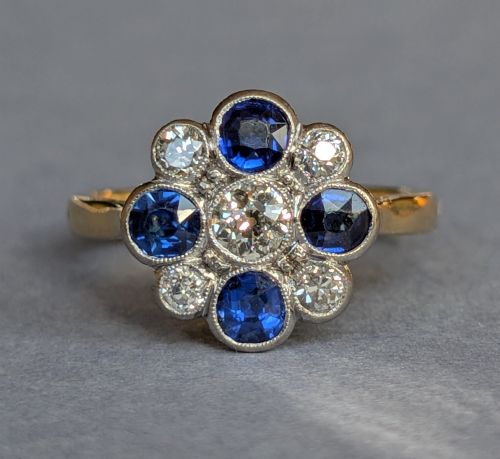
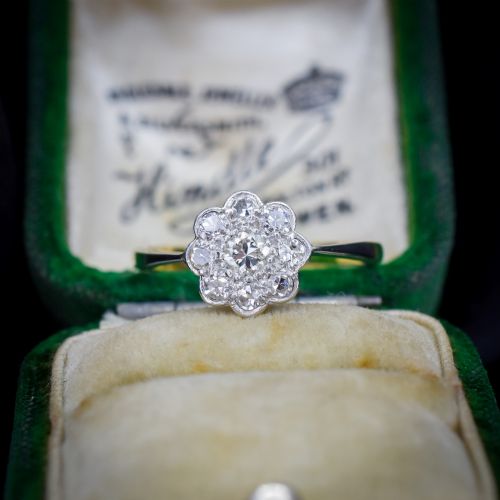
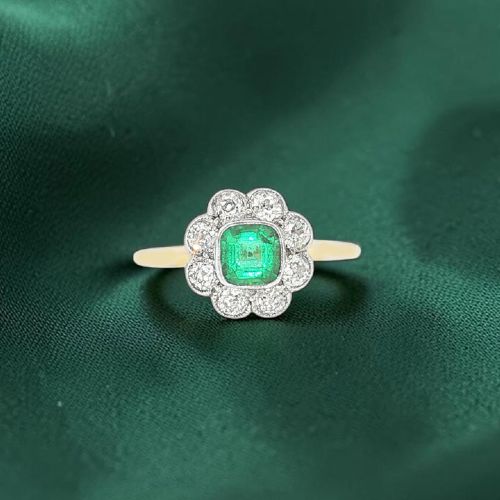
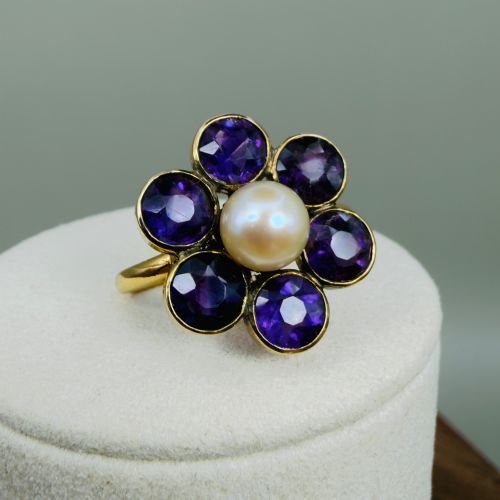
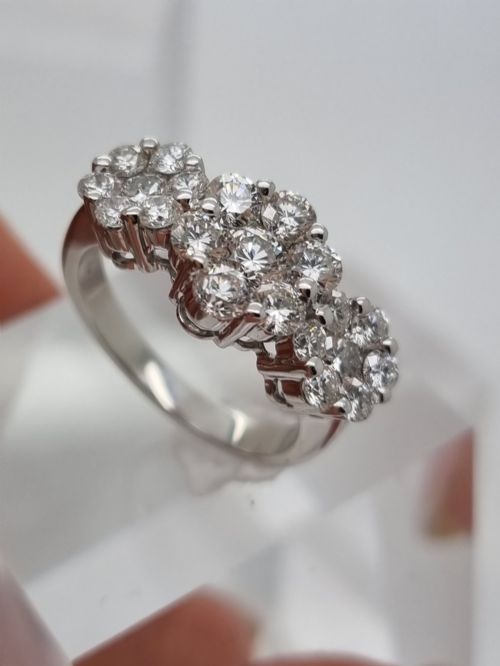
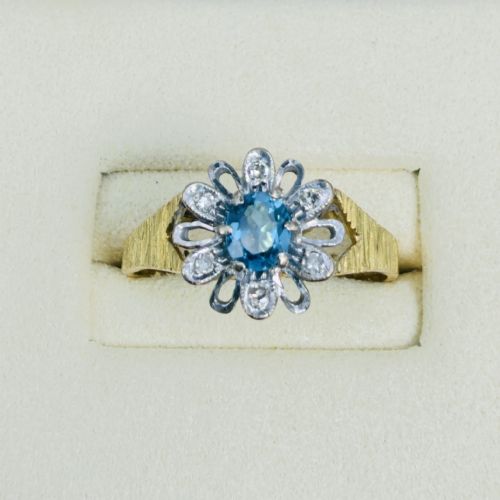
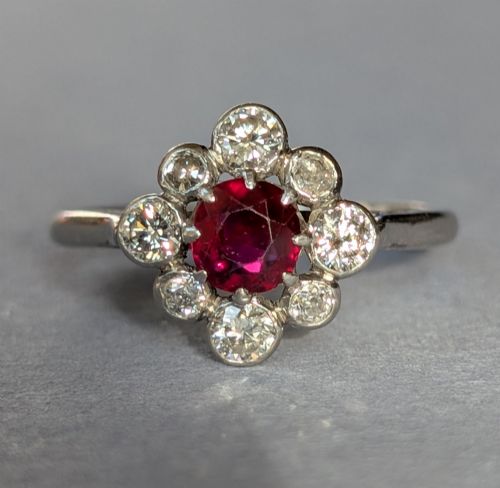
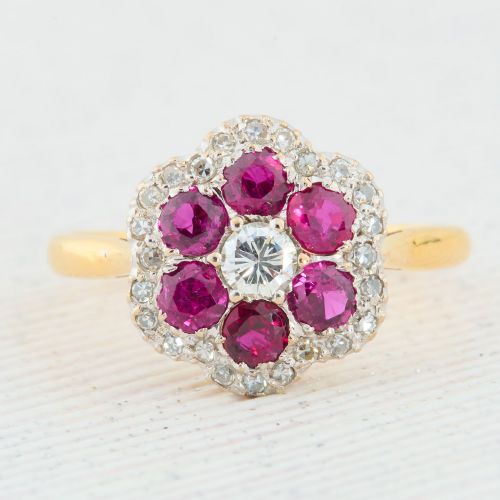
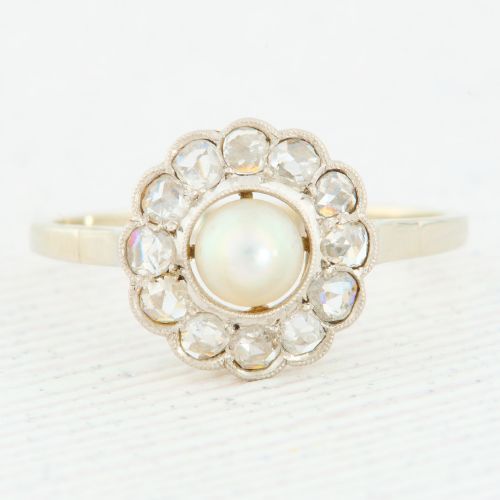
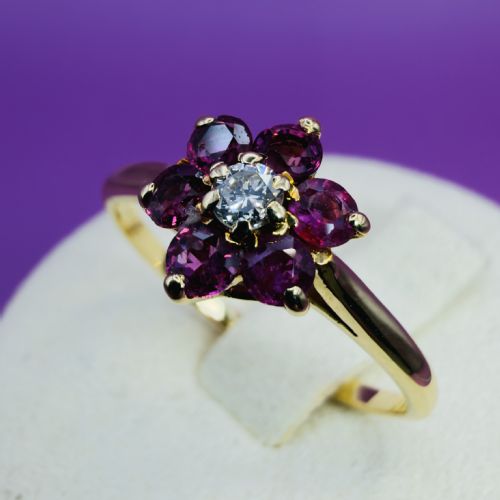
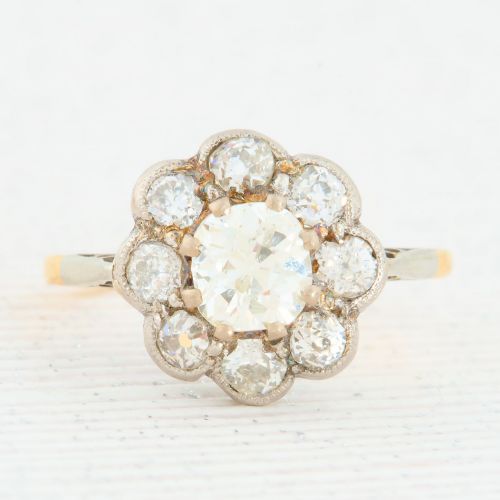
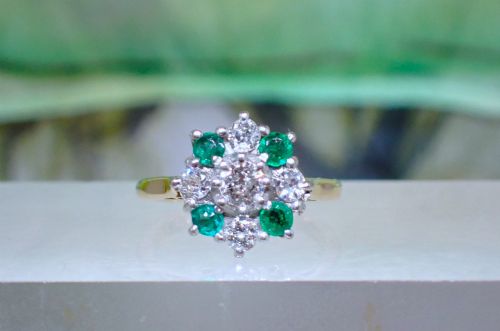
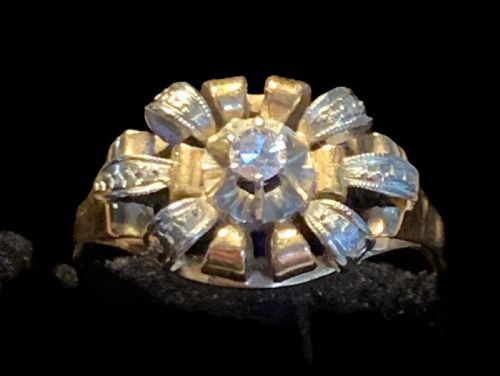
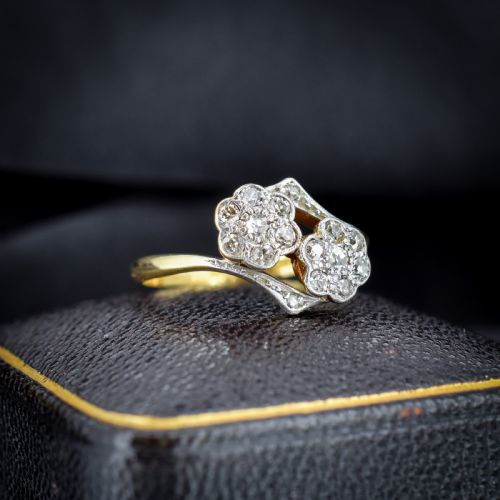
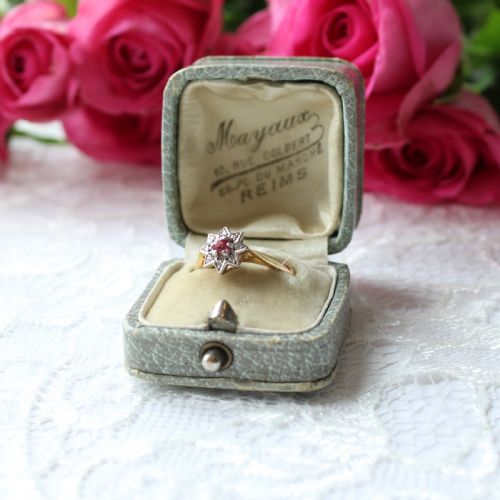
A vintage flower dress ring centres on a central gemstone surrounded by petals of diamonds or coloured stones, creating a distinct floral outline. These pieces span multiple decades, drawing heavily on Victorian, Edwardian, and Art Deco aesthetics.
Buyers frequently encounter cluster configurations where rubies, sapphires, emeralds, or pearls form the bloom against a backdrop of yellow gold, white gold, or platinum. Mid-century interpretations also appear alongside earlier nineteenth-century examples.
The layout often mimics a daisy or multi-petalled blossom, relying on concentric circles of stones to give depth and proportion to the finger.
Materials and construction
Goldsmiths utilised eighteen-carat yellow and white gold alongside platinum to construct the basket settings and shanks that support the clustered stones. Platinum frequently secures diamond accents in Edwardian and Art Deco designs to maximise brilliance.
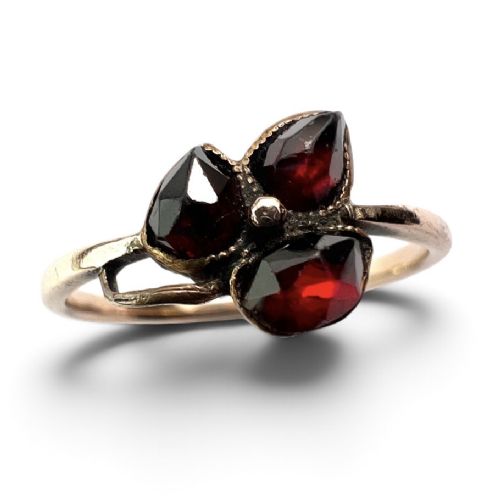
Gemstones including rubies, sapphires, emeralds, turquoise, and garnets are paired with old-cut or brilliant-cut diamonds to define the floral petals.
Listings span periods from the Victorian era through to the 1960s, utilising diamonds, sapphires, rubies, and emeralds set in gold and platinum.
Craftsmanship and stone selection
The precision of the stone setting and the symmetry of the petal arrangement dictate the overall standard of the piece. Uniformity in the cut and saturation of the surrounding coloured stones elevates the visual balance.
Heavier gauge gold or platinum shanks indicate a higher grade of manufacture, ensuring the cluster head remains secure during daily wear.
Kutchinsky
The Vintage Flower Dress Ring Glossary
- Cluster ring
- A ring design featuring a central gemstone encircled by a group of smaller stones. This layout forms the foundational structure for botanical and floral motifs.
- Daisy cluster
- A specific arrangement of round stones where a central gem is surrounded by five or more uniform petals. It remains a defining characteristic of early twentieth-century jewellery.
- Old-cut diamond
- A hand-faceted diamond shape common in antique pieces predating modern machine cutting. These stones exhibit smaller tables and high crowns.
- Platinum
- A dense, durable precious metal prized for its strength in secure claw and grain settings. It gained widespread popularity during the Edwardian and Art Deco periods.
- Trilogy
- A ring style set with three principal stones representing a progression. While distinct from single clusters, variations occasionally incorporate floral elements.
Vintage Flower Dress Ring: Frequently Asked Questions
How do I clean my ring?
Warm soapy water and a soft brush remove everyday oils safely from the metal and stones.
Avoid harsh chemical dips, particularly if the piece contains softer gems like turquoise, pearls, or emeralds.
Can I wear mine daily?
Sturdier mountings in eighteen-carat gold or platinum withstand regular wear when treated with reasonable care.
Pieces set with pearls or softer stones require more mindful handling to prevent surface scratching.
How do I identify the period?
Mounting styles, metal choices, and stone-cut configurations provide primary clues to the era of manufacture.
Edwardian pieces often feature platinum-topped gold with delicate millegrain, whereas mid-century examples display bolder yellow gold forms.
Are these rings engagement pieces?
Many historical examples function equally well as alternative engagement tokens or decorative dress accessories.
Cluster designs gained immense popularity for both purposes throughout the Victorian and twentieth-century periods.