



Vintage Floral Side Table
A vintage floral side table brings rich timber, delicate inlay and painted blossoms together into a practical domestic surface.
Vintage Floral Side Table
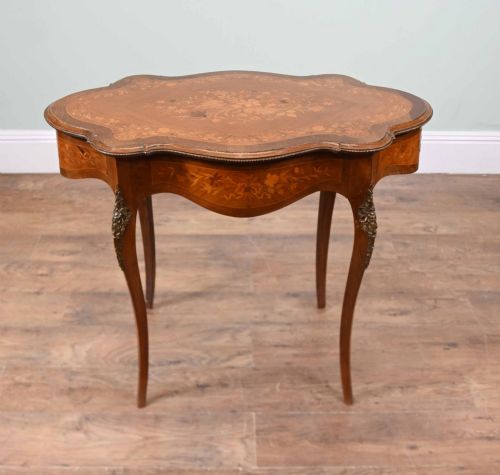
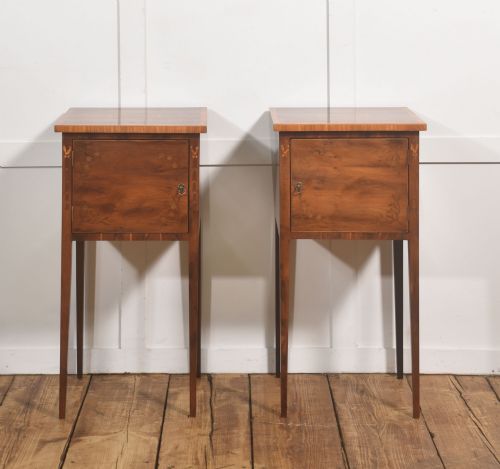
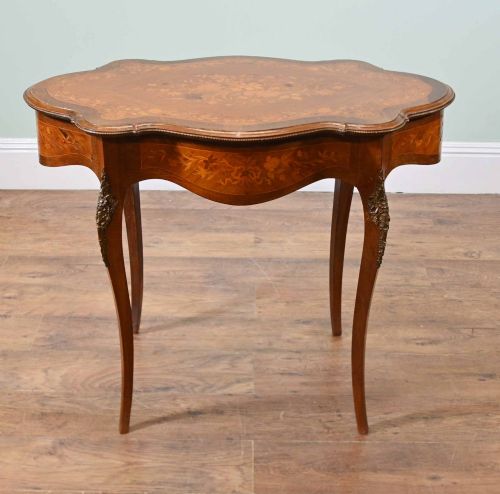
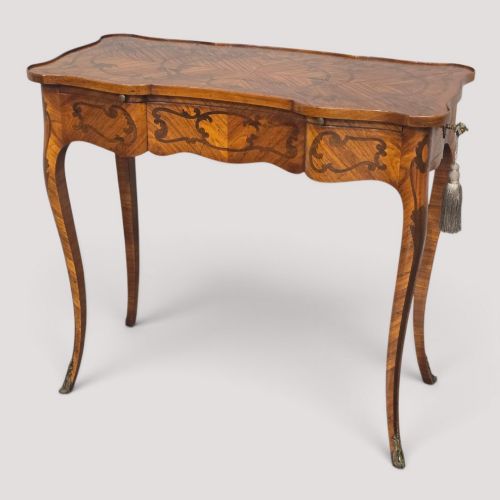
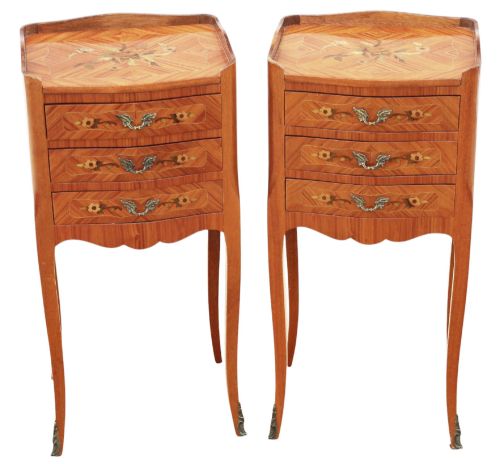
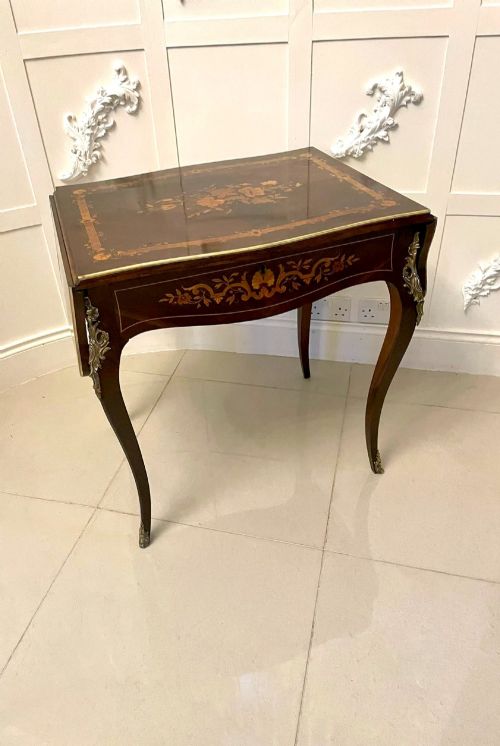
A vintage floral side table covers a diverse group of occasional furniture, bedside cabinets, writing desks and lamp tables produced from the nineteenth century into the twentieth. These pieces span Victorian, Edwardian and Art Deco eras, alongside French revivals influenced by Louis XV styles.
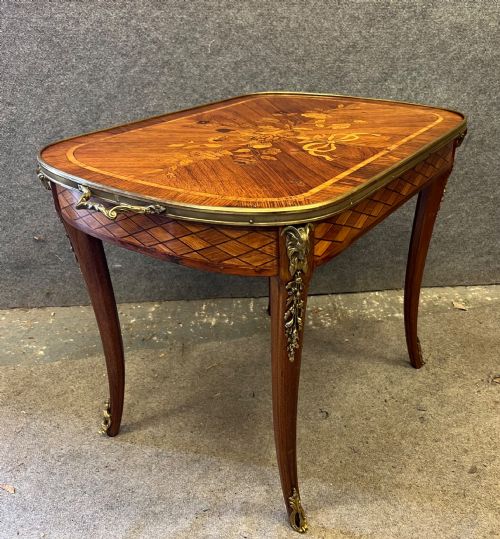
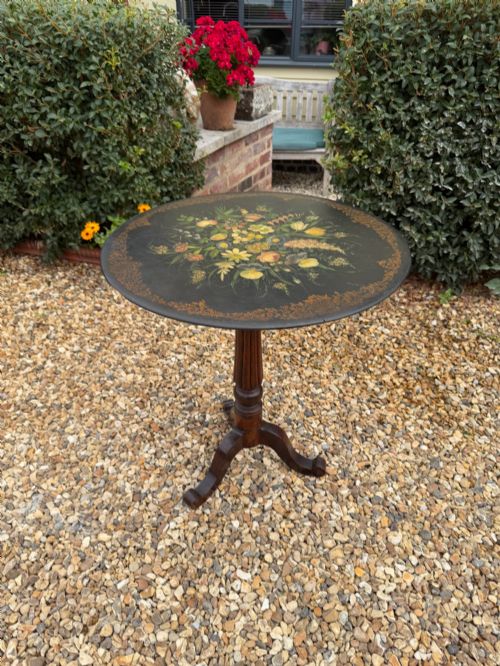
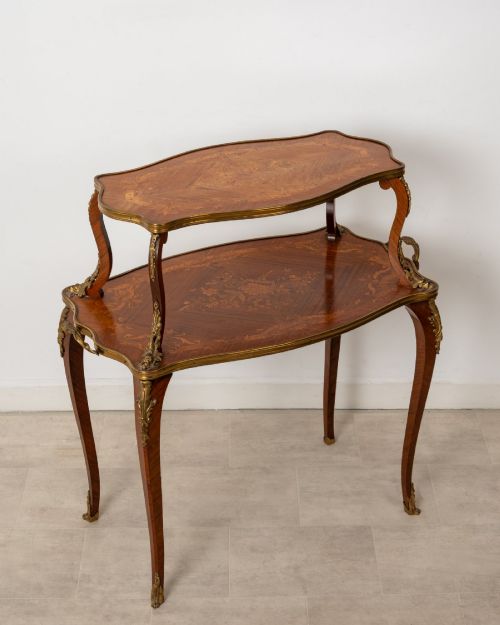
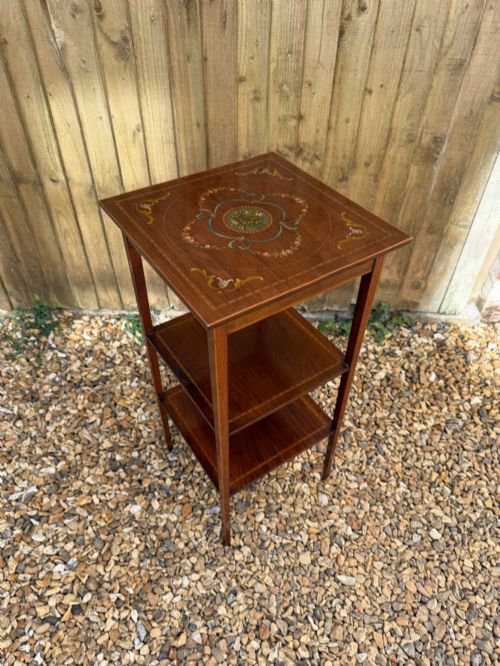
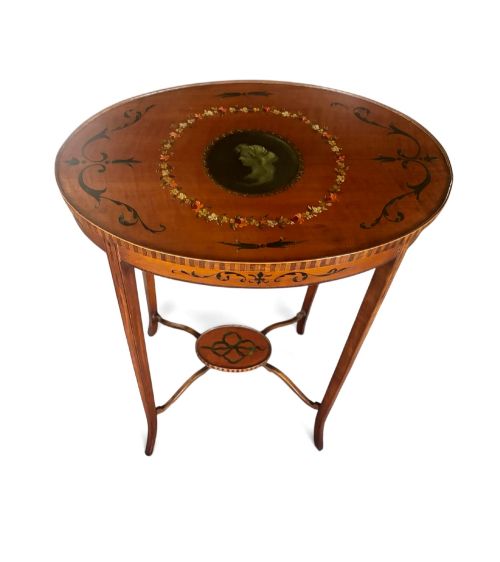
The most common examples on this page are French marquetry bedside tables and Edwardian occasional tables featuring floral marquetry or hand-painted botanical decoration. Formats range from circular wine tables and two-tier étagères to bow-fronted cabinets and drop-leaf tables.
Origins stretch across Britain, France, Italy, India and the Netherlands, reflecting global taste for inlaid wood and decorative painted surfaces during the nineteenth and early twentieth centuries.
Materials and technique
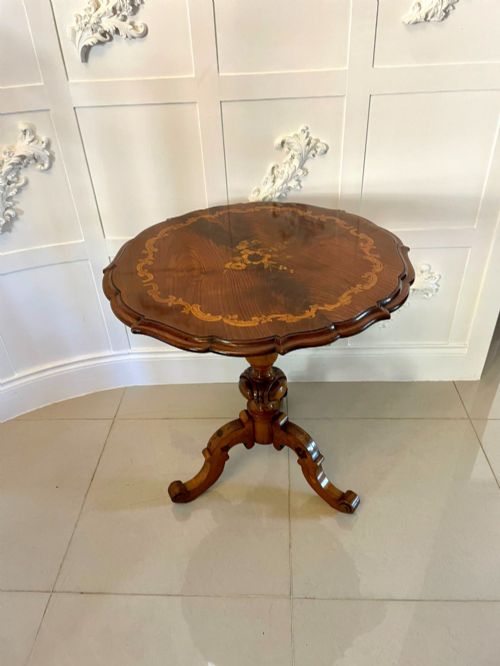
Cabinet makers utilised dense hardwoods such as mahogany, walnut, rosewood, satinwood and kingwood as foundations for intricate marquetry and veneer work. Individual floral motifs were hand-cut from contrasting timbers and assembled into detailed table tops and cabinet doors.
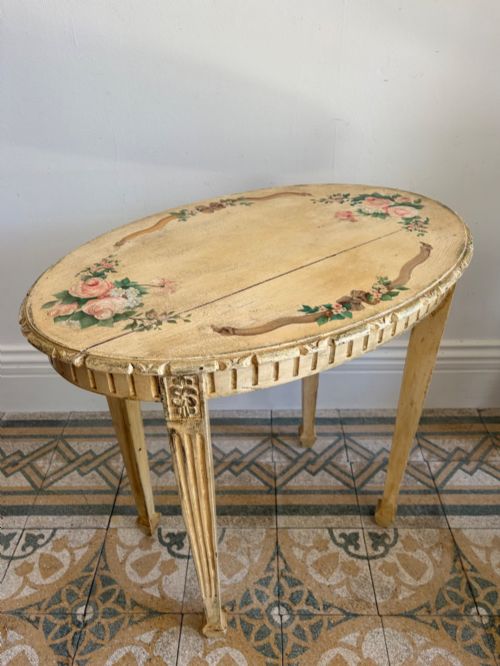
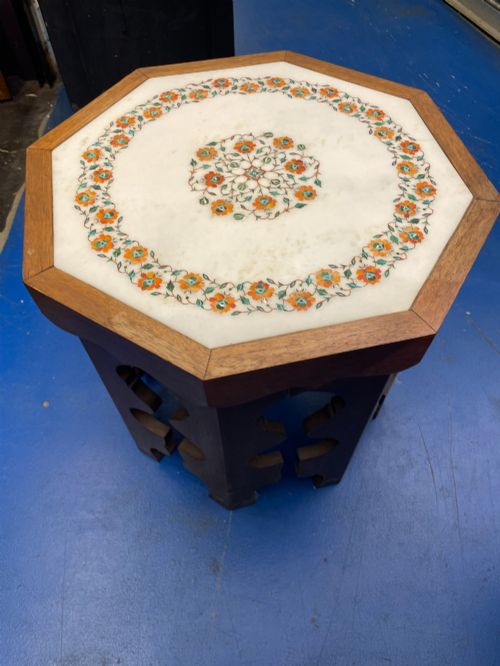
Alternative surfaces incorporate hand-painted decoration directly onto mahogany or satinwood, alongside carved bone inlays, toleware, slate, and inset marble tops. Supporting elements include ormolu mounts, brass details, and turned bobbin legs.
Vintage Floral Side Table Retail Price Guide 2026
Typical asking prices for vintage floral side table among the pieces listed under this phrase on Sellingantiques today, from the lower quarter to the upper quarter. They describe what is for sale here now, not the wider market.
Several tables swap traditional floral wood veneers for hand-painted birds, enamel glass and carved bone blooms.
Assessing quality
The standard of a vintage floral side table rests on the precision of its marquetry and the harmony of its proportions. Finer examples display tightly fitted wood veneers with natural grain variation rather than printed or superficial ornamentation.
Execution of hand-painted floral decoration and the crispness of carved details separate standard production items from finer pieces. Structural integrity, from well-joined drawers to stable legs, governs the longevity of each table.
Liberty & Co
The Vintage Floral Side Table Glossary
- Marquetry
- The art of applying decorative veneer pieces to a structure to form floral and geometric patterns. It relies on contrasting wood tones to create depth without additional pigments.
- Étagère
- A small open shelving unit or tiered side table designed for display. These pieces frequently feature shaped trays supported by slender uprights.
- Ormolu
- Gilded bronze mounts applied to furniture edges and legs during the eighteenth and nineteenth centuries. It adds metallic contrast to dark timber surfaces.
- Toleware
- Painted or lacquered sheet metal formed into decorative objects and table bases. It provides a smooth surface for detailed floral artistry.
- Chinoiserie
- European artistic interpretation of Chinese decorative motifs. It frequently appears on painted furniture featuring birds, flowers and garden scenes.
Vintage Floral Side Table: Frequently Asked Questions
Where should I place a vintage floral side table?
These compact pieces fit easily beside a sofa as a lamp table or next to a bed as a nightstand. Their decorative tops allow them to function independently as focal points in hallways or reception rooms.
Keep them away from direct heat sources and strong sunlight to protect delicate wood veneers and painted botanical details over time.
How do I clean an inlaid wooden table top?
Dust the surface regularly with a soft, dry cloth to prevent dirt accumulation in the grain and veneer joints. Avoid using abrasive household cleaners or excess water.
Apply a quality beeswax polish occasionally to nourish the timber and maintain a soft natural sheen across the marquetry.
How do I distinguish Edwardian pieces from Victorian ones?
Victorian examples generally feature heavier proportions, darker walnut or mahogany timbers, and dense, highly ornate carvings or deep marquetry. Edwardian designs tend to be lighter in scale, frequently utilising satinwood and more restrained floral decoration.
Cabinet construction methods and secondary woods inside drawers also help determine the period of manufacture.
Were these tables meant for daily use?
Most occasional tables and bedside cabinets were built for practical domestic tasks such as holding lamps, books or drinks. Their sturdy timber frames ensure they remain functional for everyday living.
Care should be taken with delicate marble tops and fine painted finishes to prevent scratching or moisture damage during regular use.