




Vintage Floral Settee
A vintage floral settee brings pattern and presence to a room, offering upholstered seating shaped by centuries of changing styles.
Vintage Floral Settee
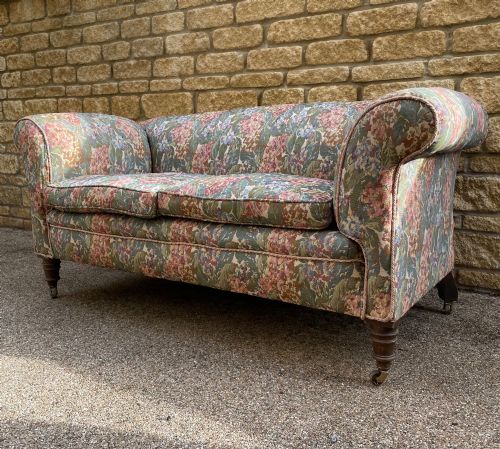
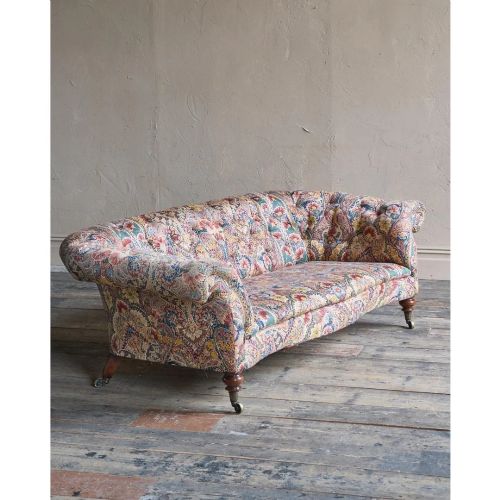
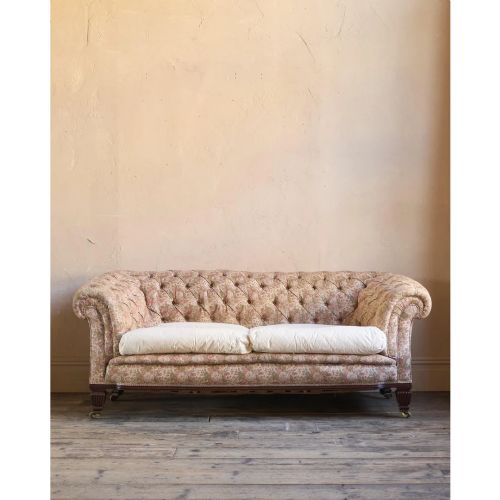
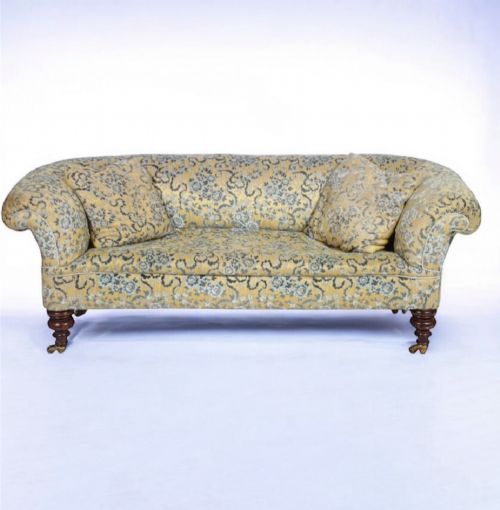
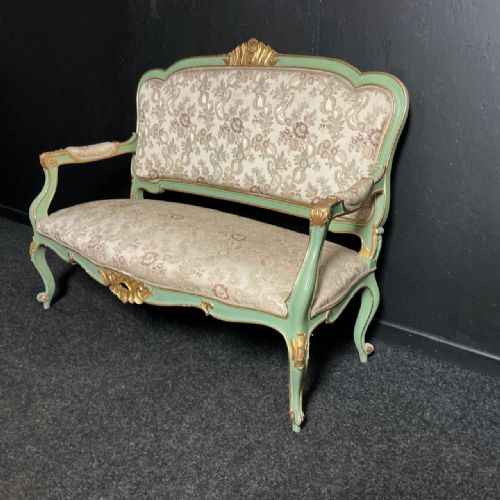
A vintage floral settee encompasses upholstered two-seater and three-seater sofas created across the nineteenth and twentieth centuries, including Victorian, Edwardian, and later periods. These seats take forms such as the Chesterfield, the Knowle sofa, and the camel back, reflecting historical revivals from Queen Anne to Louis XV.
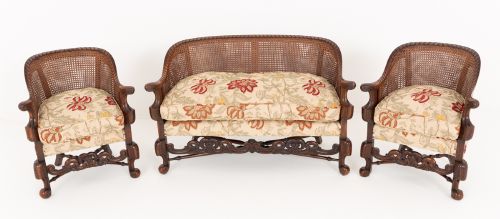
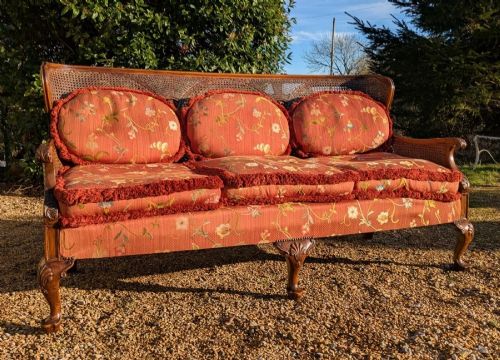
The pieces appearing on this page range from early nineteenth-century mahogany frames to twentieth-century painted French designs and Edwardian walnut models. Buyers will find seating paired with floral upholstery fabrics, damask, and ticking, alongside variations like drop arms and feather cushions.
Materials and Construction
The framework of these settees relies on timbers such as mahogany, walnut, and carved wood, providing structural support for the upholstered body. Brass fittings and detailed hand carvings frequently accent the exposed wooden legs and frames.
Upholstery relies on fabric, damask, and traditional ticking, sometimes filled with feather cushions or paired with leather elements. Craftsmen shaped these materials into sofas and canapés using techniques passed down through Victorian and Edwardian workshops.
Vintage Floral Settee Retail Price Guide 2026
Typical asking prices for vintage floral settee among the pieces listed under this phrase on Sellingantiques today, from the lower quarter to the upper quarter. They describe what is for sale here now, not the wider market.
Listings feature timber frames in mahogany and walnut, paired with upholstery in damask, fabric, and original ticking.
Judging Quality and Craftsmanship
Quality rests in the precision of the timber frame, where hand-carved details and dense woods like mahogany or walnut distinguish superior pieces. The integrity of the original joinery determines how well a settee holds its form over generations.
The distinction also lies in the upholstery and internal padding, where feather cushions and traditional fabric choices elevate the piece. Maker attribution plays a role, as demonstrated by workshops such as Howard and Sons and Gillows.
Howard and Sons·Gillows
The Vintage Floral Settee Glossary
- Chesterfield
- A large sofa with deep buttoned upholstery, rolled arms of the same height as the back, and traditional proportions. Originating in the nineteenth century, it remains a staple of formal seating.
- Canapé
- A decorative French-style sofa featuring an exposed wooden frame, often carved and painted. These pieces display distinct influences from Louis periods.
- Damask
- A reversible figured fabric woven on a jacquard loom, featuring patterns formed by contrasting warps and wefts. It frequently appears on period upholstery.
Vintage Floral Settee: Frequently Asked Questions
How do I identify a Victorian settee?
Victorian settees often feature dark carved woods like mahogany or walnut, substantial upholstery, and deep buttoning as seen on Chesterfield models. Their silhouettes draw on revival styles ranging from Gothic to Rococo.
Makers from this era, including Gillows, sometimes stamped their frames or casters, offering clear evidence of origin alongside period-specific construction methods.
Where should I place a floral settee?
A floral settee serves as a focal point in a living room, library, or bedroom, working well against neutral walls that highlight the patterned fabric. Placing the piece away from direct sunlight preserves the dyes in the upholstery.
Matching the settee with complementary armchairs creates a cohesive seating suite, while smaller two-seater models fit comfortably in studies or at the end of a bed.
How do I care for antique upholstery?
Maintaining antique upholstery requires gentle vacuuming with a soft brush attachment to remove dust without stressing delicate fibres. Avoiding direct heat and strong sunlight prevents the fabric and timber frame from drying out.
Professional cleaning is recommended for antique textiles, while leather elements benefit from occasional conditioning to maintain their suppleness.