



Vintage Floor Dinner Gong
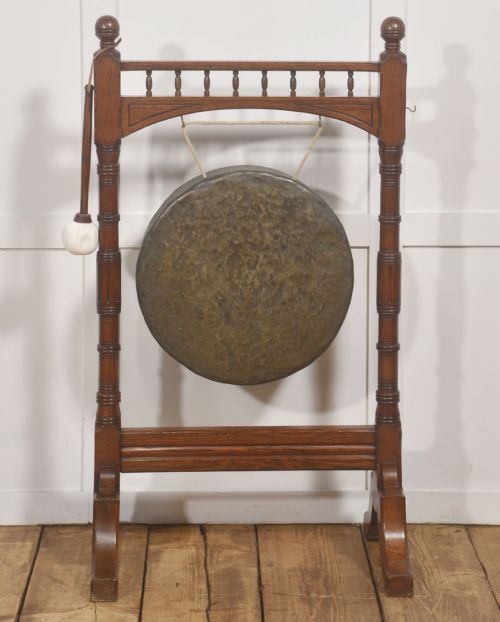
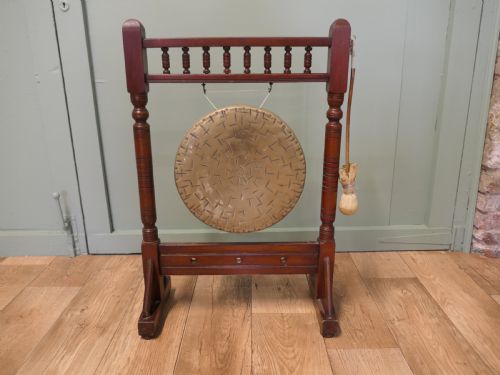
These vintage floor dinner gong pieces bring a rich acoustic presence to a hallway, formed in oak, mahogany, and brass across several periods.
Vintage Floor Dinner Gong
When you search for a vintage floor dinner gong, you find tall standing frames designed to hold a metal disc that sounds for meals. The pieces on this page span the 19th century, Victorian era, 1900, 1910, and 1930, showing how domestic summons evolved through different design movements.
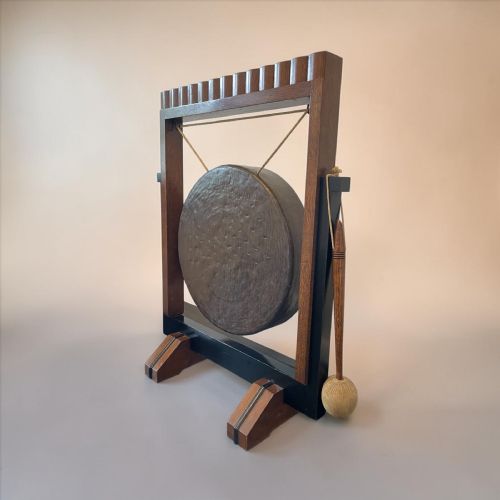
You are most likely to meet oak framed dinner gong examples, often built with brass or bronze plates. These range from heavy carved forms to cleaner Arts and Crafts lines, reflecting the domestic tastes of their respective decades.
How they were made
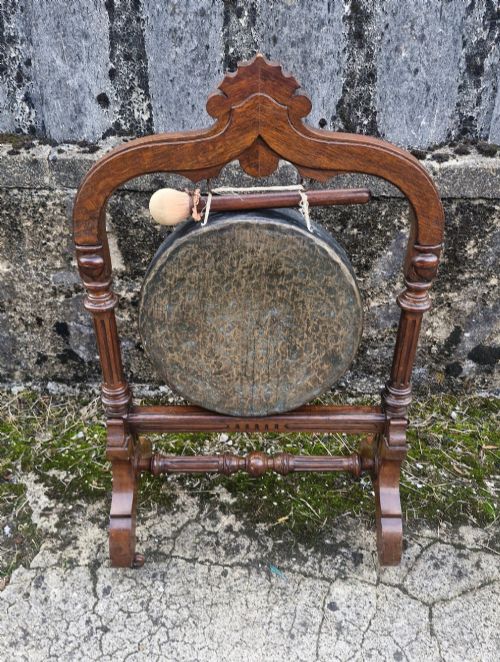
Cabinet makers constructed the standing frames using solid timbers such as oak, mahogany, and walnut, frequently employing carved decoration or Gothic revival arches. Wrought iron also appears as a structural framing material, providing rigid support for suspended metal.
The sound elements themselves utilise polished brass and bronze, hung from the wooden or iron structures by means of cord, rope, or fabric attachments. These suspension materials allow the metal plate to resonate freely when struck.
Vintage Floor Dinner Gong Retail Price Guide 2026
Typical asking prices for vintage floor dinner gong among the pieces listed under this phrase on Sellingantiques today, from the lower quarter to the upper quarter. They describe what is for sale here now, not the wider market.
Current listings span the 19th century through 1930, featuring oak, mahogany, walnut, brass, bronze, and wrought iron.
What varies in quality
The distinction between standard examples and superior pieces rests upon the ambition of the woodwork and the purity of the metal casting. Monumental carved oak frames and detailed Gothic revival styling demand greater joinery skill than simple turned supports.
Material combination also elevates a piece, particularly where heavy brass work integrates cleanly with figured timber or wrought iron elements. The integrity of the original hanging cord and the resonance of the gong plate complete the assessment.
The Vintage Floor Dinner Gong Glossary
- Gothic Revival
- An architectural and decorative style drawing on medieval forms, frequently seen in pointed arches and heavy timber carving on these frames. It became popular during the Victorian period.
- Arts and Crafts
- A design movement valuing honest construction and handcraftsmanship, visible in the simpler walnut and oak framed gongs. It prioritised utility and simple decorative expression.
- Bronze
- An alloy of copper and tin used for the striking plates, prized for its deep and resonant acoustic properties. It ages to a dark, stable patina over decades.
- Wrought iron
- Iron beaten and shaped by hand into structural frames, offering a sturdy alternative to timber. It provides industrial strength with slender profiles.
Vintage Floor Dinner Gong: Frequently Asked Questions
How do you sound a floor gong?
You strike the suspended metal plate using a dedicated mallet, usually tipped with leather or soft material to draw out the resonant tone.
Striking near the centre produces a deeper hum, while hitting closer to the edge yields a brighter initial note.
Where should a floor gong be placed?
These pieces suit large hallways, reception rooms, or entrance spaces where the tall wooden frames have sufficient room to stand clear of daily foot traffic.
Ensure the hanging cord remains secure and the frame stands firmly on a level floor to maintain stability.
How do I identify a Victorian gong?
Victorian examples often feature dark oak or mahogany timbers decorated with heavy carving, Gothic arches, or elaborate brass mountings.
Later 20th century pieces lean towards cleaner Arts and Crafts or Art Deco lines with less applied ornament.
Are the hanging cords original?
Cord, rope, and fabric suspension parts endure heavy wear and frequently require replacement over a century of use.
Collectors look for period-appropriate substitutes that match the original weight and material of the suspension setup.