

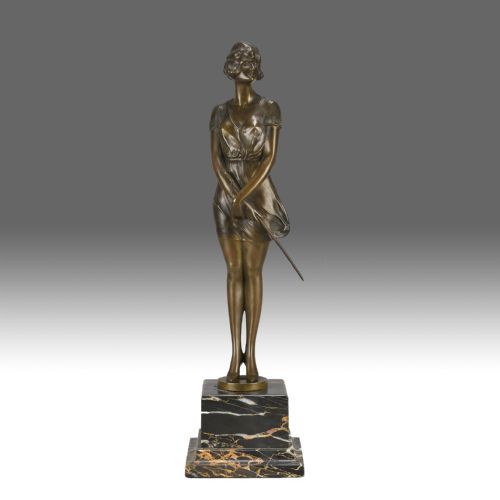


Vintage Flapper Statue
A vintage flapper statue captures the kinetic energy and modern spirit of the interwar period.
Vintage Flapper Statue
A vintage flapper statue embodies the distinct aesthetic of the 1920s and 1930s Art Deco movement, capturing the liberated feminine forms of the era. These figures depict dancers, musicians, and stylish women in dynamic poses.
The objects seen here range from substantial bronze studies and spelter table lighters to table lamps and porcelain figurines. Most pieces date from around 1920 to 1930, reflecting the height of European modernist design.
Makers translated contemporary fashion and dance into permanent media, producing decorative sculptures that served both artistic and functional roles in period interiors.
Materials and Methods
Foundry workers cast these figures in bronze or spelter, frequently applying a dark or colourful patination to enhance the metallic surface details. Spelter offered an economical alternative to bronze while allowing for intricate costume rendering.
Sculptors combined metal figures with bases carved from marble or onyx, anchoring the dynamic silhouettes to solid stone plinths. Certain sculptural lamp designs incorporated moulded glass elements to diffuse light.
Vintage Flapper Statue Retail Price Guide 2026
Typical asking prices for vintage flapper statue among the pieces listed under this phrase on Sellingantiques today, from the lower quarter to the upper quarter. They describe what is for sale here now, not the wider market.
Assessing Quality and Execution
The choice of base material influences the overall integrity of the piece, with richly veined natural marble and onyx indicating superior workshop standards over simple timber or composite plinths.
Bruno Zach·Zoldan Kovats·D.H. Chiparus·Royal Dux
The Vintage Flapper Statue Glossary
- Art Deco
- A design style spanning the 1920s and 1930s characterised by sleek lines, geometric forms, and stylised representations of human figures. It dominated decorative arts and architecture during the interwar period.
- Spelter
- A zinc alloy commonly utilised as a cost-effective substitute for bronze in decorative figures. It accepts patination well but possesses a softer structure than bronze.
- Patinated Bronze
- Bronze treated with chemical solutions to produce a specific surface colour or aged finish. This technique highlights the contours of the sculpted garment and hair.
- Study
- An exploratory or finished sculptural work created to examine a specific pose or subject. These pieces often predate larger production runs or stand as independent works.
Vintage Flapper Statue: Frequently Asked Questions
What materials make up these figures?
Sculptors and foundries utilised bronze, spelter, marble, onyx, alabaster, and glass to construct these decorative works. Metal figures frequently rest upon heavy stone bases.
Patination was commonly applied to bronze and metal surfaces to create darker, richer finishes that accentuated the details of period clothing.
How do I date a flapper sculpture?
Pieces typically originate from the 1920s or 1930s, aligning with the Art Deco movement. Stylistic cues in the clothing, hair, and footwear correspond directly to interwar fashion.
Signatures from known sculptors or foundry stamps inscribed on the base provide further chronological and geographical context.
Were these statues used as lamps?
Certain sculptural forms doubled as functional items such as table lamps and table lighters. Makers integrated lighting components or lighter mechanisms directly into the decorative bronze or spelter composition.
These functional pieces combined contemporary interior lighting needs with the sculptural aesthetics of the modern woman.
Where were these statues manufactured?
European workshops and major potteries produced these figures during the interwar decades. French foundries were particularly prolific in casting spelter and bronze female figures.
Export marks and ceramic stamps help identify the specific regional origins of porcelain and pottery examples.