

Vintage Five Stone Diamond Ring
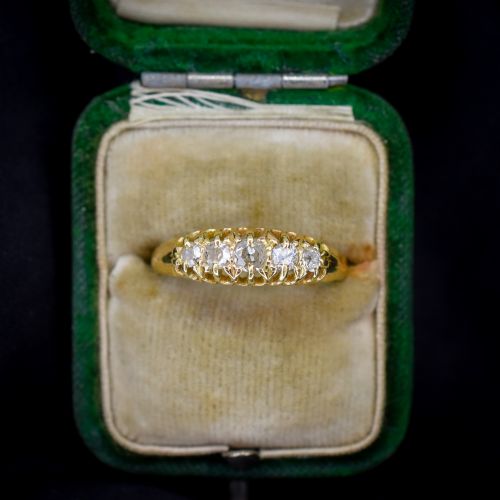
A vintage five stone diamond ring offers a graduated row of gems that sits low on the hand, bridging the Victorian, Edwardian, and Art Deco eras.
Vintage Five Stone Diamond Ring
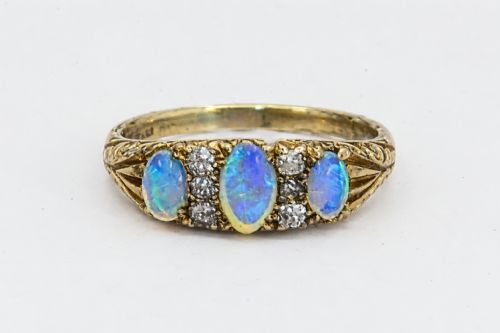
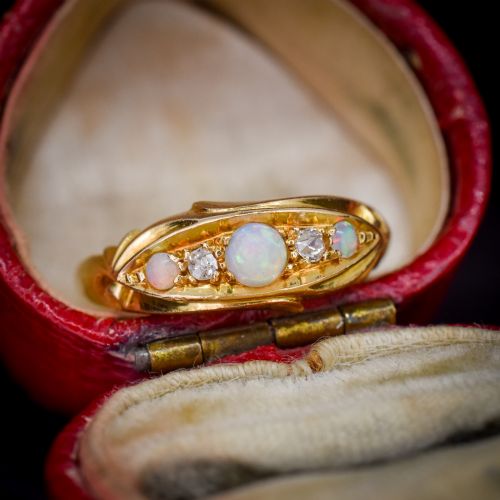
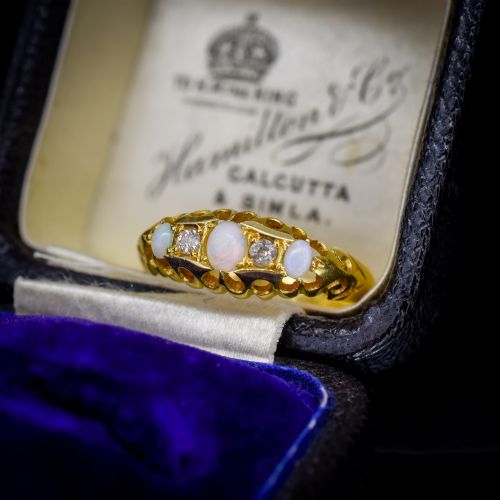
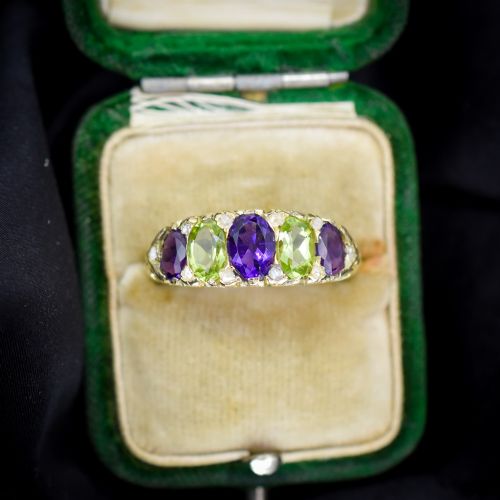
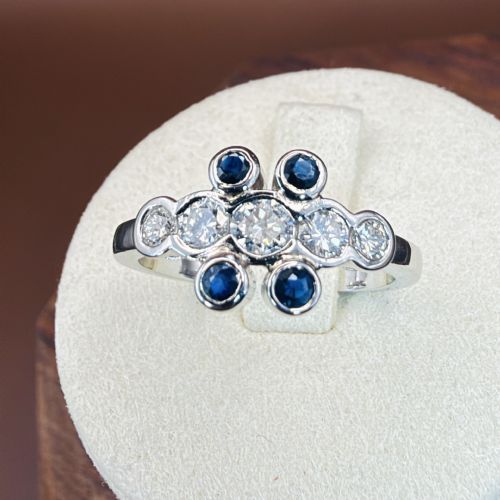
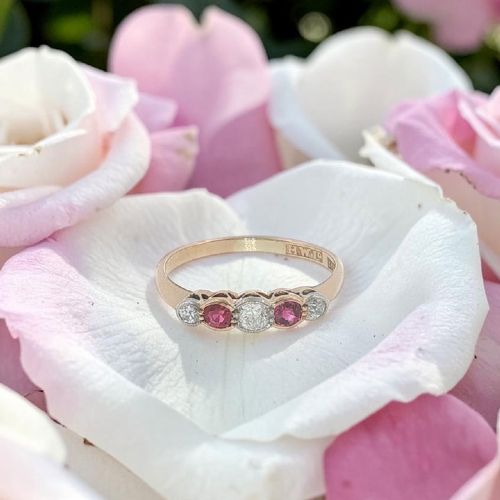
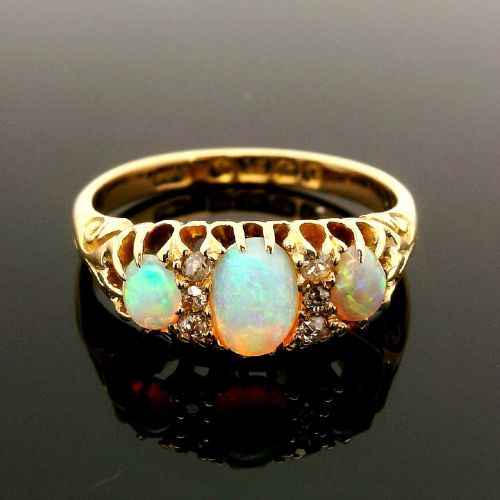
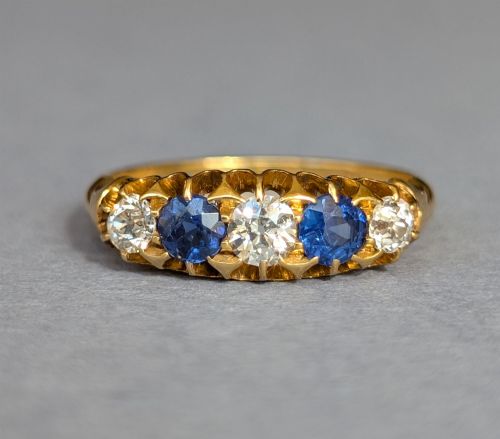
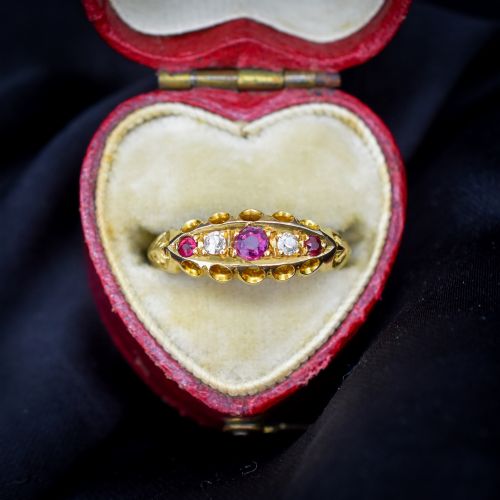
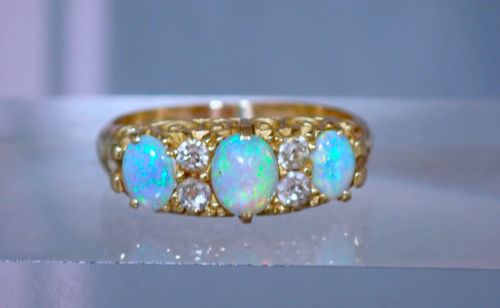
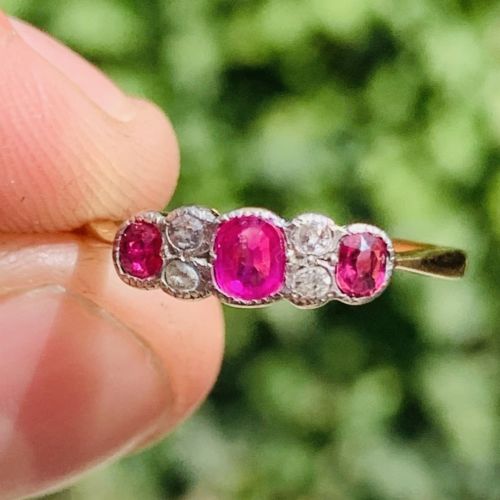
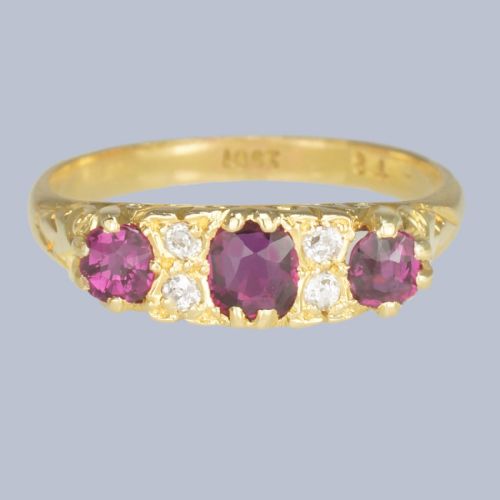
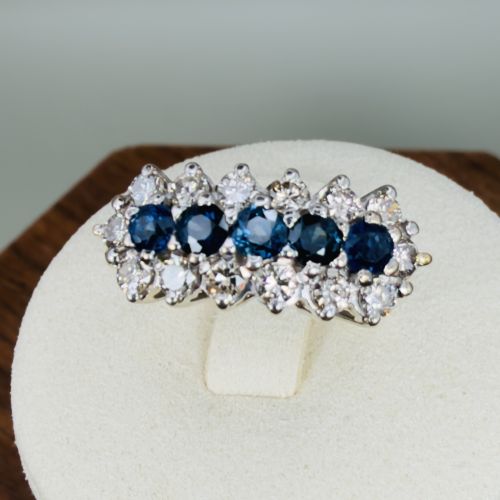
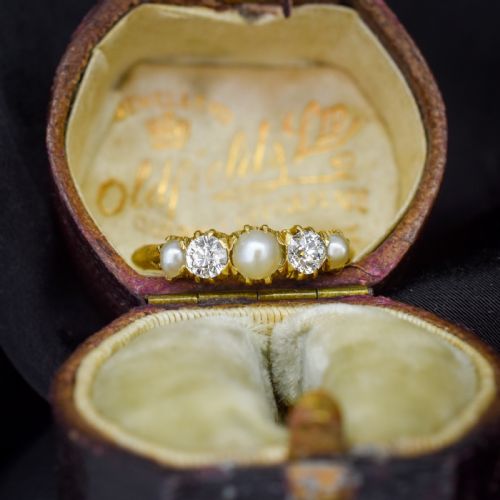
A vintage five stone diamond ring presents a sequential line of polished gems mounted across the finger, a form designed to catch the light from multiple angles. This selection spans from late Victorian and Edwardian examples to Art Deco and mid-century pieces, showing how the silhouette evolved from curved boat settings to geometric linear mounts. The classic iteration places five graduated diamonds in a row, though many variations alternate diamonds with rubies, sapphires, opals, or pearls.
How they were made
Goldsmiths shaped these mounts predominantly from 18ct yellow or white gold, frequently combining gold shanks with platinum settings to secure the stones safely. Older pieces utilise traditional yellow gold alloys, while later twentieth-century rings incorporate white gold or solid platinum to achieve a bright, uniform backdrop for the gems.
Stones in these rings display historic cutting styles, including old cut, old European cut, old mine cut, and rose-cut diamonds, shaped by hand before modern machinery standardised facets. Gemstones are held within boat-shaped navette mounts, claw settings, or low gallery arrangements that keep the stones flush against the finger.
Several rings preserve strict Victorian and Edwardian colour codes, pairing diamonds with bright opals and rich rubies.
What varies in quality
The overall proportion and graduation of the stones define the visual success of a five stone arrangement, where a balanced decrease from the centre stone to the outer edges creates harmony. Superior examples maintain secure, even claw work that holds each gem firmly without overwhelming the sparkle of the table facets.
Metal thickness and structural integrity across the shoulders and band separate heavily worn rings from those retaining their original heft. The clarity and colour uniformity of the accompanying diamonds and coloured gems dictate the distinction between standard commercial output and finer workshop pieces.
The Vintage Five Stone Diamond Ring Glossary
- Old cut
- A diamond cut by hand popular in the nineteenth and early twentieth centuries, featuring a smaller table, higher crown, and open culet. These stones produce a softer, candlelit sparkle compared to modern brilliant cuts.
- Boat ring
- A ring featuring a navette or boat-shaped setting that curves gently across the finger, often housing a row of stones flanked by engraved shoulders. This form was especially prevalent during the Victorian and Edwardian periods.
- Half hoop ring
- A ring design where stones are set in a continuous semi-circle across the top half of the band. It serves as a direct stylistic ancestor to modern channel-set and claw-set wedding and eternity bands.
- Trilogy ring
- A ring featuring three primary stones representing the past, present, and future, though listings occasionally apply related descriptive grouping terms to multi-stone gem configurations.
- Platinum
- A dense, durable white metal utilised extensively in twentieth-century jewellery, particularly during the Art Deco period, for securing delicate stone settings without adding bulk.
Vintage Five Stone Diamond Ring: Frequently Asked Questions
How do I wear a vintage five stone ring?
These rings sit low on the hand, making them suitable for daily wear either on their own or paired alongside a plain wedding band.
Because many older settings feature delicate claws or boat mounts, pairing them with a jagged modern eternity ring can cause friction against the side of the metal.
What is an old cut diamond?
An old cut diamond is a stone shaped by hand before modern geometric standards were established, resulting in chunky facets and a distinctive open culet at the base.
These diamonds were cut to maximise brilliance under low indoor lighting, giving them a warm, distinctive character distinct from modern brilliant-cut stones.
Can I resize a vintage ring?
Most gold and platinum rings from the Victorian, Edwardian, and Art Deco periods can be resized by a skilled jeweller who understands historic metalwork.
Care must be taken near the shoulders and hallmarks so that resizing does not compromise the structural integrity of the settings or obscure stamped assay marks.
How do I date a British antique ring?
British rings often feature hallmarks stamped inside the band, including sponsor's marks, purity standards like 18ct, and assay office symbols indicating towns such as Chester or Birmingham.
Date letters stamped alongside these hallmarks allow collectors to pinpoint the exact year the piece was tested and entered the market.