







Vintage Fish Oil Painting
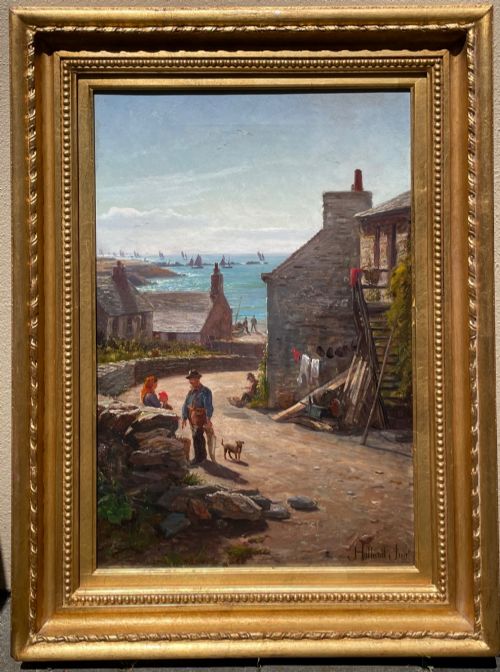
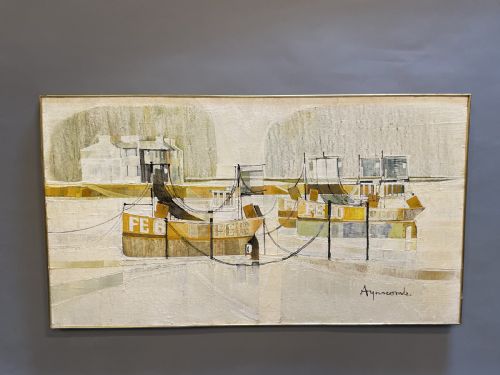
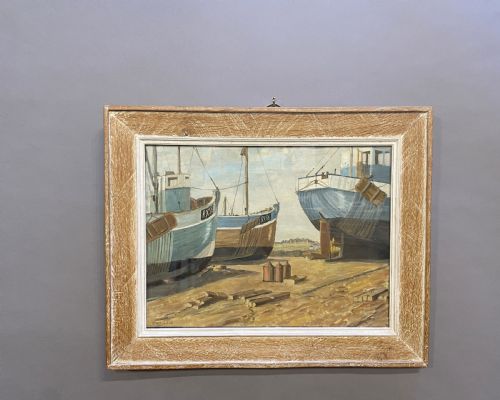
A vintage fish oil painting captures coastal life, maritime vessels, and river scenes through traditional brushwork.
Vintage Fish Oil Painting
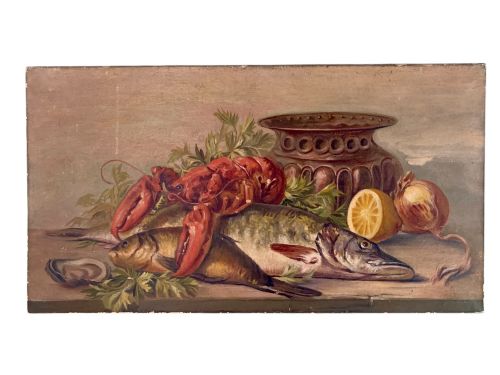
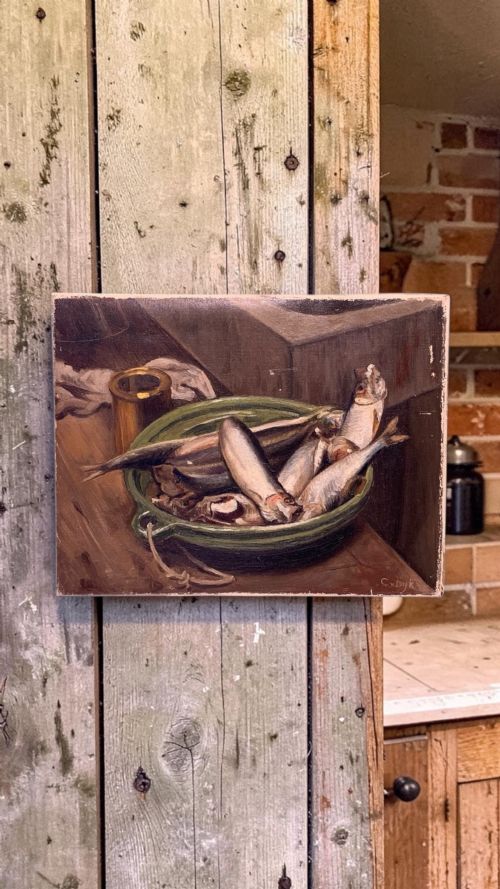
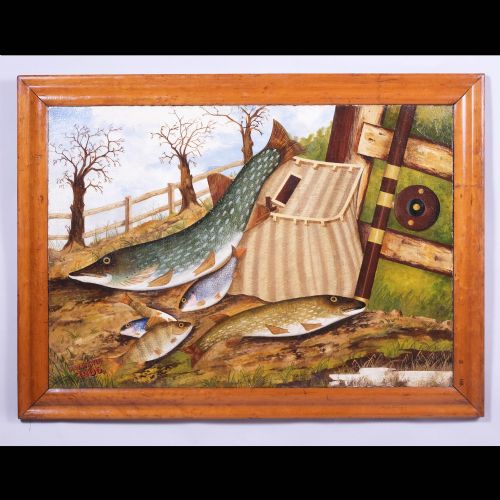
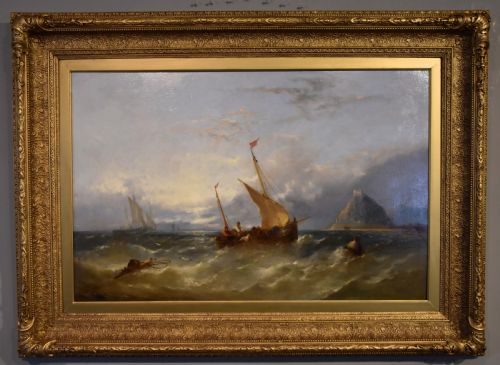
A vintage fish oil painting encompasses coastal scenes, harbour views, and still life compositions depicting catches like lobsters, salmon, and pike. These works capture maritime subjects, fishing boats, and angling scenes across various historical periods.
The pieces appearing most frequently span the Victorian era through the mid-20th century, representing British, French, and Scandinavian schools. Buyers encounter works executed on canvas, board, and panel, ranging from intimate studies to large framed landscapes.
Maritime realism, Impressionism, and post-Impressionism dominate the stylistic output of these coastal and riverine depictions. Creators utilised oil paint to record the changing light on water, harbour walls, and working vessels.
Materials and technique
Artists applied oil paint to prepared supports of woven canvas, rigid wooden panels, or compressed board, often priming the surface to receive the pigment. Pigments were manipulated with brushes and palette knives to build texture, particularly in rendering the churning sea, wooden boat hulls, and skies.
Frames frequently consist of gilt wood or gold leaf mouldings that complement the palette of the marine and landscape scenes. The combination of durable oil media and solid wood supports has ensured the survival of these coastal works across decades.
Several canvases record the exact moment a northern pike breaks the surface tension, caught in a struggle.
Assessing quality and execution
Quality rests upon the artist's handling of light, atmospheric perspective, and the fluid movement of water and vessels. Superior examples display confident brushwork and precise tonal control that convey the atmosphere of the coast or riverbank.
Compositional balance and the accurate depiction of maritime architecture or anatomy distinguish accomplished works from routine decorative paintings. The preservation of the original paint surface and the appropriateness of the surrounding frame further influence the standing of a piece.
Kenneth Cozens·George Graham·William Henry Williamson·Florence Adelina Hess·John Holland·Edward Matthew Elliott·Charles Napier Hemy·Gyrth Russell·George SHAW·T.S. Wallis·George Gregory·John Bell·Gustave de Breanski·George Henry Knight·William Lambert Bell·Owen Bowen·Antonio Godoy·Hendrik Yan Wolter·W.E. Barrington-Browne·James Ward·Emil Ekman·Søren Christian Bjulf·John Riddle
The Vintage Fish Oil Painting Glossary
- Canvas
- A heavy woven fabric stretched across a wooden frame to serve as a painting support. It provides a textured surface favoured by artists working in oil.
- Board
- A rigid flat sheet of wood or compressed material used as a base for painting. It offers a stable alternative to woven fabric.
- Gilt wood
- Wood coated with a thin layer of gold leaf or metallic gilt paint. This finish defines traditional framing around historical oil paintings.
- Maritime realism
- An artistic style dedicated to the accurate portrayal of the sea, ships, and coastal communities. Practitioners focused on detailed observation of maritime subjects.
- Post-Impressionism
- A predominantly French art movement extending Impressionism while rejecting its limitations. Artists emphasised symbolic content and heavier weight in paint application.
Vintage Fish Oil Painting: Frequently Asked Questions
What subjects do these paintings feature?
These works depict maritime scenes, working fishing boats in harbours, coastal villages, and river landscapes. Still life compositions featuring fish or lobsters also appear alongside angling scenes.
Subjects range from calm coastal inlets to stormy seas, reflecting the varied experiences of fishermen and coastal communities.
How do I date an oil painting?
Dating relies on stylistic evidence, signatures, costume details in figures, and the construction methods of the canvas or frame. Victorian and Edwardian works often bear distinct academic or impressionistic traits.
Examine the reverse of the board or canvas for inscriptions, artist stamps, and labels left by historical framers or retailers.
Where were these marine scenes painted?
Artists worked across prominent British fishing ports such as St Ives, Cornwall, Brixham, and Folkestone, as well as locations on the Isle of Man. French and Scandinavian coastal communities also inspired many regional schools.
Painters frequently travelled to active harbours to capture the daily routines of local fishermen and their vessels.
How should I display an oil painting?
Hang paintings away from direct sunlight and sudden temperature fluctuations to protect the oil paint and canvas support. Ensure the wall fixings securely support the weight of the framed artwork.
Keep pieces clear of heat sources and damp environments to maintain the condition of both the painting and its wooden frame.