





Vintage Fish Knife
These vintage fish knife pieces are specialised dining implements designed for the table, offering a glimpse into formal nineteenth and twentieth century dining customs.
Vintage Fish Knife
When you search for a vintage fish knife, you are looking at specialised implements designed for serving and eating fish courses during formal meals. The examples on this page span the Victorian and Edwardian eras through to the mid century period, reflecting changing dining habits over time.
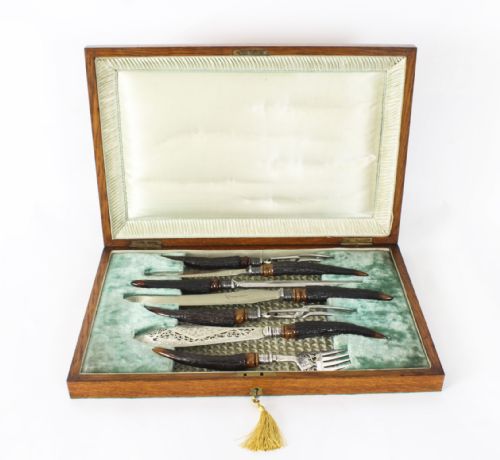
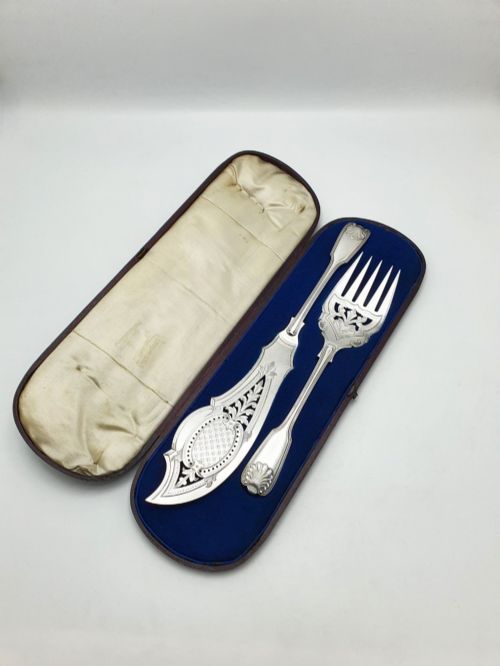
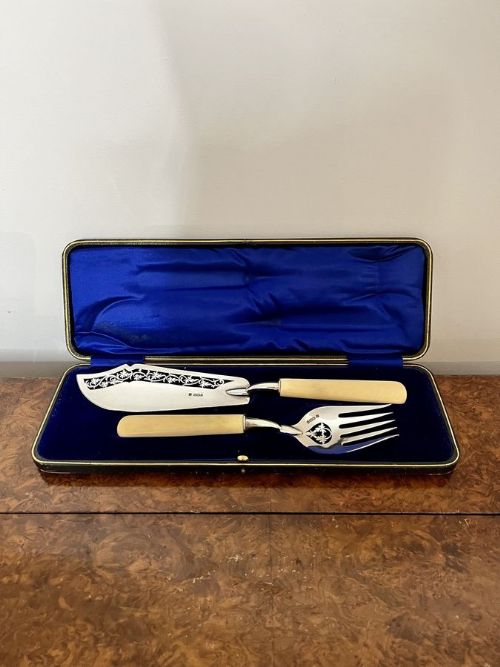
You are most likely to meet silver plated or sterling silver serving sets featuring engraved blades and organic handles made from antler, horn, or wood. Some pieces arrive as single servers, while others form part of larger cased canteens or specific carving sets.
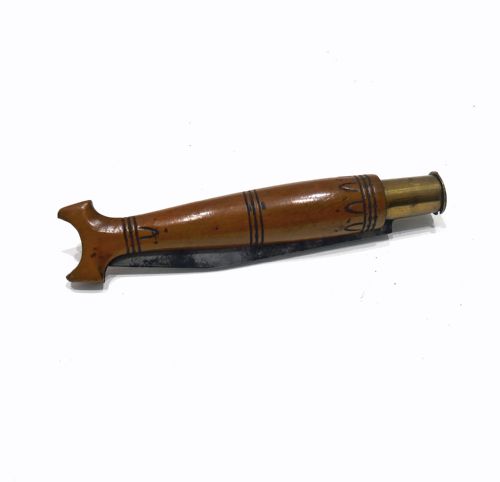
The selection also includes unusual French fruitwood pocket knives shaped like fish and twentieth century designs by makers such as Georg Jensen. These diverse forms demonstrate that while the function remains tied to the dining table, the materials and decorative styles vary considerably.
How they were made
Makers utilised silver and silver plate for blades and slices, often applying detailed hand engraving depicting aquatic themes, foliage, or hunting scenes. Steel and brass also appear in functional or structural roles within these sets.
Handles were shaped from natural materials including fruitwood, oak, antler horn, and plain horn, secured to the metal components with pins or ferrules. Velvet linings frequently appear inside the fitted presentation cases that protect these boxed sets.
Vintage Fish Knife Retail Price Guide 2026
Typical asking prices for vintage fish knife among the pieces listed under this phrase on Sellingantiques today, from the lower quarter to the upper quarter. They describe what is for sale here now, not the wider market.
Materials recorded across the inventory include silver, silver plate, steel, brass, velvet, wood, fruitwood, and antler horn.
What varies in quality
The distinction between standard items and superior examples lies in the depth and clarity of the blade engraving and the quality of the natural handle materials. Antler and horn handles chosen for balanced grain and comfortable weight indicate higher production standards.
Presentation matters significantly in this category, with original oak cases retaining fitted velvet interiors commanding greater interest. The presence of matching sets by recognised retail houses or silversmiths elevates the standing of a piece compared to mismatched components.
Georg Jensen·Waring & Gillows
The Vintage Fish Knife Glossary
- Fish server
- A matched pair comprising a large knife and fork designed specifically for portioning fish at the table. They frequently feature wide, pierced blades decorated with engraved scrollwork.
- Silver plate
- A base metal, such as copper or nickel silver, coated with a thin layer of pure silver through an electrochemical or mechanical process. This technique provided the appearance of solid silver at a lower cost.
- Antler horn
- The shed bone material of deer utilised for knife handles due to its textured grip and durability. Craftsmen shaped and polished the natural contours to fit the hand.
- Canteen
- A fitted wooden box or chest housing a complete set of cutlery or serving pieces in designated slots. Oak was a common timber choice for these protective enclosures.
Vintage Fish Knife: Frequently Asked Questions
Were fish knives always made of solid silver?
Many historical examples utilised silver plate over a base metal rather than solid silver to keep costs manageable while maintaining a bright appearance on the dining table. Steel and brass also appeared in specific components.
Solid sterling silver versions do exist, usually bearing clear hallmarks that indicate the metal purity, assay office, and year of manufacture.
Can I use these vintage fish sets for everyday dining?
While these pieces were built for functional use, their age and delicate organic handles mean they benefit from careful handling and hand washing rather than automated dishwasher cycles. Storing them in fitted boxes or lined drawers protects them from knocks.
Many collectors prefer to use them for special occasions or display them within oak cased canteens alongside other period tableware.
How do I date a Victorian fish serving set?
Examine the style of the engraving on the blade, the shape of the fork tines, and the type of handle material, as aesthetic preferences shifted between the early and late nineteenth century. Maker marks and silver hallmarks, where present, provide precise dates.
The presence of original velvet lined oak cases can also offer clues regarding the period of manufacture and retail origin.