
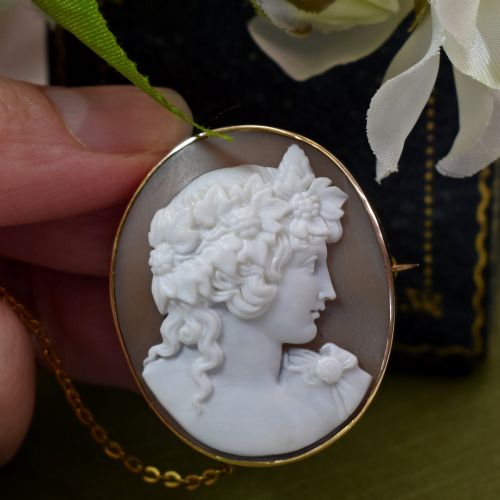


Vintage Fine Jewellery Brooch
When you search for a vintage fine jewellery brooch, you meet a collection spanning Victorian, Edwardian, and mid-century periods designed to pin securely to lapels and fabrics.
Vintage Fine Jewellery Brooch
The selection includes pendant brooches that adapt to necklaces alongside traditional pinned forms. Pieces originate from diverse workshops, demonstrating the changing aesthetic priorities of jewellers from eighteen sixty through to nineteen sixty-nine.
Distinctions in construction and design
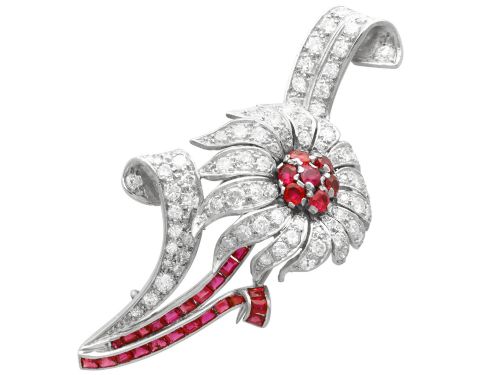
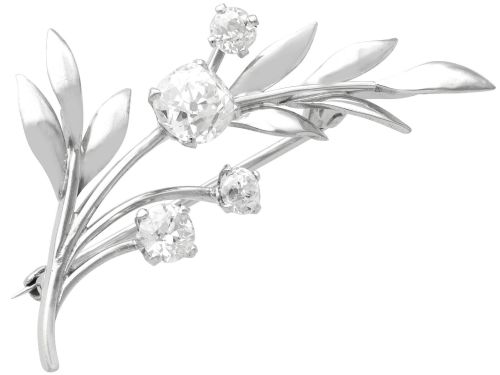
Quality rests in the precision of the metalwork, such as fine hand-piercing on gold hearts and the tight tolerances of millegrain borders on platinum mounts. Superior items display well-matched gemstones with clean colour distribution and secure, even claw work.
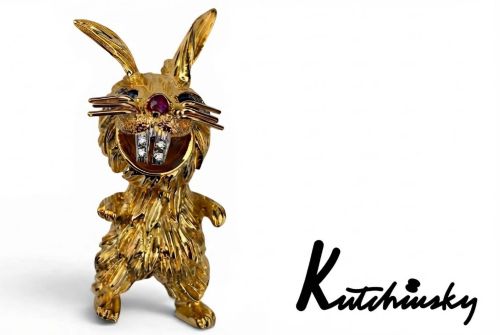
Attribution to documented makers such as Cartier, Kutchinsky, Gubelin, or E. Wolfe and Co. elevates a piece through known provenance. The complexity of the subject matter, from multi-gem animal figures to intricate floral spray motifs, dictates the level of artisan skill involved.
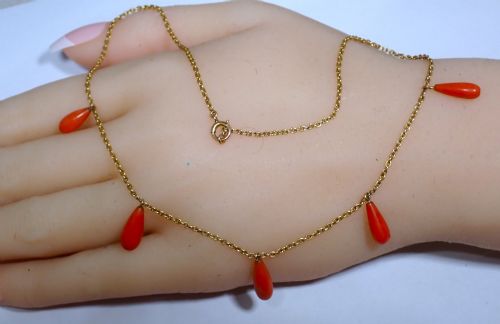
Listings incorporate platinum, gold in multiple purities, and silver, paired with diamonds, rubies, sapphires, emeralds, pearls, garnets, and turquoise.
Kutchinsky·Gubelin·Cartier Paris·E. Wolfe and Co.·Asprey
The Vintage Fine Jewellery Brooch Glossary
- Bar brooch
- A slender horizontal pin format popular during the Edwardian and Art Deco periods, often featuring central gem clusters.
- Pendant brooch
- A dual-purpose jewel fitted with a hidden loop so it functions both pinned to clothing and suspended from a chain.
- Millegrain
- A decorative jewellery technique creating a border of tiny raised metal beads along the edge of a setting.
- Pavé
- A setting style where small gemstone facets are positioned closely together and held by minimal metal beads to present a continuous surface of stones.
- Cameo
- A relief carving produced on materials such as shell or stone, frequently mounted in a gold frame as a wearable portrait.
Vintage Fine Jewellery Brooch: Frequently Asked Questions
How do I wear a pendant brooch?
These versatile pieces include an integrated loop or bail on the reverse, allowing you to slide them onto a neck chain. Simply remove or secure the pin mechanism before threading a chain through the mount.
When worn as a brooch, the same loop remains discreetly hidden behind the garment. This dual function was common in Edwardian and Victorian fine jewellery design.
What metals are typical in vintage brooches?
Yellow gold in varying purities, alongside white gold, platinum, and silver, forms the basis of these items. Platinum gained popularity in the early twentieth century for its strength in delicate Art Deco settings.
Earlier Victorian pieces rely heavily on yellow gold, while mid-century creations often return to warmer gold tones alongside white metals. Selection depends entirely on the prevailing fashion of the manufacturing decade.
How do I date an antique brooch?
Dating relies on material combinations, gemstone cuts, and stylistic markers such as geometric Art Deco lines or Victorian natural motifs. Metal purity hallmarks and maker signatures provide definitive historical reference points.
Examining the pin mechanism and clasp construction also helps determine the era of manufacture. Older items often feature C-clasps or longer pins extending beyond the frame.
Are animal novelty brooches collectable?
Animal pins depicting creatures like frogs, ducks, poodles, and marlin fish represent a distinct sub-genre of mid-century fine jewellery. Workshops used textured gold and pavé gemstones to render realistic or whimsical forms.
Signed examples from established makers attract particular attention from collectors. Their playful designs offer insight into post-war jewellery trends.