




Vintage Farming Wall Art
These vintage farming wall art pieces capture rural life through traditional oil paintings and watercolours spanning the Victorian era to the mid-twentieth century.
Vintage Farming Wall Art
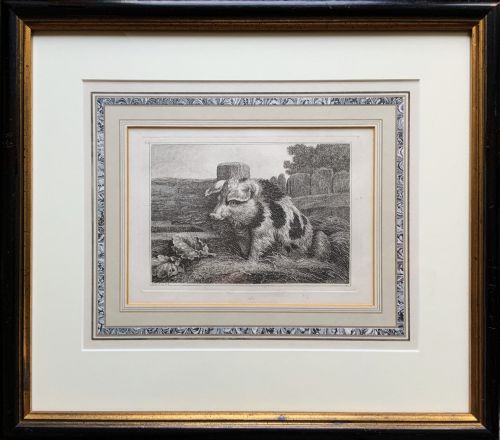
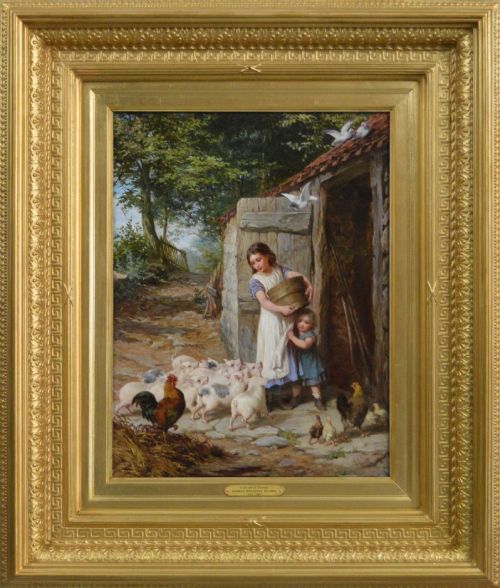
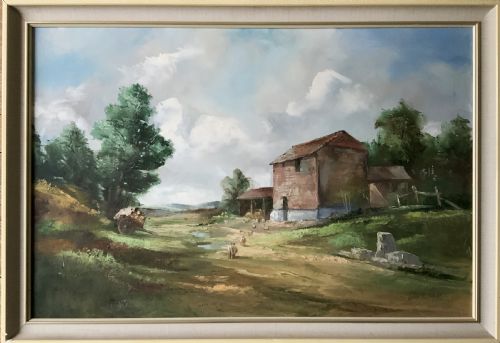
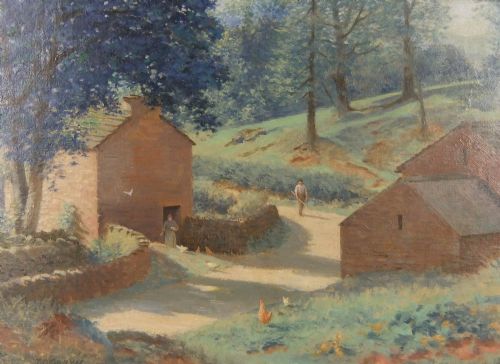
When searching for vintage farming wall art, buyers encounter painted depictions of rural scenes, including shire horses ploughing, livestock in pastures, and farmyard chores. The selection on this page relies heavily on original works dating from the nineteenth century through the mid-twentieth century.
The most common formats met here are framed oil paintings on canvas or board and delicate watercolours on paper. These pieces document agricultural traditions, farm buildings, and the British countryside across various rural periods.
Subjects range from detailed depictions of dairy maids and harvest teams to expansive landscapes by regional artists. Buyers find both intimate studies of farm animals and broad panoramic views of fields and barns.
Materials and construction
Artists painted these scenes using oil paint or watercolour applied to canvas, wood panels, or heavy paper. Oil on canvas pieces often display textured brushwork, while watercolours rely on thin washes to capture natural light in rural landscapes.
Frames play a significant part in the physical composition, utilising wood such as ebonised mouldings or traditional gilt surrounds. Many works retain their period framing, which protects the paper or canvas and frames the rustic subject matter.
Vintage Farming Wall Art Retail Price Guide 2026
Typical asking prices for vintage farming wall art among the pieces listed under this phrase on Sellingantiques today, from the lower quarter to the upper quarter. They describe what is for sale here now, not the wider market.
Listings feature works spanning the nineteenth century through the 1960s, executed in oil and watercolour on canvas, paper, and wood.
Factors determining quality
Quality rests on the artist's ability to render anatomical accuracy in animals and figures, alongside atmospheric depth in the landscape. Stronger pieces demonstrate confident brushwork and a balanced composition rather than rigid, formulaic depictions of farmyards.
The preservation of the paint surface and paper integrity separates superior examples from lesser works. Original framing and well-documented provenance from studio sales or known exhibitions further elevate the standing of a piece.
George Augustus Holmes·John Frederick Herring Jnr·Ernest Pile Bucknall·John Atkinson·George Soper·Herbert Royle·Arthur Winter Shaw·John Frederic Greenwood·Owen Bowen·Claude Cardon·Rowland Henry Hill·Gustav Goemans·John R K Duff·John Percy Cooke·Samuel Towers·Jack R Mould·W A Clark·T B Garvie·Nora Munro Summers·Fred C Jones·Kershaw Schofield·Charles James Adams·J E Hood
The Vintage Farming Wall Art Glossary
- Oil on Canvas
- Pigment mixed with drying oil applied to stretched fabric. This medium allows for rich colour layering and textured details.
- Watercolour
- Pigment suspended in a water-based solution applied to paper. It creates luminous, transparent effects suited to pastoral scenes.
- Board
- A rigid wooden or composition panel used as a painting surface instead of canvas. It provides a stable base for twentieth-century works.
- Gilt
- A thin layer of gold leaf applied to wooden frames. It adds a decorative border that enhances the colours within the artwork.
- Shoulder Yoke
- A curved wooden device carved for carrying buckets or milk pails. This functional agricultural object represents dairy work.
Vintage Farming Wall Art: Frequently Asked Questions
What subjects appear in these farming paintings?
The works depict traditional agricultural life, including ploughing horses, cattle in pastures, farmyard poultry, and workers harvesting crops. Scenes often feature historic farm buildings, rolling hills, and pastoral landscapes.
Artists focused on daily rural routines, capturing animals and labourers during different seasons across the nineteenth and twentieth centuries.
Are these artworks original pieces?
The collection consists of original hand-painted works, including oil paintings on canvas or board and watercolours on paper. Each piece represents a unique creation by an individual artist rather than a modern reproduction.
Signatures, studioprovenance, and period framing often accompany these historical artworks, confirming their authenticity and age.
How should I display vintage farming art at home?
These pieces suit traditional and rustic interiors, working well in kitchens, dining rooms, or living spaces with natural wood finishes. Pairing them with complementary period frames enhances their historical character on the wall.
Protect the artworks from direct sunlight to preserve the pigments in both the oil paints and delicate watercolours over time.
How do I identify the date of a painting?
Dating relies on stylistic clues, artist signatures, framing methods, and materials such as canvas or board preparation. Victorian works often feature darker, more dramatic palettes, while twentieth-century pieces lean towards impressionist or brighter rural realism.
Examine the back of the frame or stretcher bars for artist inscriptions, gallery labels, or studio sale stamps that provide further historical context.