
Vintage Farmhouse Dining Table
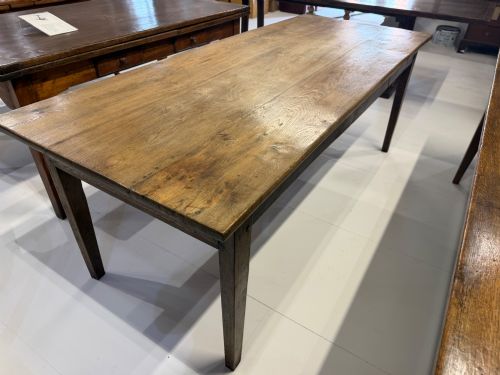
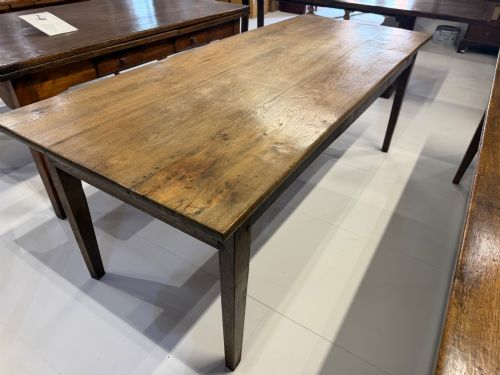
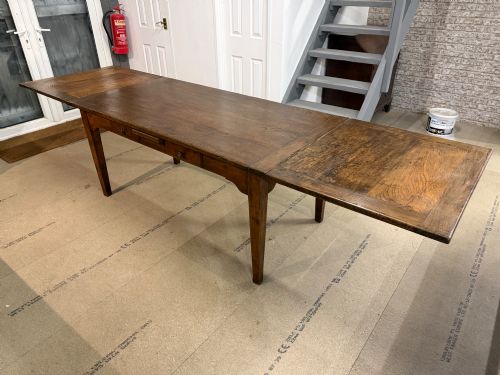
A vintage farmhouse dining table brings honest character to a room, offering sturdy timber surfaces built for daily family life.
Vintage Farmhouse Dining Table
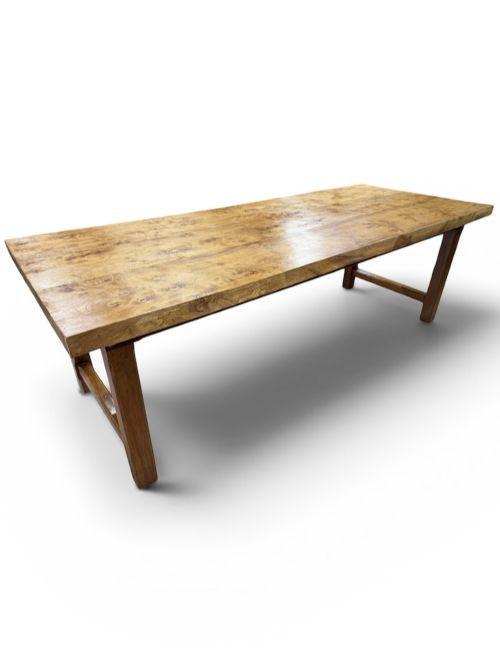
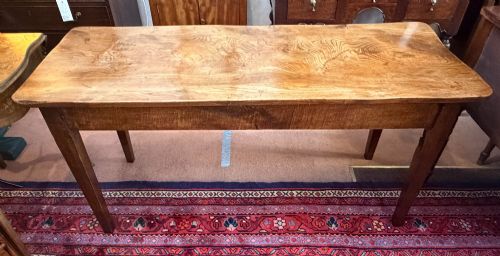
When you search for a vintage farmhouse dining table, you find heavy, functional timber tables designed for daily meals and kitchen work. Most examples on this page date from the nineteenth century or the early decades of the twentieth century, reflecting standard working furniture of those eras.
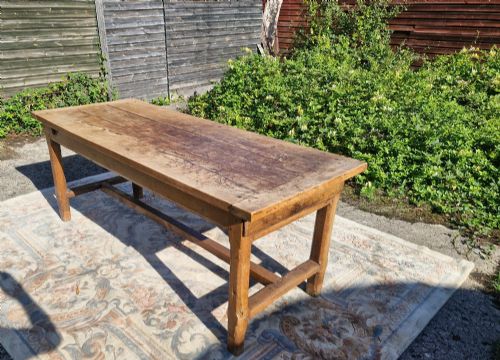
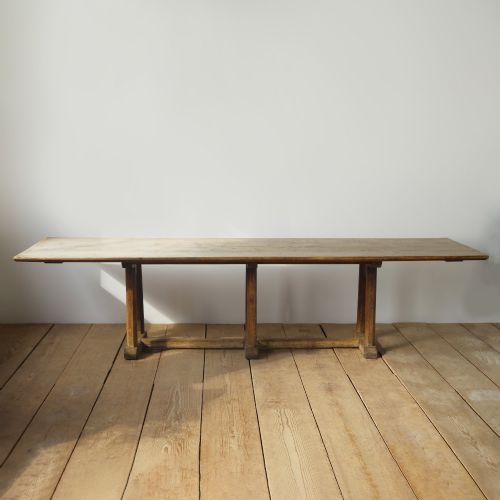
The styles range from English Victorian country pieces to French provincial and rustic country designs. These tables often appear as kitchen tables, refectory tables, or harvest tables, constructed primarily to seat multiple people comfortably for dining.
Many of the listed pieces show regional traits, including Welsh oak tables and French farmhouse forms. Their proportions vary from long harvest tables down to smaller kitchen tables, usually prioritising practical daily use over formal elegance.
How they were made
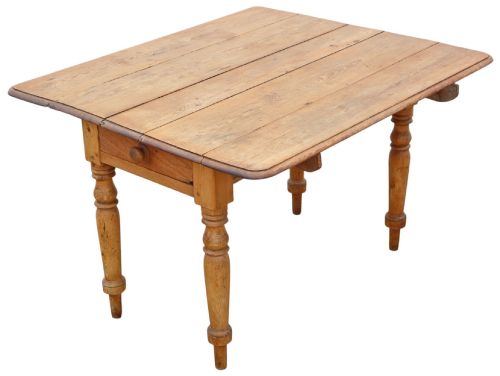
Makers built these tables using solid native timbers such as oak, pine, elm, and fruitwood. Tops frequently consist of thick boards joined together, sometimes utilising a two-board top construction or scrubbed timber surfaces.
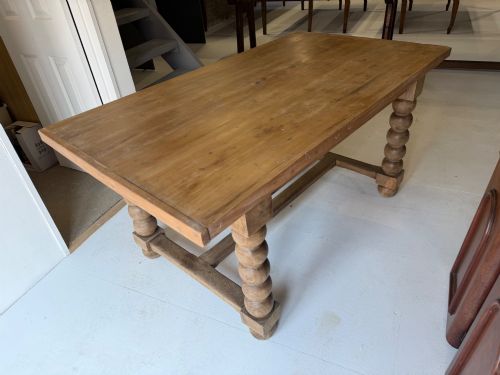
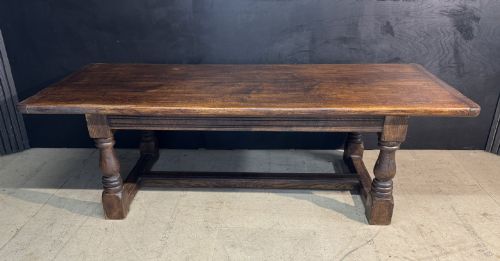
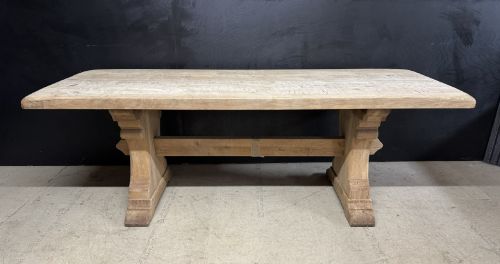
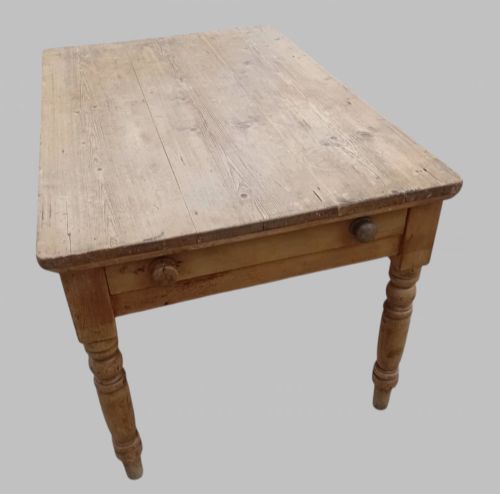
Framing methods include refectory styles, trestle supports, and legs shaped with tapers or bobbin turnings. Joinery relied on traditional methods to keep the heavy wooden frames stable during constant household service.
Listings feature timbers including oak, pine, elm, cherrywood, and fruitwood across nineteenth and early twentieth-century periods.
What varies in quality
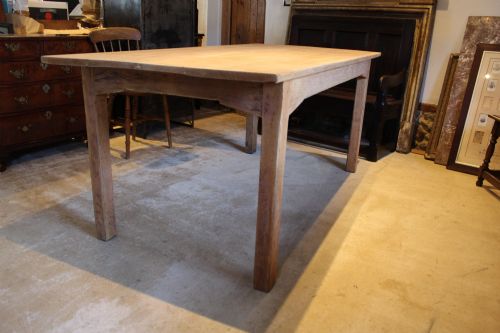
The grade of timber and the integrity of the original construction separate standard tables from exceptional ones. Denser hardwoods like oak or cherrywood generally command more attention than softer pine, though a thick pitch pine scrub top retains its own utilitarian appeal.
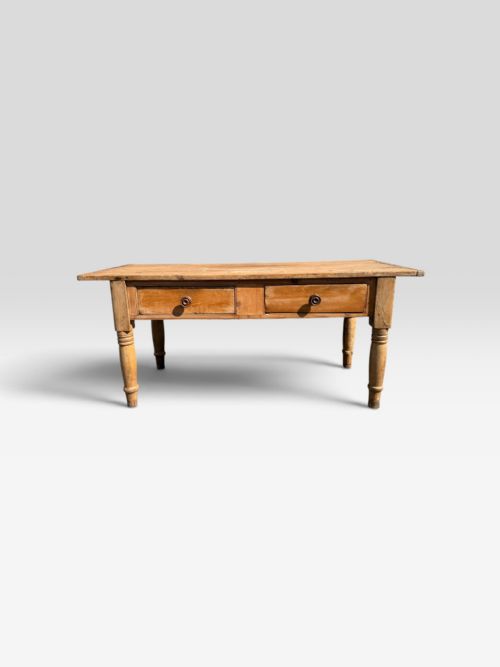
Proportion and scale also affect quality, with longer tables and refectory forms showing balanced dimensions that suit larger dining spaces. The retention of original drawers, unaltered legs, and honest surface weathering dictates the character of each individual piece.
The Vintage Farmhouse Dining Table Glossary
- Refectory table
- A long dining table traditionally used in monastic refectories and later adopted for domestic farmhouse kitchens. These pieces often feature stretcher bases for added stability.
- Harvest table
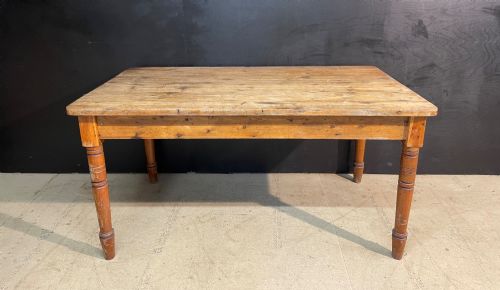
- A narrow, elongated table designed to accommodate large groups for seasonal farm gatherings. They frequently employ pine or mixed timber tops supported by sturdy wooden legs.
- Scrub top
- A plain wooden tabletop left unpolished so it could be vigorously scrubbed clean with water and sand. This surface treatment is common on Victorian kitchen and harvest tables.
- Drop leaf
- A table design featuring hinged flaps on the sides that can be folded down to save space. This mechanism allowed utilitarian kitchen tables to fit into smaller rooms when not in use.
- Bobbin legs
- Turned wooden furniture legs shaped with a series of rounded, spool-like swellings. This decorative turning style appears on nineteenth-century oak and beech tables.
Vintage Farmhouse Dining Table: Frequently Asked Questions
How do I clean a wooden farmhouse table?
Wipe the surface with a damp cloth and mild soap, avoiding harsh chemical sprays that strip the aged finish. Natural timber responds best to occasional applications of beeswax to nourish the wood.
Keep untreated scrub tops free from standing moisture by using coasters and placemats during daily meals.
Are these tables suitable for everyday family use?
These tables were originally built for hard domestic labour, making them exceptionally robust for modern dining rooms and kitchens. Their durable timber construction handles daily meals, schoolwork, and gatherings without issue.
Most vintage examples already carry marks from decades of use, meaning normal family life simply adds to their established character.
How can I tell the age of a farmhouse table?
Examine the timber boards underneath and along the edges for tool marks, hand-cut joinery, and the natural oxidation of the wood over time. Nineteenth-century pieces typically feature wider boards and hand-forged or early iron fixings.
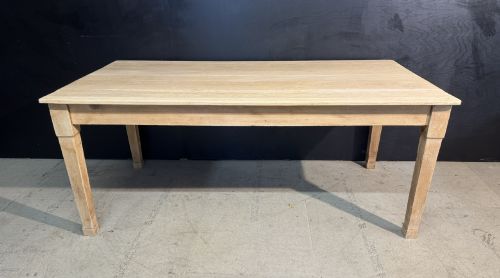
Styles also offer clues, such as the heavy proportions of Victorian country pieces or the lighter tapered legs seen on later examples.
What is the difference between oak and pine tables?
Oak is a dense hardwood that provides a darker grain, heavier weight, and superior resistance to dents over centuries of service. Pine is a softer softwood that feels lighter in colour and weight, often presenting a paler scrubbed surface.
Both woods were standard for farmhouse furniture, with pine common in kitchen settings and oak favoured for formal dining spaces.