



Vintage Farmhouse Artwork
Vintage farmhouse artwork brings rustic scenes and rural charm into rooms, offering intimate glimpses of country life through traditional and modernist eyes.
Vintage Farmhouse Artwork
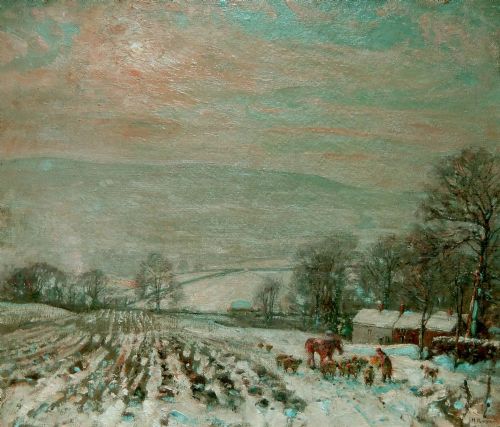
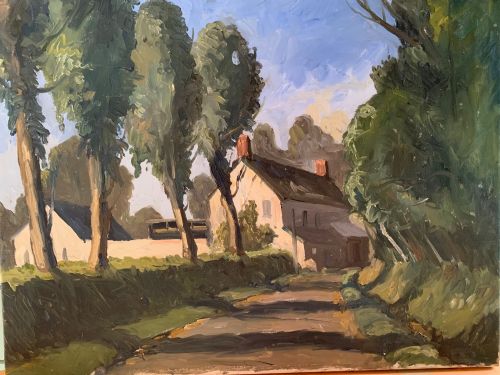
When you search for vintage farmhouse artwork, you uncover pastoral landscapes, farmyards, and rustic cottages spanning from the Victorian era through the mid-twentieth century. These pieces capture agricultural life across Britain and Continental Europe through evocative depictions of barns, fields, and rural workers.
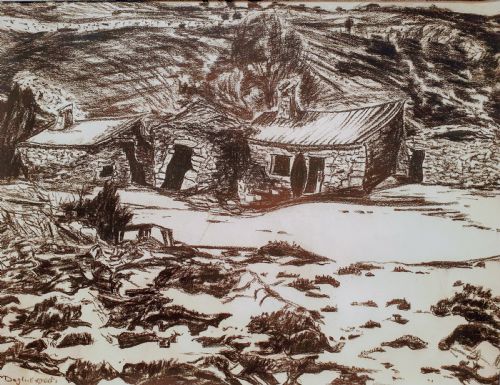
You are most likely to meet oil paintings on canvas and board alongside delicate watercolours and charcoal drawings. The subjects range from traditional British school farmyards to French Provençal courtyards and Corsican hillsides.
The selection encompasses diverse artistic responses to rural settings, moving from figurative Victorian genre painting to British impressionism and mid-century modernist interpretations. Each piece records a distinct era's fascination with the simplicity and character of the countryside.
Materials and methods
Canvas and heavy paper serve as the primary supports for these rural scenes, accommodating both fluid watercolours and rich applications of oil paint. Artists built texture using oil paint and charcoal to render the weathered wood of barns, stone cottages, and surrounding foliage.
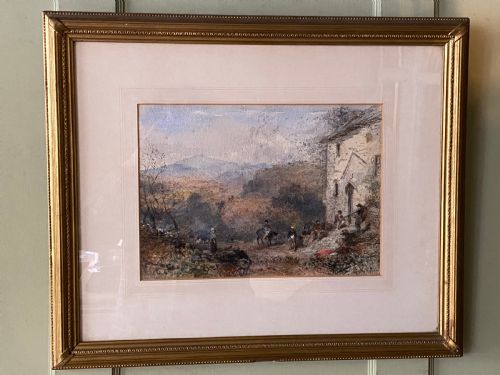
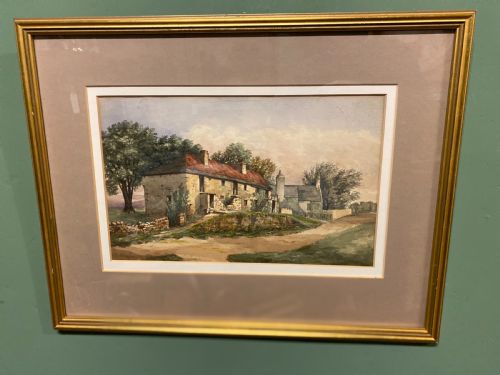
Gilt wood frames frequently encase these works, providing a formal boundary that contrasts with the rustic subject matter within. Watercolour paintings and drawings on paper capture finer linear details of farmworkers' cottages and yard scenes.
Vintage Farmhouse Artwork Retail Price Guide 2026
Typical asking prices for vintage farmhouse artwork among the pieces listed under this phrase on Sellingantiques today, from the lower quarter to the upper quarter. They describe what is for sale here now, not the wider market.
One French landscape captures a windy day so effectively you can practically feel the mistral blowing through the olive trees.
Assessing quality and execution
The strength of the composition and the artist's handling of light and atmosphere distinguish the finer pieces in this range. Works by named painters often demonstrate a more confident brushwork and a deeper understanding of tone within rural landscapes.
The integrity of the original canvas, the preservation of the paint surface, and the harmony of the framing contribute to the overall presence of the artwork. Subtle colourist approaches in mid-century French works separate ambitious artistic statements from standard decorative production.
Herbert Royle·John Atkinson·Majorie Hoare·James Kyd·Owen Bowen
The Vintage Farmhouse Artwork Glossary
- Canvas
- A heavy woven fabric stretched across a wooden frame to serve as a sturdy surface for oil painting. It provides a distinct texture that interacts with the applied pigment.
- Watercolour
- A paint method where pigments are suspended in a water-based solution, typically applied to paper. This technique creates luminous, translucent washes of colour.
- Post-Impressionism
- An art movement following impressionism that extended its use of vivid colours and thick brushstrokes while emphasising geometric forms or expressive content. It appears in several twentieth-century continental rural scenes.
- Genre painting
- The pictorial representation of scenes from everyday life, typically depicting ordinary people in work or domestic settings. In this context, it often highlights farmworkers and rural laborers.
Vintage Farmhouse Artwork: Frequently Asked Questions
What subjects appear in farmhouse art?
These works focus primarily on rural subjects, including farmyards, barns, agricultural workers' cottages, and surrounding fields. Artists often recorded specific regional architectures, from Yorkshire locations to Provençal farmhouses and Corsican hills.
The compositions range from documentary depictions of daily labour to expressive interpretations of windy days and quiet pastures.
How do I date these paintings?
Dating relies on stylistic clues, framing, material supports, and signatures or biographical details of the artists. Victorian pieces lean towards detailed genre representation, while mid-century works adopt modernist twists or vibrant colourist palettes.
Examing the back of the canvas, stretcher bars, and framing materials often provides additional chronological markers.
Where were these pieces created?
The geographical origins span Britain and continental Europe, with notable concentrations from English regional schools and French artistic communities. Artists travelled to rural regions in Provence and Corsica to capture the local light and agricultural architecture.
British works frequently document northern farmyards and pastoral landscapes near recognised artistic hubs.
How should I hang these works?
These pieces suit spaces that benefit from warm, organic textures and historical depth, pairing naturally with wooden interiors and traditional or eclectic decor. Maintaining stable humidity and avoiding direct sunlight protects the oil paint, canvas, and paper supports.
Matching the frame style to the period of the artwork helps integrate the piece cohesively into a modern room.