



Vintage Farm Artwork
These vintage farm artwork pieces capture rural life through oil paint, canvas, and watercolour from the nineteenth and twentieth centuries.
Vintage Farm Artwork
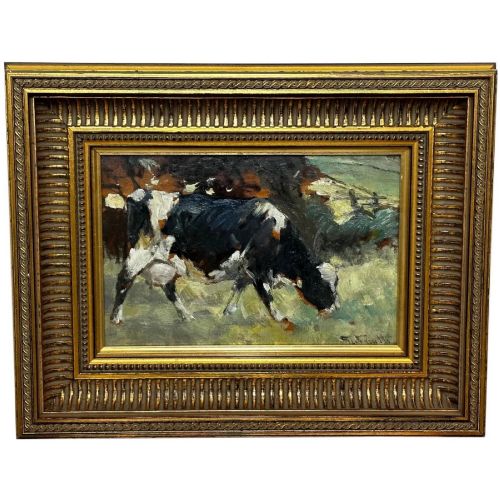
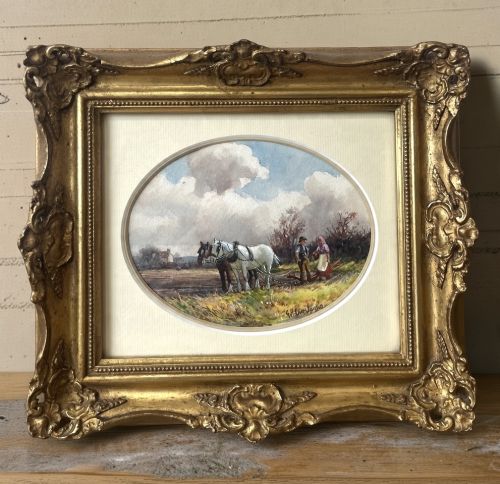
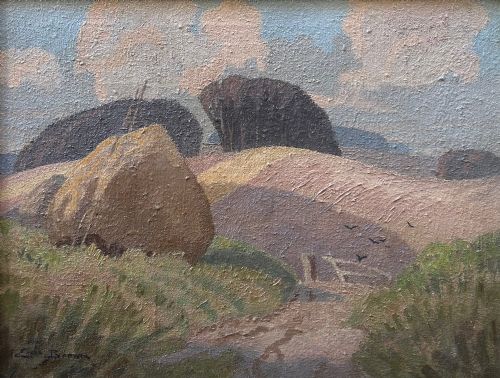
Vintage farm artwork encompasses paintings and watercolours depicting rural landscapes, farmsteads, and agricultural animals. Buyers encounter British Realism, Impressionism, and Victorian pastoral scenes created by regional artists.
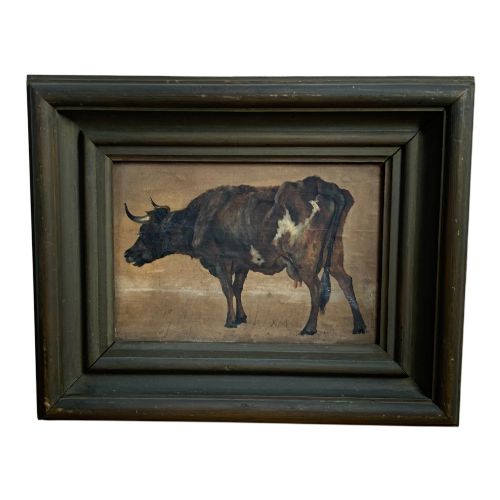
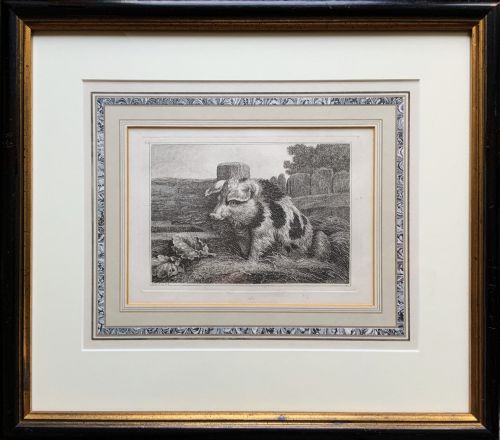
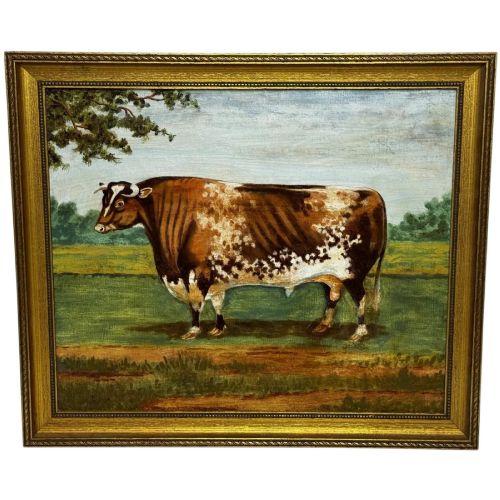
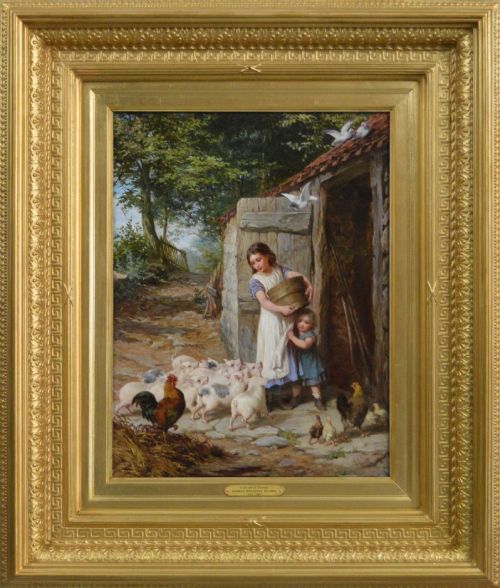
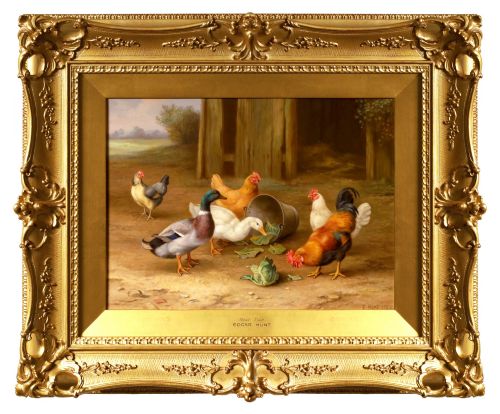
The subjects range from detailed depictions of livestock like shorthorn bulls and poultry to expansive views of Yorkshire farmyards and harvest scenes. Most examples date from the Victorian era through the mid-twentieth century.
Works appear in various formats including framed oils on canvas, board, and delicate watercolours on paper. Each piece reflects the changing artistic interpretations of rural industry across different decades.
Materials and techniques
Artists utilised oil paint on canvas, wood panels, or board to build textured, durable rural scenes. Watercolours on paper offer a lighter, transparent approach favoured for studies and atmospheric landscapes.
Gilt and ebonised frames often enclose these works, providing structural support and period-appropriate presentation. Pigments applied with brushwork capture natural light in styles ranging from tight academic realism to loose impressionism.
Vintage Farm Artwork Retail Price Guide 2026
Typical asking prices for vintage farm artwork among the pieces listed under this phrase on Sellingantiques today, from the lower quarter to the upper quarter. They describe what is for sale here now, not the wider market.
Several canvases are dedicated entirely to the dignified portraits of prized shorthorn bulls and assertive cockerels.
Determinants of quality
Quality rests on the artist's ability to render anatomical accuracy in animals and convincing light in rural landscapes. Superior brushwork creates depth and atmosphere rather than flat imitation.
Provenance and signature clarity elevate a piece, alongside the condition of the original canvas and support. Stronger works display confident handling of tone and colour within their specific period style.
George Augustus Holmes·Edgar Hunt·Herbert Royle·John Frederick Herring Jnr·Ernest Pile Bucknall·Owen Bowen
The Vintage Farm Artwork Glossary
- Oil on canvas
- Pigments bound in drying oil applied to stretched fabric. This medium allows for rich colour blending and thick impasto texture.
- Watercolour
- A paint consisting of transparent colour suspended in a water-based solution. Applied to paper, it creates luminous washes and fine detail.
- British Impressionism
- A painting style focusing on light and everyday subjects. It emerged in the late nineteenth century with looser brushstrokes.
- Victorian Pastoral
- Art celebrating rural and agricultural life. These scenes often romanticised farm labour and livestock.
Vintage Farm Artwork: Frequently Asked Questions
What subjects appear in vintage farm artwork?
These works depict agricultural scenes, including farmsteads, hay carts, and harvests. Animals such as cattle, horses, pigs, and poultry frequently feature as central subjects.
Artists also recorded rural workers, farm interiors, and regional landscapes across Britain. The focus reflects the importance of farming life during the nineteenth and twentieth centuries.
How do I date these paintings?
Dating relies on stylistic clues, artist lifespans, and framing materials. Victorian works often show tighter realism, while pieces from the nineteen-twenties onward lean toward impressionistic brushwork.
Signatures, exhibition labels, and canvas stamps help narrow the decade. Secondary sources and artist registries provide further verification for specific signatures.
How should I display framed artwork?
Hang these pieces away from direct sunlight to protect watercolours and oil pigments from fading. Stable indoor humidity prevents canvas slackening and wood panel warping.
Ensure walls support the weight of heavier gilt frames. Proper placement enhances the visual depth of the rural landscape within your room.
What is the difference between oils and watercolours here?
Oils use pigment suspended in oil on canvas or board, creating heavy textures and deep colours. Watercolours use water-soluble pigments on paper, resulting in lighter, translucent images.
Oils generally require protective varnish rather than glass framing. Watercolours need conservation-grade mounting behind glass to prevent environmental damage.