


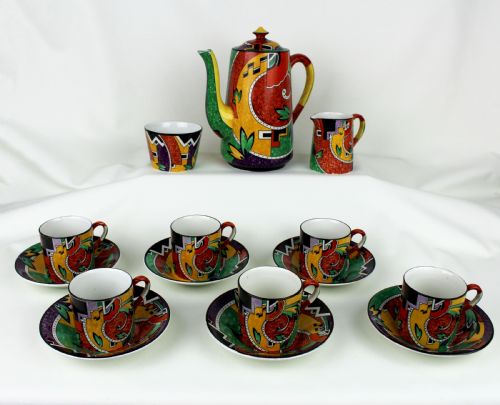
Vintage Espresso Cups
These vintage espresso cups are small porcelain and silver-mounted vessels designed for after-dinner coffee, bringing period craftsmanship and distinct twentieth-century style to the table.
Vintage Espresso Cups
Vintage espresso cups encompass small porcelain and demitasse vessels intended for serving strong coffee after meals. When browsing vintage espresso cups, buyers frequently encounter matched sets and cased services from the early decades of the twentieth century.
The selections span distinct historical styles, notably Art Deco designs alongside Edwardian and late Victorian forms. Makers and manufacturers of the period produced both individual cups and comprehensive coffee services complete with saucers and spoons.
How they were made
Makers utilised fine porcelain and sterling silver or silver plate, often combining ceramic bodies with metal mounts. Hand-painted decoration and gold leaf accents appear regularly across the surviving pieces.
Cased sets frequently feature satin and leatherette linings inside fitted boxes to protect the fragile porcelain and silver components. Production techniques relied on traditional pottery firing alongside precision metalwork for the mounts and spoons.
Vintage Espresso Cups Retail Price Guide 2026
Typical asking prices for vintage espresso cups among the pieces listed under this phrase on Sellingantiques today, from the lower quarter to the upper quarter. They describe what is for sale here now, not the wider market.
Object forms include comprehensive coffee services alongside individual cased sets and saucers.
What varies in quality
Quality differences stem primarily from the fineness of the porcelain body and the complexity of the hand-painted decoration. Finer examples display meticulous brushwork and balanced proportions that distinguish them from standard production wares.
The presence of original fitted cases lined in satin and leatherette elevates the status of a service. Complete sets featuring matching silver mounts and spoons across every component command greater appreciation than assembled groupings.
Royal Worcester·Elkington·Hutschenreuther·Spode Copeland·KPM
The Vintage Espresso Cups Glossary
- Demitasse
- A small cup used for serving espresso or Turkish coffee. It typically holds about half the liquid of a standard teacup.
- Coffee cans
- Cylindrical cups without the traditional footed base or flared rim found on standard teacups. They are characteristic of many early twentieth-century ceramic services.
- Silver plate
- A base metal coated with a thin layer of silver. This technique provided the appearance of solid silver at a more accessible cost for domestic tableware.
- Gold leaf
- Hammered sheets of gold applied to ceramic surfaces for decorative detailing. It requires careful firing to adhere permanently to the porcelain glaze.
Vintage Espresso Cups: Frequently Asked Questions
What is a demitasse?
A demitasse is a small cup specifically designed for serving strong black coffee or espresso after meals. The name translates from French to mean half-cup.
These vessels are smaller than standard teacups, typically holding two to three ounces of liquid. They are frequently paired with matching saucers in the listings.
How were these sets used?
These sets were utilised primarily for formal after-dinner entertaining and afternoon gatherings in the home. Hosts served strong coffee or liqueurs to guests using the coordinated cups and spoons.
Many services were kept in fitted cased boxes when not in use to protect the delicate porcelain and silver components from damage.
How do I date these pieces?
Dating relies on maker marks stamped or painted on the underside of the porcelain, alongside stylistic indicators like Art Deco geometric patterns. Period materials such as leatherette-lined cases also help establish the era of manufacture.
Early twentieth-century pieces often reflect specific design movements ranging from late Victorian ornamentation to clean modernist lines.
Can I use them daily?
While these cups were made for practical use, their age, hand-painted decoration, and gold leaf require gentle handling. Hand washing is essential to preserve the delicate ceramic glazes and metal mounts.
Many owners choose to use them on special occasions or display them within cabinets to protect the fragile porcelain and fitted cases.