





Vintage Equine Portrait
A vintage equine portrait captures the singular character of a valued horse through the disciplined eye of 19th-century and early 20th-century painters.
Vintage Equine Portrait
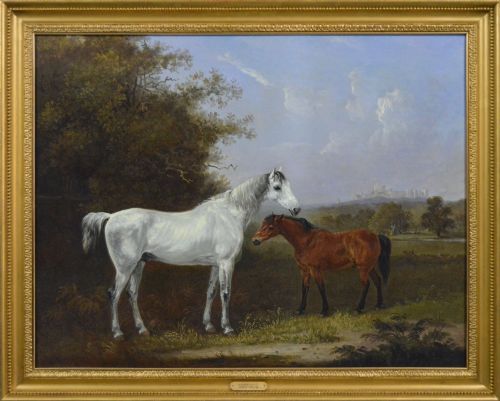
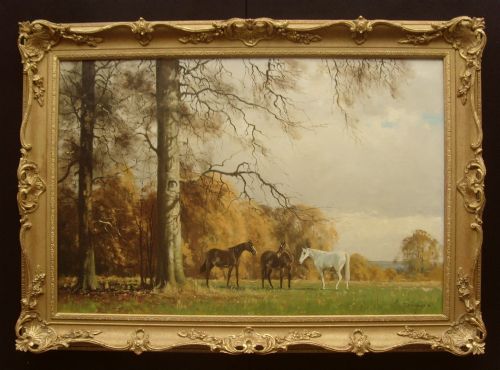
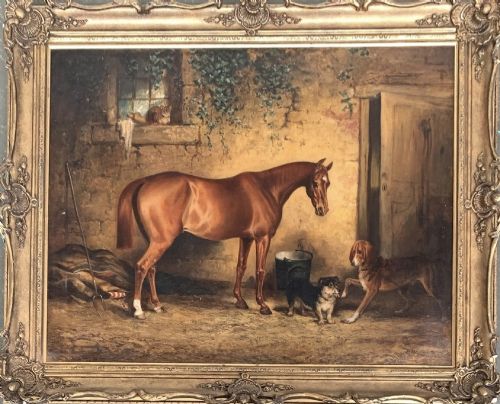
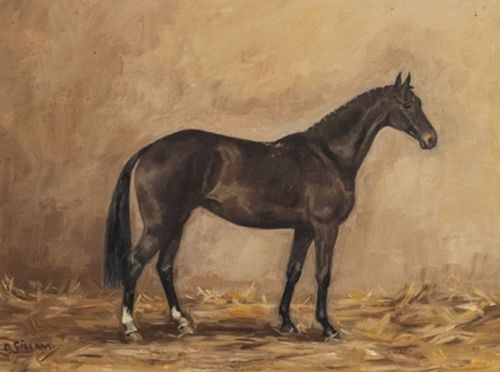
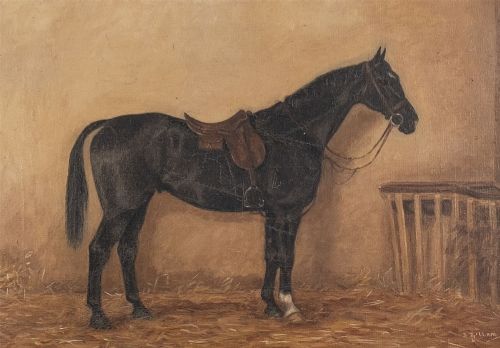
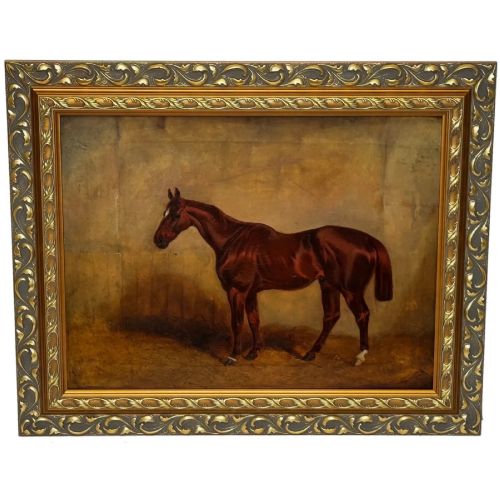
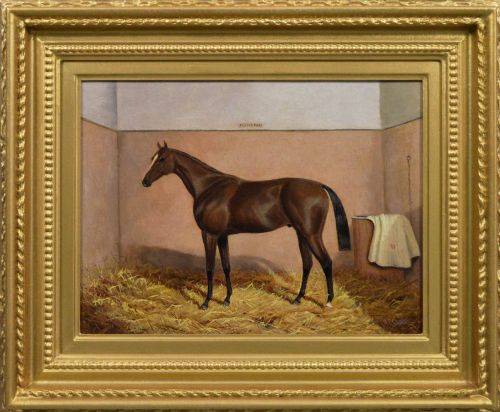
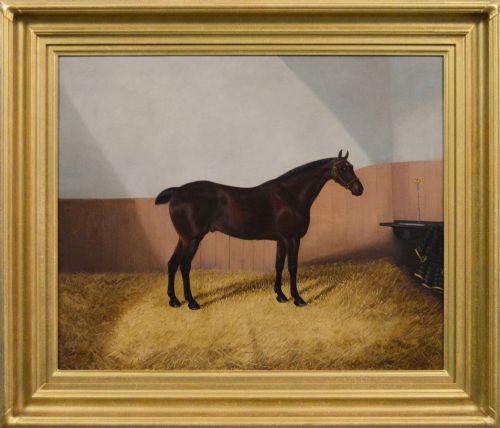
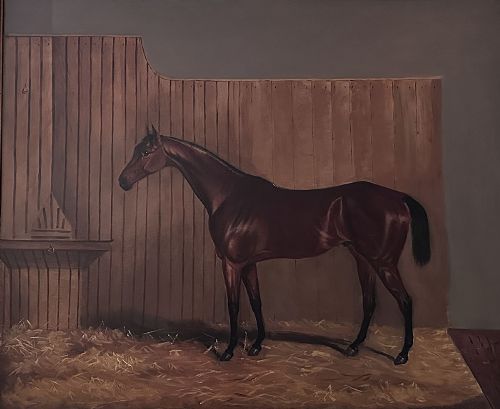
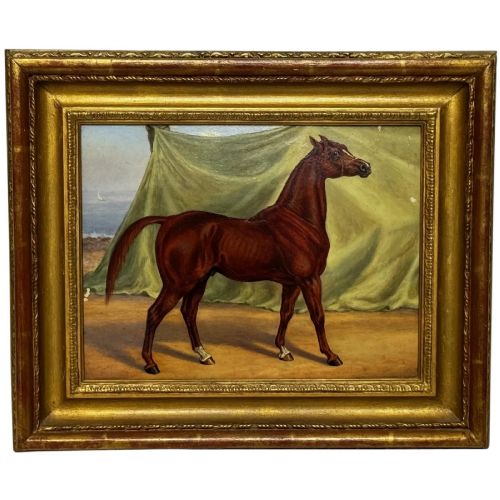
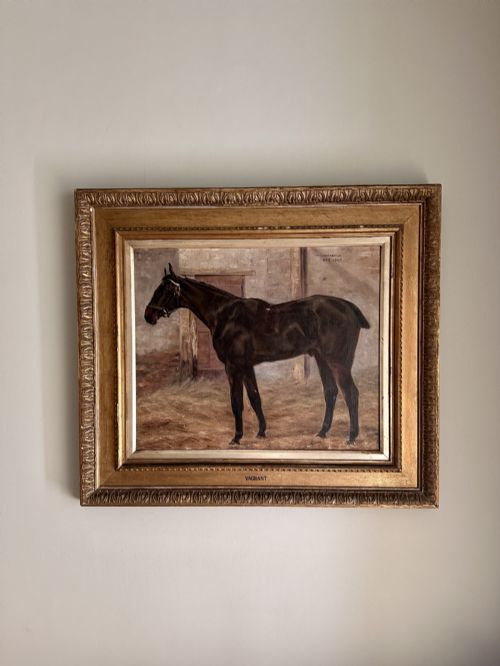
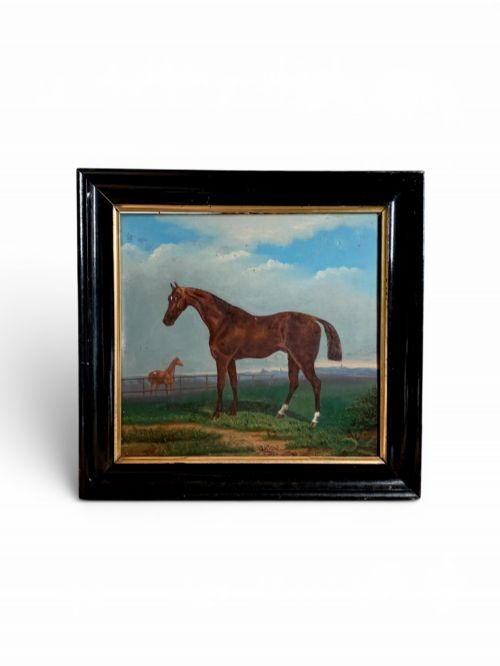
A vintage equine portrait focuses closely on individual animals, recording specific hunters, racehorses, and stable inhabitants rather than generalized rural scenes. These works capture specific animals such as the racehorse Flying Fox or named mounts like Master Walter, often painted within stables, meadows, or farmyards.
Most pieces encountered here originate from the 19th century and the Victorian era, alongside Edwardian and Georgian examples. Oil on canvas dominates the selection, accompanied by occasional watercolours, pastels, and framed photographic prints.
The subjects range from solitary chestnut hunters and bay horses to mares with foals and thoroughbreds with jockeys. Works extend from traditional English school paintings to international subjects including Bombay stables and colonial race meetings.
Variations in Quality
Quality rests upon the artist's anatomical precision in rendering the bone structure, muscle tone, and posture of the horse. Master painters capture the distinct light reflecting off a coat and the alert expression of the animal, whereas lesser hands produce rigid or disproportionate forms.
Provenance and documentation elevate certain pieces, particularly when a painting identifies a named winner, a specific estate, or a recorded jockey and owner. The integrity of the original canvas, panel, and period gilt frame also influences the standing of the work.
Vintage Equine Portrait Retail Price Guide 2026
Typical asking prices for vintage equine portrait among the pieces listed under this phrase on Sellingantiques today, from the lower quarter to the upper quarter. They describe what is for sale here now, not the wider market.
Listings feature works spanning the Georgian, Victorian, and Edwardian periods, executed in oil, watercolour, pastel, and photographic print.
Charles Bilger Spalding·Henry Barraud·Walter Robin Jennings·Edmund Bristow·Albert Clark·Fred Fitzpatrick·Thomas Walker Bretland·George E Sharpe·Benjamin Cam Norton·Alfred Moginie Bryant·Abraham Cooper RA·Walter Herbert Wheeler
The Vintage Equine Portrait Glossary
- Hunter
- A horse bred and trained for fox hunting or general riding. These animals appear frequently in Victorian sporting art.
- Giltwood
- Wood that has been covered with a thin layer of gold leaf or gold paint. This finish commonly appears on period frames enclosing equine oil paintings.
- Gesso
- A plaster-like mixture applied to wood frames before gilding. It provides a smooth surface capable of holding intricate moulded ornamentation.
- Thoroughbred
- A horse breed best known for its use in horse racing. Portraits often record famous winners and royal thoroughbreds.
- Provenance
- The chronological history of the ownership of a piece. Documented records link specific portraits to estates, galleries, and historic collections.
Vintage Equine Portrait: Frequently Asked Questions
What subjects appear in these portraits?
The works depict named racehorses, hunters, stallions, mares with foals, and working horses in stable interiors or rural landscapes. Many identify specific animals and historical winners.
Subjects extend from English country estates and farmyards to international locations including colonial race meetings and Indian stables.
How do I identify the period of a painting?
Periods are identified through the clothing of any figures, the style of the framing, the stretcher construction, and recorded artist dates. Victorian and Edwardian works often carry specific stylistic markers of British sporting art.
Signatures, inscriptions on the reverse, and documented exhibition history further clarify the exact decade of creation.
How were these artworks displayed historically?
Original owners hung these portraits in country houses, estate offices, and stable blocks to record prized bloodlines and sporting achievements. Heavy giltwood and gesso frames gave the canvases formal presence in reception rooms.
Many pieces were commissioned directly by owners, landlords, or racing patrons to commemorate specific victories and notable mounts.
Are all the pieces oil paintings?
While oil on canvas and wood panel represents the majority of the works, the category also includes watercolours, pastels on paper, and framed photographic prints. Each medium requires specific framing and conservation approaches.
Supports vary from traditional canvas to pine panels and paper sheets housed behind protective glass.