



Vintage Equine Art
Vintage equine art brings the power and character of horses into a room through historic paintings, sculptures, and drawings.
Vintage Equine Art
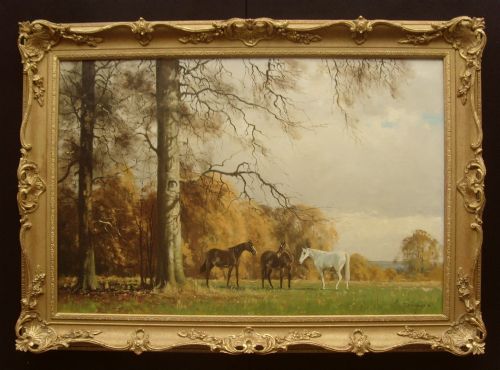
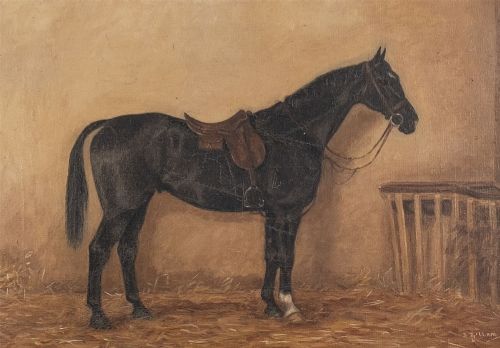
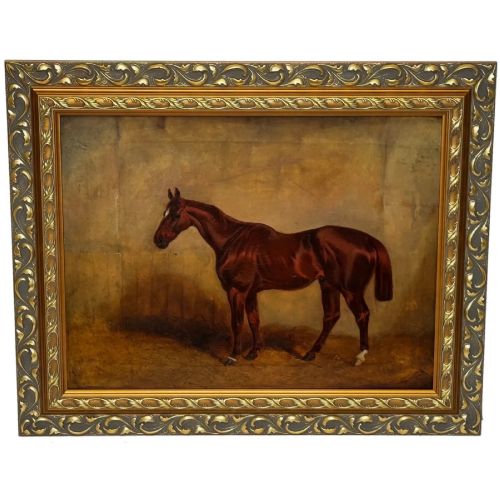
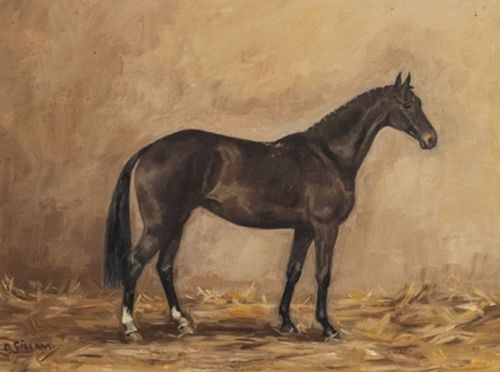
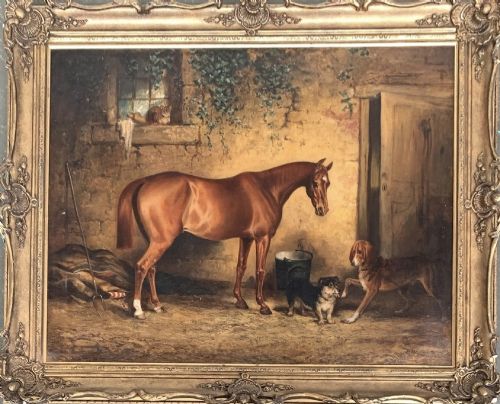
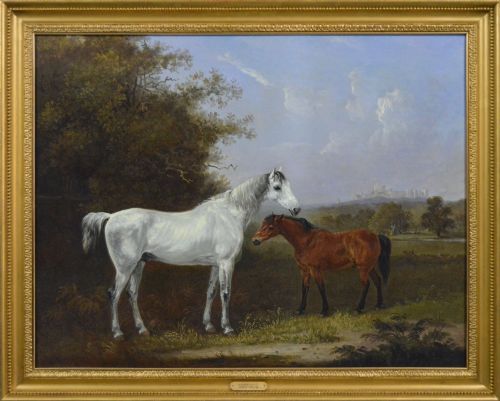
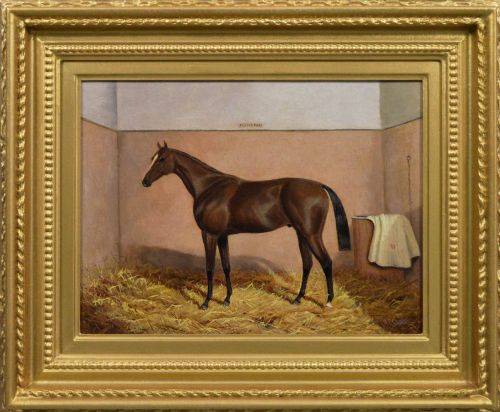
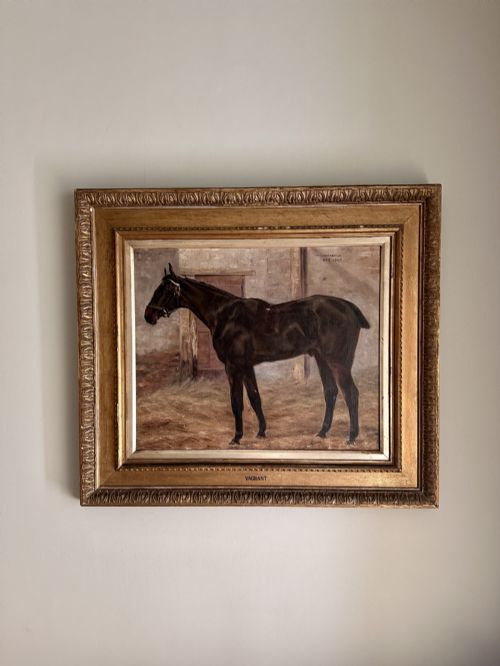
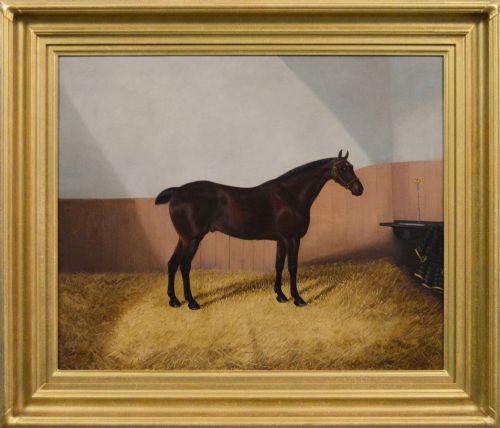
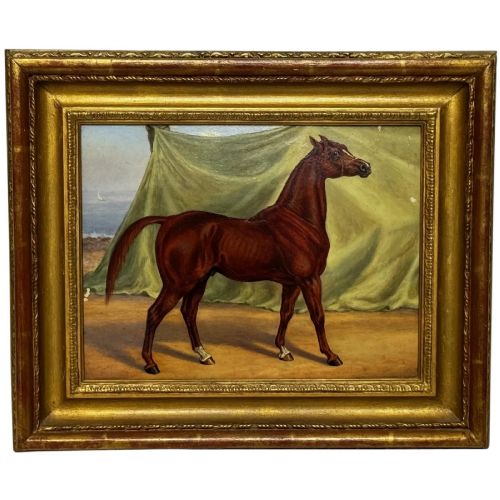
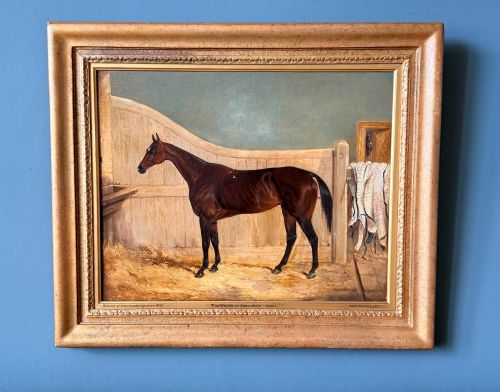
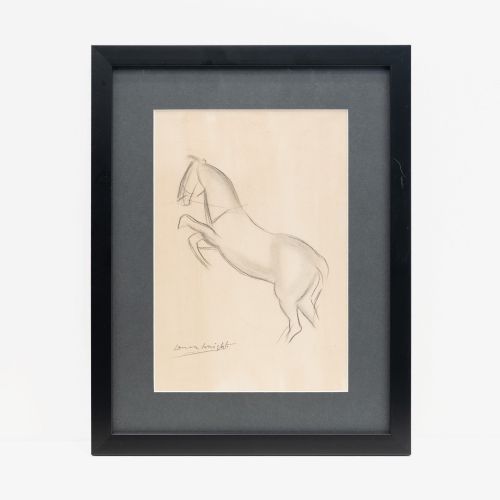
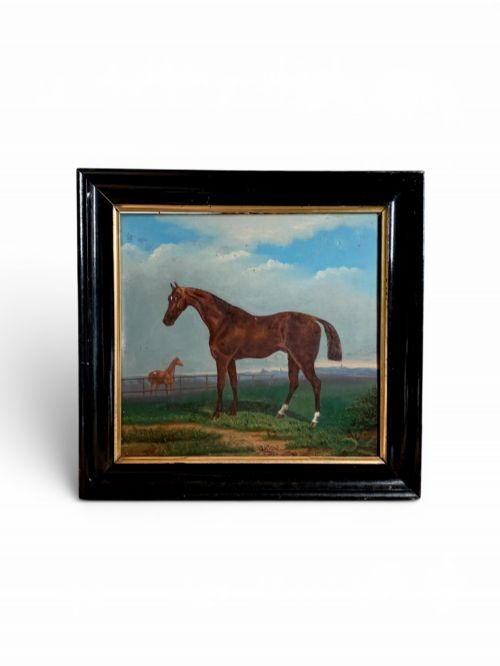
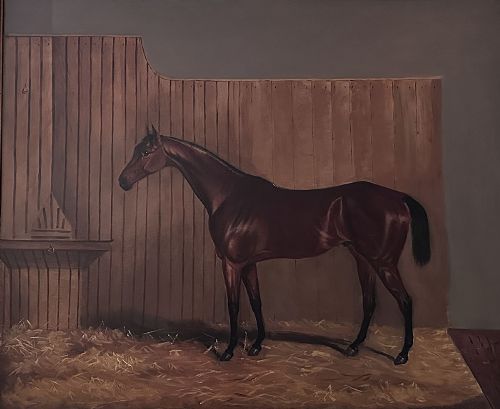
When searching for vintage equine art, buyers encounter a diverse range of works depicting horses in stables, landscapes, and racing settings. The most common forms on this page are oil paintings on canvas and panel, alongside watercolours, pastels, gouache, and sculptural works in bronze, wood, and carved materials.
The material record spans from the Georgian and Victorian eras through to the mid-20th century. Works capture individual thoroughbred portraits, rural working horses, and dramatic racing scenes created by named painters and anonymous hands alike.
How they were made
Artists relied primarily on oil paint applied to canvas, wood panels, or paper support, often set within giltwood or simple wooden frames. Watercolours, pastels, and gouache provide lighter illustrative alternatives on paper.
Sculptural pieces utilise bronze casting or hand carving in wood, translating muscular forms into three-dimensional figures. Painted surfaces and prints after established animaliers represent additional methods of production found in the listings.
Vintage Equine Art Retail Price Guide 2026
Typical asking prices for vintage equine art among the pieces listed under this phrase on Sellingantiques today, from the lower quarter to the upper quarter. They describe what is for sale here now, not the wider market.
The documented periods stretch from the 18th century through Victorian and Edwardian times up to the 1960s.
What varies in quality
Quality rests upon the artist's command of equine anatomy, perspective, and lighting, separating stiff academic depictions from lively, convincing portraits. Masterful brushwork captures the tension in a horse's musculature and the glossy sheen of a coat.
Provenance and documentation elevate a piece significantly, particularly when named horses, recognised owners, or verified artists such as Albert Clark or John Frederick Herring Snr are confirmed. The condition of the canvas, panel, or bronze surface also dictates the overall standard.
Charles Bilger Spalding·Henry Barraud·Walter Robin Jennings·Edmund Bristow·Albert Clark·Fred Fitzpatrick·Dame Laura Knight·Thomas Walker Bretland·John Frederick Herring Snr·William Williams·George E Sharpe·Eugene Joseph Verboeckhoven·Benjamin Cam Norton·Clifton Tomson·Alfred Moginie Bryant·Abraham Cooper RA·Arthur Winter Shaw·John Rattenbury Skeaping
The Vintage Equine Art Glossary
- Equestrian
- Pertaining to horses, horse riding, or the representation of horses in art. This term groups together portraits, racing scenes, and rural depictions.
- Giltwood
- Wood carved and coated with gold leaf or gold paint, frequently used for traditional picture frames. It adds a reflective border to oil paintings.
- Gouache
- An opaque water-based paint that dries to a matte finish, often combined with watercolour in mid-20th-century works on paper. It allows for vibrant colour blocks.
- Panel
- A flat piece of wood used as a rigid painting support instead of stretched canvas. Panels appear frequently in earlier works.
- Provenance
- The documented history of ownership of an artwork, tracing its lineage from creation to the present day. Solid provenance confirms authenticity and historical context.
Vintage Equine Art: Frequently Asked Questions
What periods do these pieces cover?
The selection spans from the 18th century through the Victorian period and into the mid-20th century. Most items originate from the 19th and early 20th centuries.
Individual pieces reflect the shifting artistic styles of their respective decades, ranging from formal sporting art to impressionistic and modern treatments.
Are these works original paintings?
Many of the listings are original oil paintings on canvas or wood panel, created by hand. There are also watercolours, gouache works, pastels, and drawings.
A selection includes painted prints and sculptural forms in bronze and carved wood.
How can I identify the artist?
Signatures, monograms, and dates inscribed directly onto the canvas or paper often reveal the creator. Detailed provenance records and exhibition histories also help attribute works.
Some listings feature attributed pieces where stylistic comparisons link the work to a known painter.
How do I care for vintage art?
Keep paintings and works on paper away from direct sunlight and damp environments to protect the pigments and support materials. Dust frames and unglazed surfaces gently with a soft, dry cloth.
Ensure bronze sculptures are kept in stable indoor conditions to preserve their patina.