





Vintage Enamel Butterfly
These vintage enamel butterfly pieces combine metalwork and vitreous glass, spanning from the late nineteenth century to the mid-twentieth century.
Vintage Enamel Butterfly
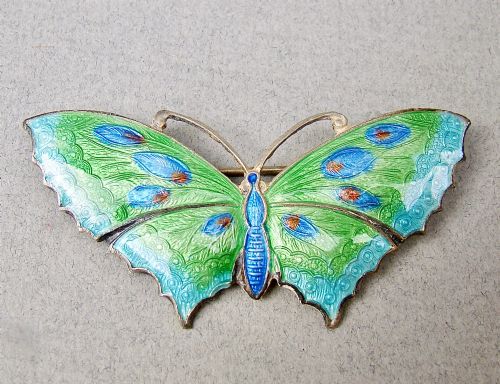
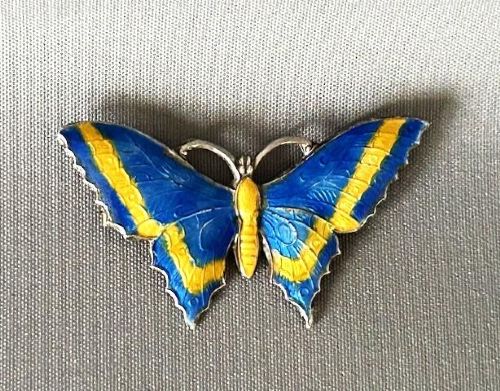
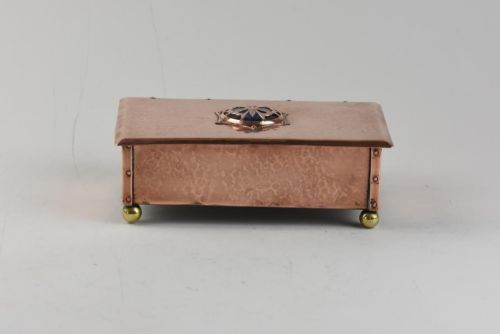
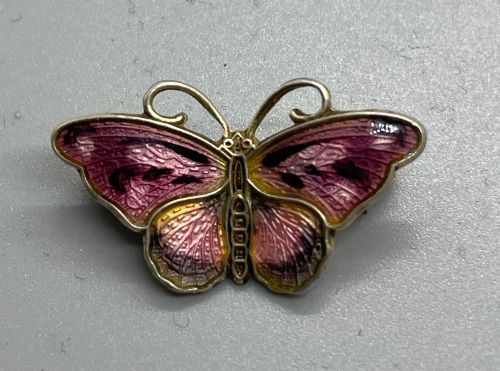
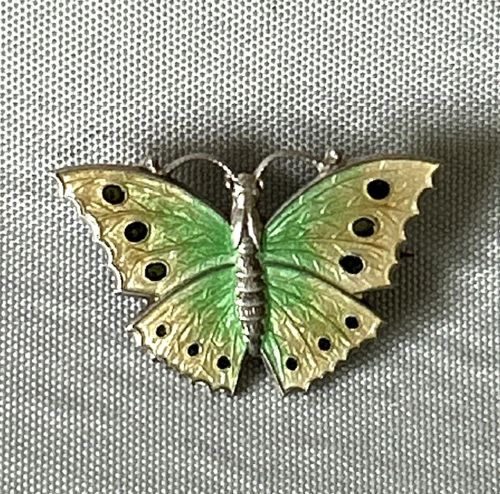
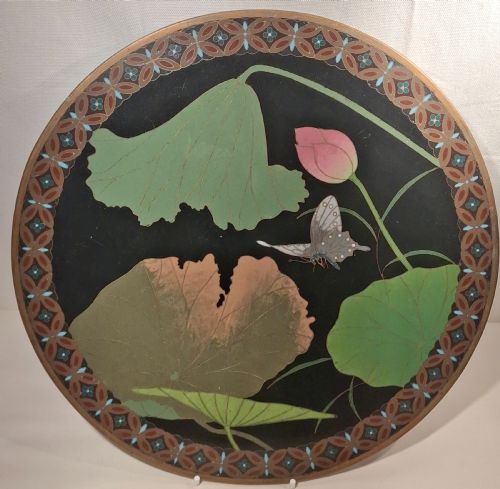
A vintage enamel butterfly primarily takes the form of a brooch, alongside trinket boxes, pendants, vases, and plaques. The brooches dominate the selection, often rendered in sterling silver or silver gilt with translucent guilloche enamel.
Makers from Norway feature heavily among the pieces, alongside continental European, Chinese, and Japanese workshops. Styles stretch across Art Deco, Art Nouveau, Arts and Crafts, and Mid-Century Scandinavian designs.
How they were made
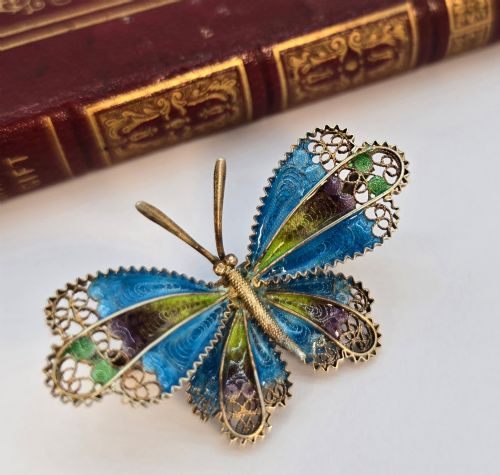
Craftsmen applied vitreous enamel onto bases of silver, sterling silver, silver gilt, copper, and brass. Techniques such as guilloche, cloisonne, and plique-a-jour create coloured patterns that catch the light through translucent glass.
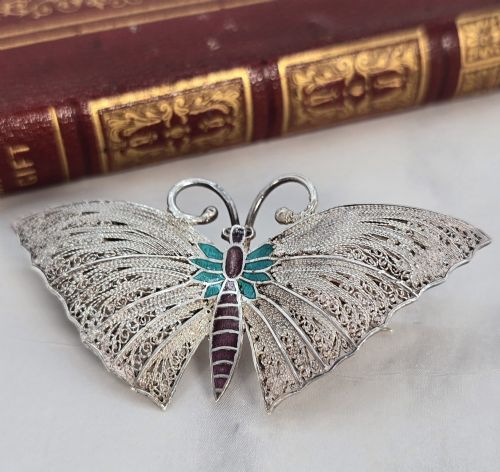
Wirework and filigree define the wing structures of many brooches, soldering fine metal threads to outline the insect's body and cells. Gilding on silver adds a rich golden tone beneath bright red, blue, yellow, and green enamel.
Vintage Enamel Butterfly Retail Price Guide 2026
Typical asking prices for vintage enamel butterfly among the pieces listed under this phrase on Sellingantiques today, from the lower quarter to the upper quarter. They describe what is for sale here now, not the wider market.
What varies in quality
The precision of the metal filigree and the clarity of the guilloche engine-turning underneath the translucent enamel determine the standard of the work. Superior pieces show exact symmetry in the wing contours and an even thickness across the vitreous glass layers.
Maker attribution elevates certain brooches, particularly signed Scandinavian silver pieces from established workshops. The depth of the silver gilt and the complexity of multi-coloured enamel application distinguish finer examples from simpler production.
Hroar Prydz·David Andersen·Aksel Holmsen·Ivar Holth·Martin Mayer·Volner Bahner
The Vintage Enamel Butterfly Glossary
- Guilloche
- A decorative engraving technique that etches precise geometric patterns into metal before enamel is applied. This layer shows through translucent coloured glass.
- Vitreous Enamel
- Glass powder fused to a metal surface at high temperatures. It forms a durable, glossy coloured coating.
- Cloisonne
- A method where thin metal wires form compartments on a metal base to hold enamel pastes. Firing bonds the glass within these walled sections.
- Plique-a-jour
- An enamelling technique similar to cloisonne but without a backing metal, allowing light to shine through the transparent glass like stained glass.
- Silver Gilt
- Sterling silver coated with a thin layer of gold. It provides the appearance of solid gold while maintaining a silver base.
Vintage Enamel Butterfly: Frequently Asked Questions
How do I wear a vintage enamel butterfly brooch?
Pin the brooch to coat lapels, cardigans, or scarves where the fabric provides adequate support for the metal weight.
Keep the piece away from direct cosmetics and moisture to protect the silver and glass surfaces.
Are these brooches made of solid silver?
Many pieces utilise sterling silver or silver gilt, while others employ copper or brass bases.
Check the reverse of the piece for hallmarks or maker marks indicating the metal standard.
How do I date a vintage enamel butterfly?
Look to the stylistic cues, such as the clean lines of mid-century Scandinavian design or the organic curves of Art Nouveau.
Maker attributions and clasp types also offer clues regarding the decade of manufacture.
How should I clean my enamel butterfly?
Wipe the surface gently with a soft, dry microfibre cloth to remove dust and oils.
Avoid liquid dips or abrasive polishes that can damage the vitreous enamel and thin metal filigree.