





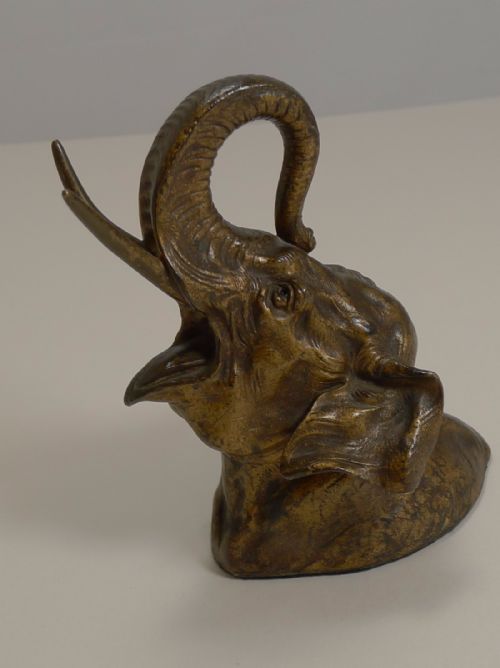
Vintage Elephant Head
These vintage elephant head pieces are carved tables, chairs, lamps and inkwells crafted from rosewood, teak and porcelain.
Vintage Elephant Head
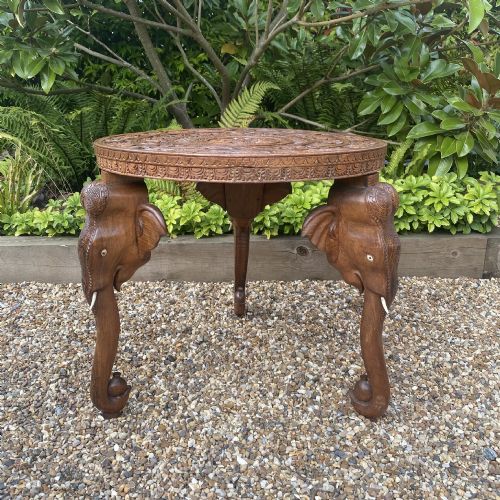
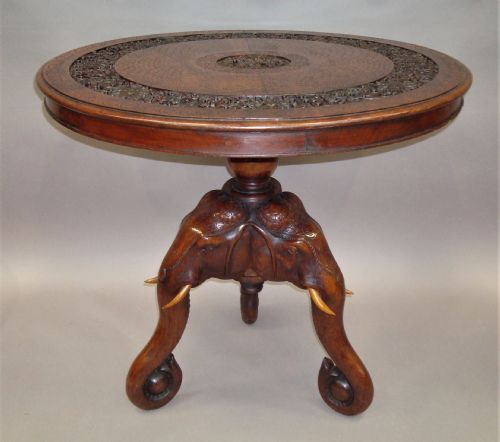
When you search for vintage elephant head forms, you find small tables, occasional furniture, chairs and lamps that incorporate carved animal motifs into their structure. Side tables and coffee tables dominate the selection, often featuring carved elephant heads and legs supporting the surface.
Most examples originate from nineteenth-century and early twentieth-century India, Burma and China. Anglo-Indian and colonial workshops produced many of the carved hardwood items seen here.
You will encounter occasional variations such as porcelain table lamps and bronze inkwells alongside the predominant wooden tables. These pieces reflect colonial design exchanges and regional carving traditions.
Materials and construction
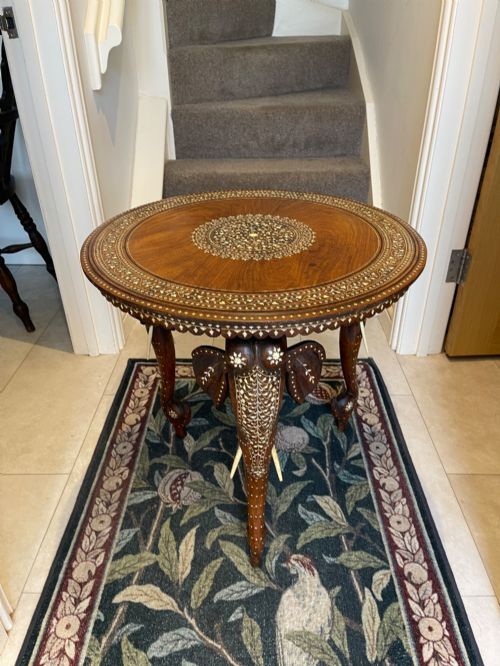
Makers utilised dense timbers such as rosewood, teak and hardwood to carve intricate figural elements and support structures. Bone inlay frequently adorns the wooden surfaces in geometric or floral patterns.
Artisans applied deep relief carving techniques to shape the elephant heads and legs that form the bases of side tables and tripod tables. Brass fittings and porcelain components appear in specific lamps and decorative objects.
Vintage Elephant Head Retail Price Guide 2026
Typical asking prices for vintage elephant head among the pieces listed under this phrase on Sellingantiques today, from the lower quarter to the upper quarter. They describe what is for sale here now, not the wider market.
Several tables rely entirely on carved elephant trunks to hold up the tea.
Judgements of quality
The choice of material and intricacy of inlay work also separate basic tables from more elaborate examples. Solid rosewood and dense bone inlay represent higher levels of artisan effort than simpler hardwood pieces.
Ernest Louis Adnin
The Vintage Elephant Head Glossary
- Anglo-Indian
- A design style produced in India during the British colonial period combining local materials with European furniture forms.
- Hoshiarpur
- A region in Punjab renowned for intricate wood carving and bone inlay work on tables and decorative objects.
- Tripod table
- A small freestanding table supported by three legs, frequently shaped as animal limbs in these specific regional items.
- Chinoiserie
- A decorative style reflecting Chinese artistic influences applied to European and Asian manufactured goods.
- Bone inlay
- Fragments of bone inserted into carved recesses within a wooden surface to create contrasting patterns.
Vintage Elephant Head: Frequently Asked Questions
What are vintage elephant head tables?
These items are small occasional tables and side tables featuring carved wooden elephant heads and legs supporting the top surface. Artisans in India and Burma produced them during the nineteenth and early twentieth centuries.
They serve as decorative accent furniture in living spaces. The heavy carving makes them sturdy surfaces despite their compact dimensions.
How do I date an elephant head table?
Dating relies on identifying the timber species, carving depth and regional style markers. Pieces from the nineteenth century often display denser hardwoods and deeper relief work.
Later items from the early twentieth century may incorporate bone inlay or simpler turnings. Comparing the construction joints helps confirm the period of manufacture.
Where were these pieces made?
Makers in India, Burma and China produced these objects during the colonial period. Workshops in centres like Hoshiarpur specialised in intricate carving and inlay techniques.
European markets imported these goods, leading to styles that blended local motifs with Western furniture types.
How do I care for carved wooden tables?
Maintain the timber by keeping the furniture away from direct heat sources and strong sunlight. Dust the intricate carvings regularly with a soft brush to prevent dirt accumulation.
Apply suitable wax polish sparingly to nourish the rosewood or teak surfaces. Avoid using liquid cleaners on bone inlay sections.