





Vintage Eagle Mirror
A vintage eagle mirror brings architectural presence and sharp neoclassical detail to a room, anchored by the iconic bird surmount.
Vintage Eagle Mirror
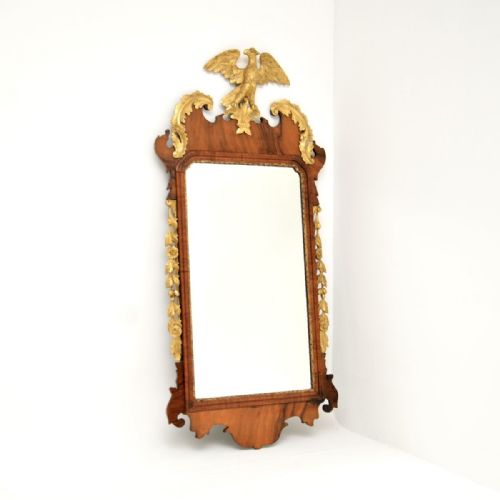
A vintage eagle mirror is a striking wall hanging defined by the carved bird of prey surmount perched atop the frame. The examples you encounter on this page span the 19th Century, Regency, and Victorian periods, drawing on Regency, Georgian, and Grand Regency styles.
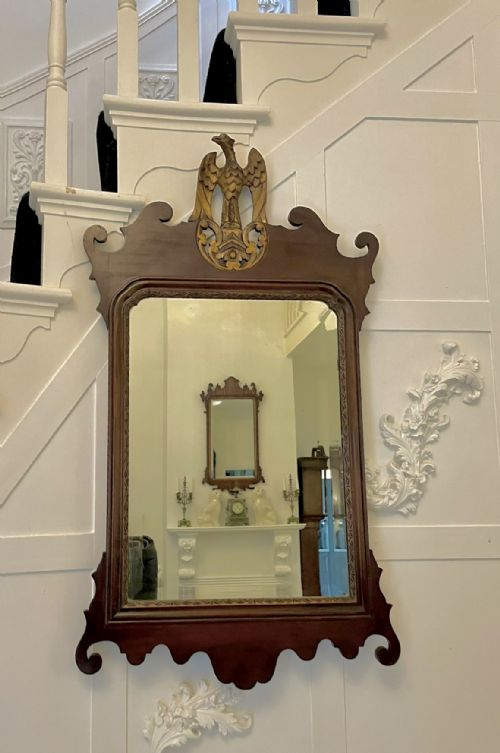
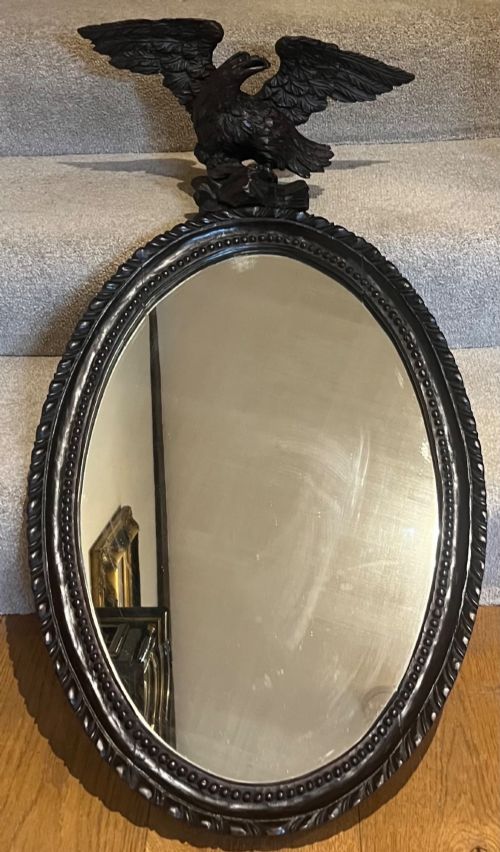
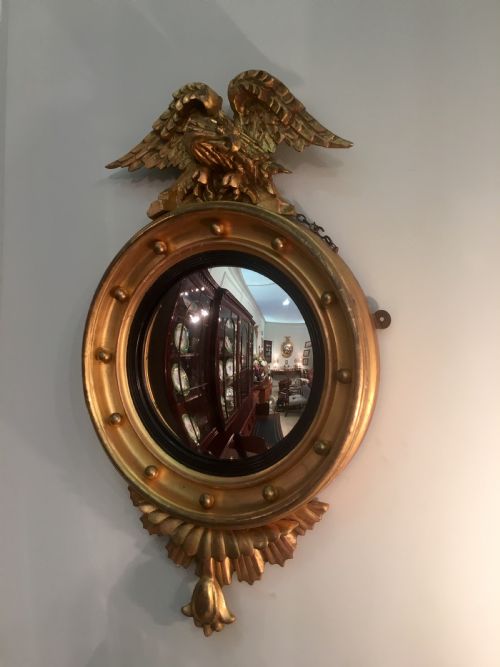
The dominant forms are circular convex mirrors with giltwood or gesso frames, alongside rectangular and oval wall mirrors shaped from mahogany, walnut, and ebonised wood. You will also find fretwork mirrors and Black Forest wood carvings that give the eagle motif a rugged, naturalistic texture.
While most pieces function purely as wall mirrors, variations include girandole mirrors with candle branches and occasional sideboards or chiffoniers that share the aesthetic vocabulary of the period. The common thread across these objects is the majestic bird motif commanding the top of the frame.
Materials and construction
Makers shaped these frames from solid timbers including mahogany, walnut, and carved wood, frequently applying gesso to build up intricate relief details before adding a gilt finish. Giltwood and brass components provide the reflective brilliance traditionally associated with Regency and Victorian interior schemes.
Carving and fretwork define the construction, from the sweeping wings of the eagle surmount to the pierced fretwork panels of mahogany wall mirrors. Black Forest pieces utilise deep, expressive hand carving to render the bird of prey in striking detail against the timber background.
Vintage Eagle Mirror Retail Price Guide 2026
Typical asking prices for vintage eagle mirror among the pieces listed under this phrase on Sellingantiques today, from the lower quarter to the upper quarter. They describe what is for sale here now, not the wider market.
Listings span the 19th Century, Regency, and Victorian periods, utilising mahogany, giltwood, and gesso.
Judging quality in a vintage eagle mirror
Quality rests primarily on the depth and sharpness of the hand carving, particularly in the rendering of the eagle's wings, beak, and talons. Crisp detailing in the gesso and clean lines in the mahogany fretwork separate superior craftsmanship from simpler production.
The integrity of the plate glass and the preservation of the original gilding or timber polish dictate the visual impact of the piece. Well-proportioned frames where the surmount integrates harmoniously with the mirror glass show a higher level of design execution.
The Vintage Eagle Mirror Glossary
- Convex mirror
- A circular mirror with a curved, outward-bulging glass plate that offers a wide-angle reflection of the room. It is typically housed in a deep gilt frame with decorative balls.
- Giltwood
- Timber that has been coated with a thin layer of gold leaf or gold paint. This technique creates a luminous surface that catches candlelight and natural daylight.
- Gesso
- A plaster-like mixture applied to wood frames to create a smooth surface for gilding or to be moulded into relief ornamentation. It allows for intricate decorative motifs.
- Fretwork
- Openwork woodwork cut into decorative patterns, often seen on the crests and borders of Georgian and Victorian mirrors. It requires precise hand-sawing.
- Girandole
- A decorative wall mirror fitted with one or more candle sconces attached to the frame. The candle flames reflect in the glass to enhance illumination.
Vintage Eagle Mirror: Frequently Asked Questions
Where should I hang an eagle mirror?
An eagle mirror works best as a focal point above a mantelpiece, sideboard, or console table where its architectural proportions can command the wall.
Ensure it is hung securely at eye level to fully appreciate the detail of the carved bird surmount and the sweep of the frame.
How do I clean the glass and frame?
Dust the giltwood or carved frame gently with a soft, dry brush to protect delicate gesso and gold leaf surfaces from damage.
Use a minimal amount of glass cleaner applied to a cloth rather than directly onto the mirror plate to prevent moisture seeping behind the antique glass.
Are convex mirrors difficult to view?
Convex mirrors do not provide a flat reflection, instead pulling in a wide-angle, distorted view of the entire surrounding interior space.
They were originally designed to monitor activity across a large room rather than for close-up personal use.
How do I date a vintage eagle mirror?
Examine the timber species, construction joints, and the method of gilding to determine the period of manufacture.
Regency pieces often feature circular convex formats with gilt gesso balls, while Georgian and Victorian examples frequently utilise mahogany fretwork panels.