

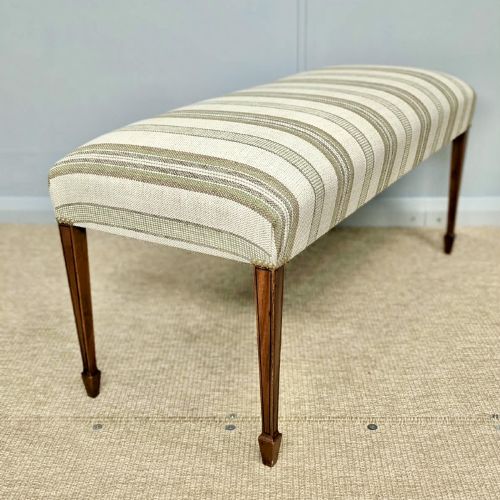


Vintage Duet Bench
A vintage duet bench offers shared seating with extended proportions, and collectors seek these double-seat piano stools and window seats for practical utility.
Vintage Duet Bench
When you search for a vintage duet bench, you encounter piano stools, window seats, and freestanding duet benches spanning the Edwardian period through to the 1920s. These pieces provide wide seats intended for two people, often positioned at a piano or placed in a reception room.
The versions you meet most frequently on this page date from around 1900, showing Edwardian influence alongside Georgian Revival and Queen Anne Revival styles. Formats range from plain mahogany frames to inlaid woodwork and French provincial designs.
Makers produced these seats in various configurations, including piano stools with music storage beneath the seat and window seats designed for extended placement. Walnut, mahogany, and giltwood appear regularly as the primary structural woods.
Materials and construction
Workshops built these double seats primarily using solid mahogany and walnut timbers, sometimes applying decorative wood inlay to the frame. Craftsmen shaped the wood into revival styles such as Queen Anne, Georgian, and Louis XVI.
Upholstery materials include fabric, velvet, leather, and tapestry for the seat pads, occasionally accented with brass details. Giltwood finishes also appear on French-influenced examples from the mid-nineteenth century.
Vintage Duet Bench Retail Price Guide 2026
Typical asking prices for vintage duet bench among the pieces listed under this phrase on Sellingantiques today, from the lower quarter to the upper quarter. They describe what is for sale here now, not the wider market.
Current listings feature materials including mahogany, walnut, giltwood, leather, velvet, and fabric across pieces dating from 1860 to the 1920s.
Distinctions in quality
The refinement of the timber carving and the precision of inlaid woodwork set finer examples apart from simpler utility seating. Superior pieces display harmonious proportions across the wider frame necessary for two sitters.
The choice of covering material, from standard fabric to rich velvet, leather, or tapestry, indicates the original grade of the commission. Intricate gilt finishes and sturdy structural joinery also distinguish higher-tier pieces.
The Vintage Duet Bench Glossary
- Duet stool
- A wide seating form designed to accommodate two people simultaneously, frequently utilised at a piano. These pieces often feature hinged seats revealing compartment space for music sheets.
- Edwardian
- A stylistic period spanning the early twentieth century characterised by lighter furniture designs and revivals of earlier eighteenth-century aesthetics. Pieces from this era often utilise mahogany with subtle inlay.
- Georgian Revival
- A design movement looking back to the eighteenth-century proportions and motifs of the Georgian era. Furniture in this style frequently employs classic wood choices like mahogany and walnut.
- Giltwood
- Timber treated with gold leaf or gold paint to create a decorative metallic surface. This finish appears frequently on pieces influenced by French aesthetic traditions.
Vintage Duet Bench: Frequently Asked Questions
What is a duet bench used for?
These wide seats were originally manufactured to accommodate two musicians playing a piano together. Today, they function equally well as window seats or hallway benches.
Their extended proportions provide practical surface space while maintaining a compact profile suitable for various rooms.
Are these benches comfortable for daily seating?
Most pieces feature upholstered pads covered in fabric, leather, velvet, or tapestry designed for sitting during piano practice or brief periods of rest. The generous width allows two people to sit comfortably side by side.
Original padding materials vary in firmness depending on the age and initial quality of the piece.
What woods were used for these seats?
Mahogany and walnut serve as the predominant hardwoods found in these listings, offering durable frames and rich natural grains. Some decorative variants also incorporate giltwood finishes.
Craftsmen selected these sturdy timbers to support the extended frame required for double seating.