
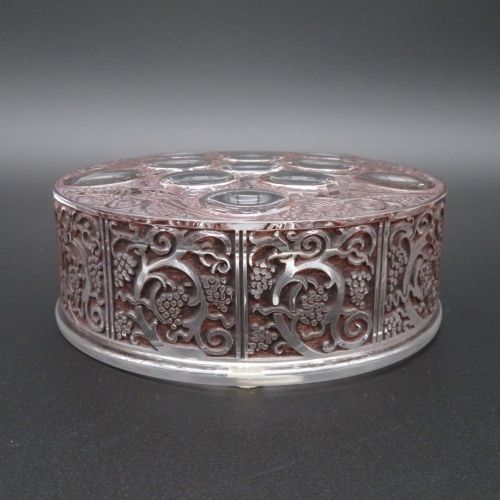


Vintage Dresser Powder Jar
These vintage dresser powder jar examples bring Art Deco dressing table charm into a modern bedroom, offering both storage and period style.
Vintage Dresser Powder Jar
A vintage dresser powder jar serves as a decorative container for cosmetic powders and small vanity items on a dressing table. Most pieces found here belong to the Art Deco period, dating primarily from the nineteen-twenties and nineteen-thirties.
Origins span across France, Germany, and Austria, with notable examples created in crystal by Lalique and in ceramic by Limoges. Buyers encounter both figural lids and cut glass bowls fitted with enamel tops.
How they were made
Craftsmen shaped these items using ceramic, porcelain, and crystal, applying glazes and hand-painted details to the surfaces. Metal components incorporated silver and blue enamel, whilst some designs utilised gold leaf and gilt highlights.
Moulded glass techniques produced frosted crystal bodies, particularly in pieces originating from French glasshouses. Ceramic and porcelain items received kiln-fired glazes, often combined with textile or modelled half doll attachments.
Listings feature items from the nineteen-twenties and nineteen-thirties, utilising porcelain, crystal, ceramic, and frosted glass.
What varies in quality
The distinction between standard production and finer pieces lies in the crispness of the modelling and the precision of the hand-painting on porcelain figures. Simpler ceramic bowls sit at one end, whilst renowned maker attributions and complex crystal moulding represent the other.
Lalique·Limoges
The Vintage Dresser Powder Jar Glossary
- Half doll
- A ceramic upper torso figure used to adorn powder brushes, lamps, and jar lids. These figures typically depict stylized women of the period.
- Art Deco
- A design style dominant in the nineteen-twenties and nineteen-thirties characterised by geometric shapes and stylized forms. It influences the architecture of these powder boxes.
- Flapper girl
- A cultural archetype of the nineteen-twenties representing modern young women with short hair and straight-line dresses. Such figures frequently top the ceramic powder jars.
- Gilt
- A thin layer of gold applied to the surface of porcelain or metal. It provides metallic accents on the rims and details of the jars.
- Frosted glass
- Glass treated to achieve a cloudy or opaque surface texture through acid etching or sandblasting. This technique defines the aesthetic of decorative crystal jars.
Vintage Dresser Powder Jar: Frequently Asked Questions
What are vintage dresser powder jars?
These items are lidded containers designed to hold cosmetic powder on dressing tables during the early twentieth century. They combine practical storage with ornamental figurine lids.
Most examples date from the Art Deco era, reflecting the design tastes of the nineteen-twenties and nineteen-thirties.
How were powder jars used?
Owners placed loose face powder inside the ceramic or glass bowl for daily cosmetic application. The lids kept the contents clean and added a decorative touch to bedroom furniture.
Smaller versions also functioned as trinket boxes for rings and pins.
How do I date these jars?
Dating relies on stylistic markers of the Art Deco period, typically placing pieces around nineteen-thirty. Materials like frosted crystal and specific ceramic glazes help confirm this timeframe.
Maker marks on the base of Limoges or Lalique items provide further chronological clues.
How do I clean a powder jar?
Gentle dusting with a soft cloth preserves the fragile painted surfaces and enamel details on ceramic and glass. Avoid harsh chemical cleaners that might damage gilt or gold leaf.
Porcelain bowls tolerate careful washing with mild soap and warm water if free of glued additions.