




Vintage Dress Buttons
These vintage dress buttons bring distinct period character to attire, offering neat silver, enamel and cast metal designs for the discerning collector.
Vintage Dress Buttons
The selection on this page leans heavily towards Edwardian silver and enamel sets, alongside nineteenth-century toggle buttons and cased designs. Buyers frequently select these items to complete historical garments or to repurpose them into contemporary jewellery.
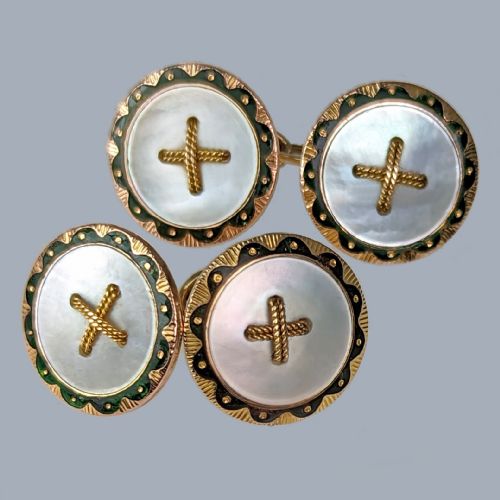
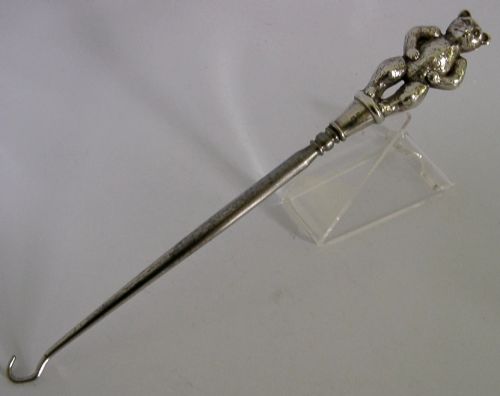
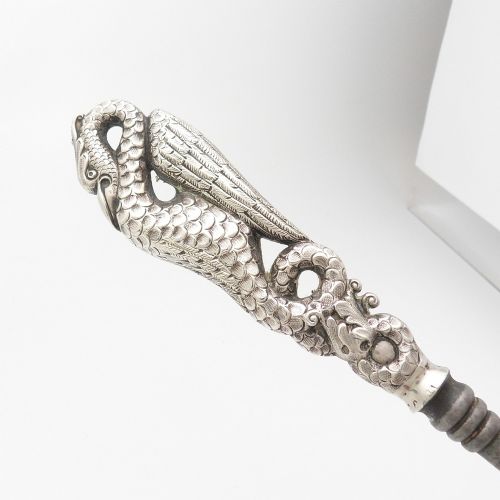
Alongside actual buttons, the evidence reveals related dressing accessories such as silver button hooks and cuff studs. These items share the same metalworking traditions and stylistic periods as the buttons themselves.
Materials and Manufacture
Silversmiths utilised sterling silver and silver gilt to shape durable fastenings, often employing casting techniques to achieve high relief ornamentation. Enamel work added vibrant colour to metal bases, creating glossy surfaces that caught the light.
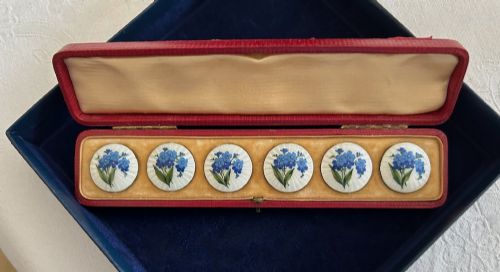
Makers integrated natural materials such as mother of pearl alongside brass and steel to vary texture and weight. Sets were frequently paired with velvet-lined presentation cases that preserved the finish of the metalwork.
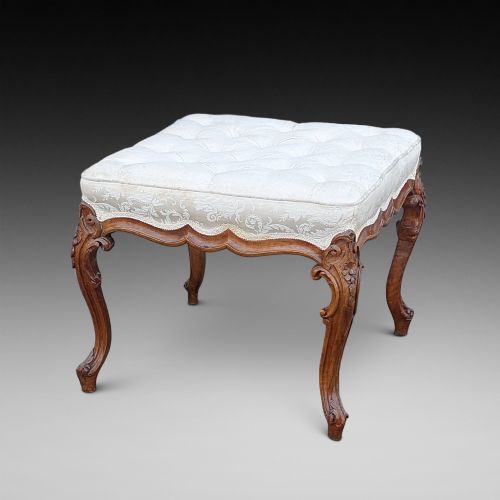
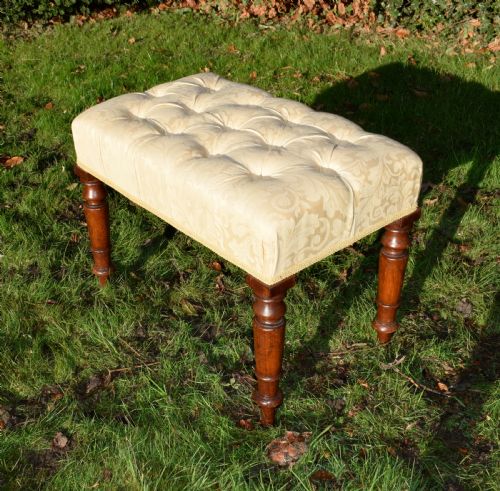
The inventory combines small dress fastenings with larger items including footstools, slipper chairs, and dressing table accessories.
Evaluating Quality
Superior examples distinguish themselves through crisp detail in cast ornamentation and the intact preservation of applied enamel work. Hand-engraved lines remain sharp and deep on better-executed pieces, showing little sign of wear.
Complete cased sets maintain a higher desirability than stray examples, particularly when the original silk or velvet lining remains undamaged. Hallmarks stamped into the metal provide clear evidence of origin and maker, adding tangible authority to the piece.
Solomon Blanckensee Son·Deakin & Francis·James Deakin & Sons
The Vintage Dress Buttons Glossary
- Hallmark
- Official stamps applied to precious metals indicating the standard of purity, the assay office, and the date of testing. These marks provide a reliable guide to the age and origin of silver buttons.
- Toggle button
- A fastening style featuring a crossbar or elongated fastener pushed through a loop rather than a traditional flat disc. Nineteenth-century examples often utilise Maltese silver in this configuration.
- Enamel
- A glassy substance fused to metal through high-temperature firing to add decorative colour. Coloured enamels require steady heat control to prevent cracking during cooling.
- Cast metal
- Molten material poured into a mould to shape intricate surface relief. This technique allowed Victorian and Edwardian makers to produce uniform sets with elaborate decorative motifs.
Vintage Dress Buttons: Frequently Asked Questions
How were vintage dress buttons worn?
These fasteners secured cuffs, collars, and closures on formal attire, often serving as visible ornaments rather than hidden fasteners.
Matched sets were designed to present a uniform decorative appearance across the front of a waistcoat, jacket, or gown.
Can these buttons still be used on modern clothing?
Many collectors attach them to contemporary garments or mount them onto bespoke jewellery settings like cufflinks and earrings.
Care must be taken with delicate antique fixings and fragile enamel surfaces during attachment.
How do I identify Edwardian silver buttons?
Edwardian examples frequently feature hallmarks from the early twentieth century alongside bright enamel work or cast floral motifs.
They often survive in fitted presentation cases lined with silk or velvet to protect the polished metal.
What materials are common in these buttons?
Sterling silver, brass, steel, and mother of pearl form the primary structural components across the available selection.
Coloured enamel and gilded finishes were frequently added to enhance the visual depth of the metalwork.