

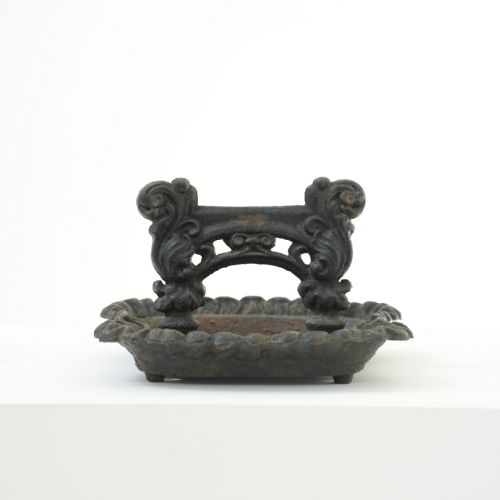


Vintage Door Scraper
These vintage door scraper examples are sturdy iron and stone appliances designed to clean mud from boots before entry.
Vintage Door Scraper
When you search for a vintage door scraper, you encounter hard-wearing domestic metalwork designed for everyday muddy boots. The examples on this page span the Georgian and Victorian eras, taking the form of freestanding or inset threshold cleaners.
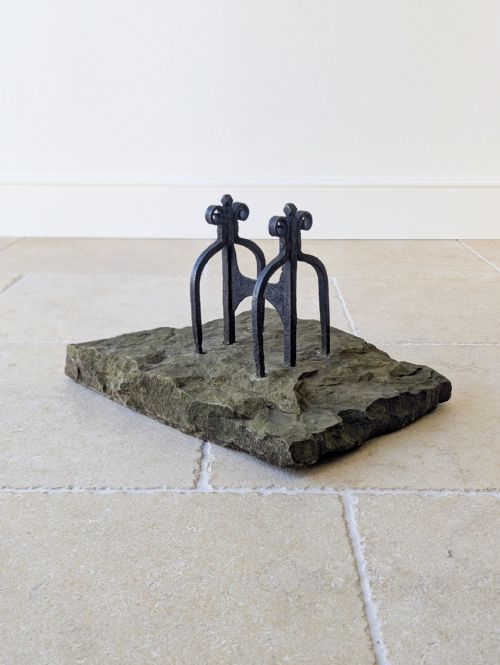
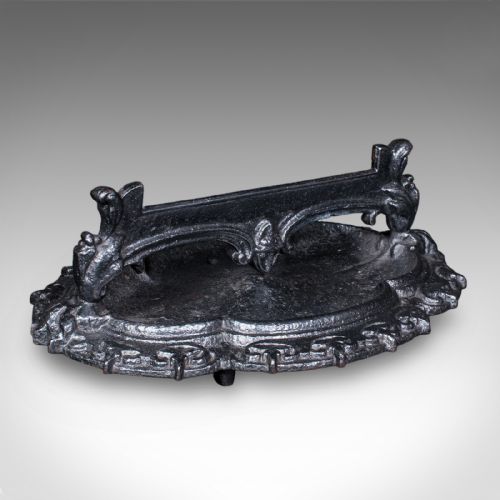
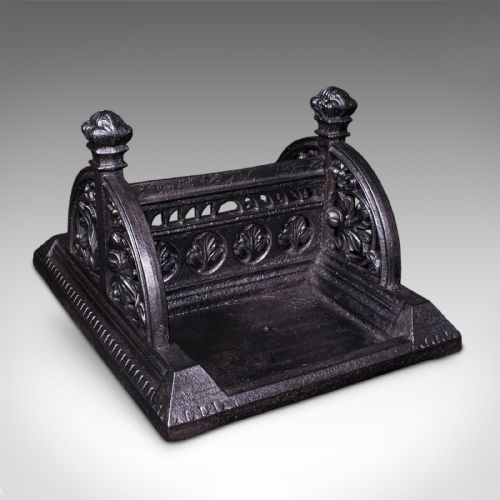
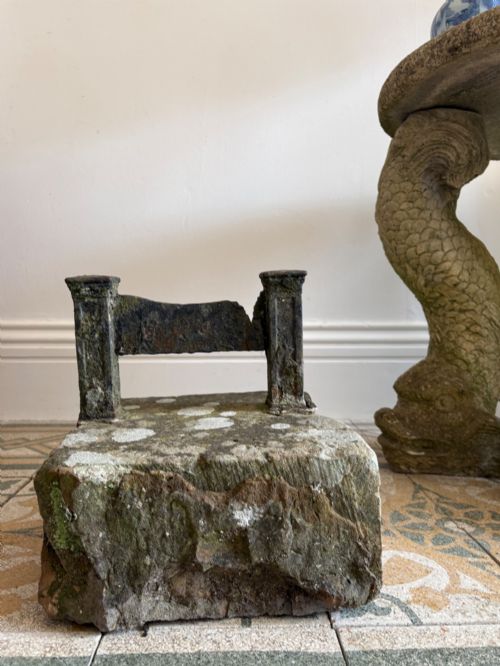
You are most likely to meet cast iron blades combined with heavy Yorkstone or hewn stone blocks. These utilitarian objects range from simple country house installations to ornate Victorian Gothic Revival townhouse pieces.
How they were made
Makers utilised durable cast iron and wrought iron for the upright scraper blades and shoe pull handles. These metal components were typically forged or cast in foundries, sometimes bearing foundry attributions such as Coalbrookdale.
The metal blades are frequently secured into heavy stone bases, including Yorkstone and hewn stone blocks, to provide the necessary weight and stability for rigorous boot cleaning.
Vintage Door Scraper Retail Price Guide 2026
Typical asking prices for vintage door scraper among the pieces listed under this phrase on Sellingantiques today, from the lower quarter to the upper quarter. They describe what is for sale here now, not the wider market.
Several examples incorporate built-in shoe pull loops, ensuring Georgian and Victorian guests could wrestle off muddy boots without losing their balance.
What varies in quality
The distinction between standard utility items and finer examples lies in the complexity of the ironwork and the quality of the stone base. Elaborate Victorian Gothic Revival designs and signed foundry pieces demonstrate superior artistic execution compared to plain municipal or domestic hardware.
Weight and structural integration also determine quality, as dense hewn stone blocks and thick wrought iron show greater substance than simpler cast components.
Coalbrookdale
The Vintage Door Scraper Glossary
- Boot scraper
- A metal blade mounted near a doorway specifically intended for scraping mud and manure from footwear. They are commonly found fixed to stone plinths or directly into exterior walls.
- Yorkstone
- A tough, fine-grained sandstone quarried in Yorkshire, frequently used as a solid mounting block for heavy ironwork. It provides a stable, weather-resistant foundation.
- Cast iron
- An iron-carbon alloy poured into moulds to create rigid components with detailed profiles. It forms the primary blade material for the majority of Victorian examples.
- Wrought iron
- Tough, malleable iron beaten into shape by hand, often utilised in earlier Georgian designs for its fibrous strength. It resists snapping under heavy leverage.
Vintage Door Scraper: Frequently Asked Questions
What is a vintage door scraper?
A vintage door scraper is a functional metal blade mounted near an entrance to clean dirt from heavy boots before entering a house. These items date primarily from the Georgian and Victorian periods.
They combine robust iron blades with heavy stone bases to withstand the daily pressure of scraping heavy footwear.
Where were door scrapers placed?
They were positioned immediately outside exterior doorways, often inset into stone steps or placed beside thresholds of country houses and townhouses. Their placement ensured mud stayed outside the main living areas.
Many examples remain fixed to heavy Yorkstone blocks designed to rest securely on the ground without permanent installation.
How do I date a door scraper?
Dating relies on material construction, style, and mounting methods, ranging from early hand-forged wrought iron Georgian pieces to mass-produced Victorian cast iron foundry items. Stylistic clues include Victorian Gothic Revival ornamentation.
Simpler utilitarian forms often date to the mid to late nineteenth century, while heavier stone-set examples point towards country house and townhouse contexts.
Can I use an antique scraper outside?
Yes, these items were built for exterior use and naturally weather outdoor conditions due to their durable iron and stone construction. Regular placement on doorsteps continues their original intended function.
Their heavy stone bases and thick metal blades require no special maintenance beyond occasional cleaning of accumulated debris.