





Vintage Dining Candelabra
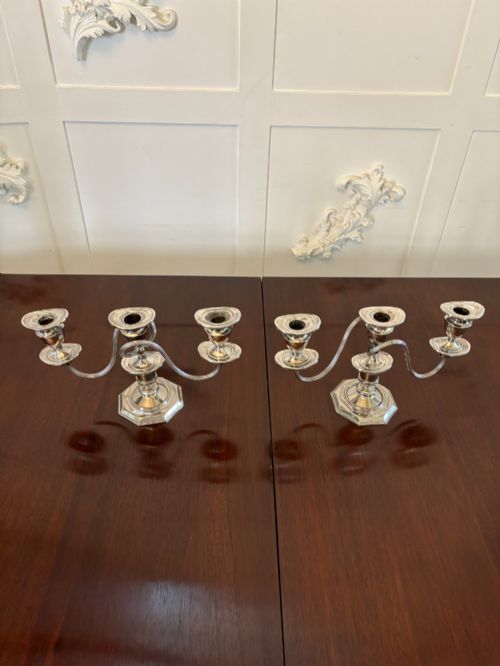
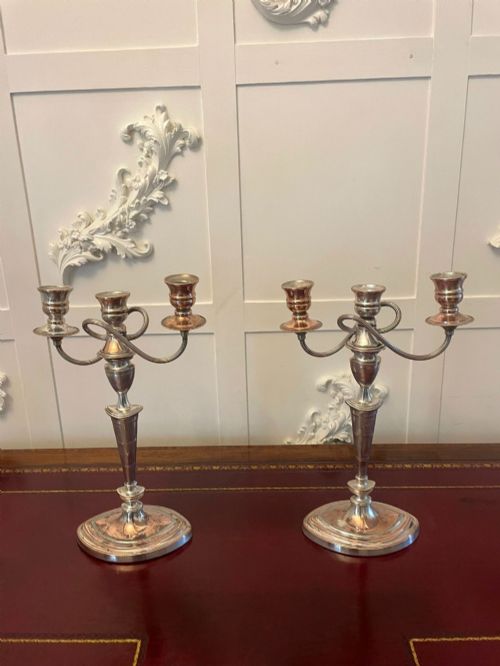
These vintage dining candelabra bring genuine presence to a table, combining substantial weight with the warm glow of silver plate and sterling silver.
Vintage Dining Candelabra
Vintage dining candelabra are multi-branch lighting fixtures designed to sit at the centre of a dining table during meals. When searching for vintage dining candelabra, buyers encounter numerous pairs dating from the Victorian and Edwardian eras alongside mid-twentieth-century examples.
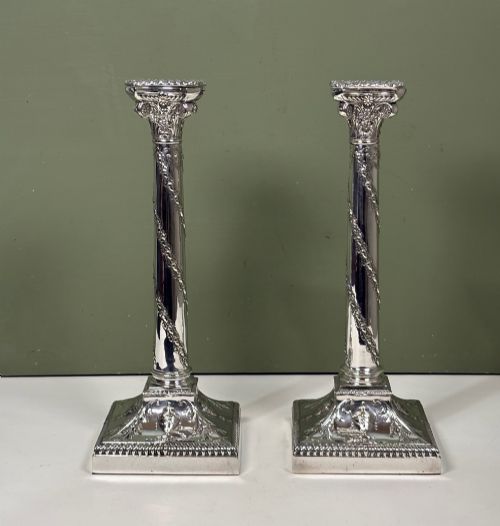
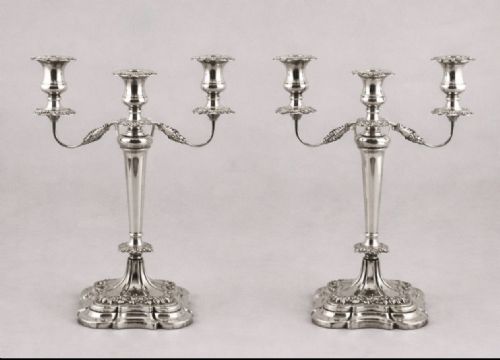
The pieces on this page span several stylistic revivals, including Rococo Revival, Neoclassical, and George I styles. Most examples offer two to five light branches, though simpler convertible candlesticks also appear among the selections.
The majority of these pieces are plated wares executed in silver plate, Old Sheffield Plate, or EPNS, though solid sterling silver items also feature in the inventory. Forms range from low table models to grander five-light candelabra with detachable branches.
How they were made
Silversmiths and manufacturers utilised traditional methods of casting, stamping, and hand-finishing to produce these dining candelabra. Silver plate and electroplated nickel silver items were formed over base metals like copper or nickel silver, creating durable structures capable of supporting multiple heavy branches.
Sterling silver pieces involved direct casting and hammering of the precious metal, often weighted internally with resin or plaster to ensure stability on the dining surface. Sheffield plating techniques appeared on older pieces, fusing a thin sheet of silver to a copper core before shaping.
Surface ornamentation such as gadrooning, scrolling foliage, and beaded edges was hand-applied or stamped using steel dies. Many designs incorporated modular components, allowing multi-light branches to lift away from the main candlestick base.
Vintage Dining Candelabra Retail Price Guide 2026
Typical asking prices for vintage dining candelabra among the pieces listed under this phrase on Sellingantiques today, from the lower quarter to the upper quarter. They describe what is for sale here now, not the wider market.
Materials range from solid sterling silver and traditional Old Sheffield Plate to copper and electroplated nickel silver.
What varies in quality
Quality in these pieces rests upon the crispness of the cast ornamentation and the thickness of the silver deposition. Finer examples retain sharp relief in their scrollwork and acanthus leaves, whereas lesser pieces show smoothed details from worn dies or aggressive polishing.
The structural integrity of the branch junctions dictates much of the value. Superior candelabra fit together snugly without wobble at the sockets and joints, demonstrating precise engineering in their threaded connections or drop-in nozzles.
Maker attribution and material choice further separate standard production items from workshop pieces. Fully marked sterling silver or identified Old Sheffield Plate carries distinct advantages over unmarked electroplated items of standard commercial manufacture.
Smith & Sissons & Co·Barker Ellis·Blagden Hodgson & Co
The Vintage Dining Candelabra Glossary
- Candelabra
- A branched lighting fixture designed to hold multiple candles simultaneously. They typically feature a central shaft dividing into two or more arms.
- Old Sheffield Plate
- An early form of plated metal produced by fusing a sheet of silver to a copper ingot before rolling. This technique creates a distinctive edge where the copper core shows through minor wear.
- EPNS
- An abbreviation for Electroplated Nickel Silver, denoting a base metal of copper, nickel, and zinc coated in an electrolytic bath of pure silver. It became the dominant plating method from the mid-nineteenth century onward.
- Rococo Revival
- A nineteenth-century design style characterised by asymmetrical scrollwork, C-scrolls, and naturalistic floral motifs. It draws inspiration from the French Louis XV period.
- Drip Pan
- A small circular plate fitted beneath the candle nozzle to catch melting wax. In better pieces, these pans are removable for cleaning.
Vintage Dining Candelabra: Frequently Asked Questions
How do I clean silver plated candelabra?
Use a soft cloth and a reputable silver cream designed for plated wares, applying gentle pressure to avoid wearing through the silver layer to the base metal. Rinse with lukewarm water and dry immediately with a clean flannel.
Avoid abrasive dips or harsh scrubbing brushes, particularly around engraved details and soldered joints where the plating may be thinner. Regular light dusting prevents heavy tarnish accumulation.
Can I use standard candles in antique candelabra?
Most antique sockets accommodate standard taper candles, though minor variations in nineteenth-century sizing sometimes require trimming the base of the candle slightly with a knife.
For a secure fit without shaving the wax, small beeswax wick rings or subtle card inserts inside the nozzle keep candles upright during dinner parties.
How do I tell sterling silver from silver plate?
Examine the piece for hallmarks, which on sterling silver typically include a standard mark such as a lion passant alongside assay office symbols and date letters. Silver plated items usually bear maker marks indicating electroplating or nickel content.
Look closely at high-wear areas like edges and corners where underlying copper or yellowish nickel shows through if the silver layer has worn away.
How were candelabra used on historical dining tables?
Candelabra served as the primary illumination for evening dining before electric lighting, placed centrally to cast light downward onto food and guests. Lower-profile branch models allowed diners to converse across the table without visual obstruction.
Pairs were often arranged symmetrically along the length of larger tables alongside matching entrée dishes and centrepieces.