
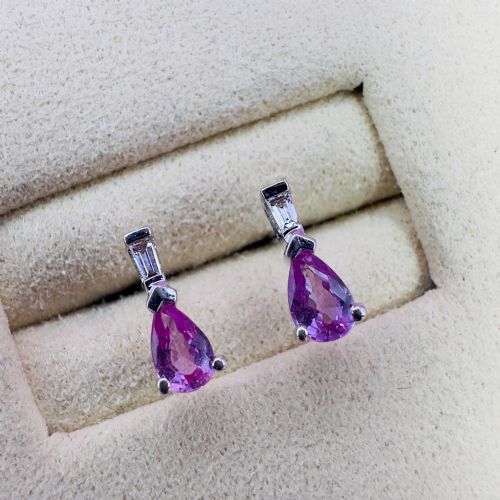


Vintage Diamond Studs
Vintage diamond studs bring together classic forms and lasting materials, offering everyday wearability anchored in decades past.
Vintage Diamond Studs
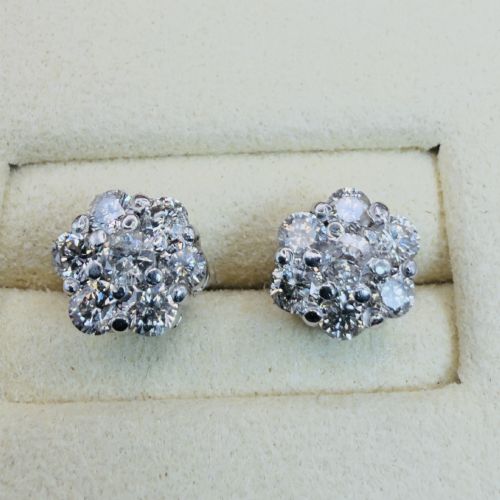
When you search for vintage diamond studs, you encounter earrings spanning the Victorian era through the mid-century, with designs ranging from simple solitaires to elaborate cluster formations. The most common forms on this page include floral and daisy cluster configurations alongside classic screw-back and clip-on fastenings from the mid-twentieth century.
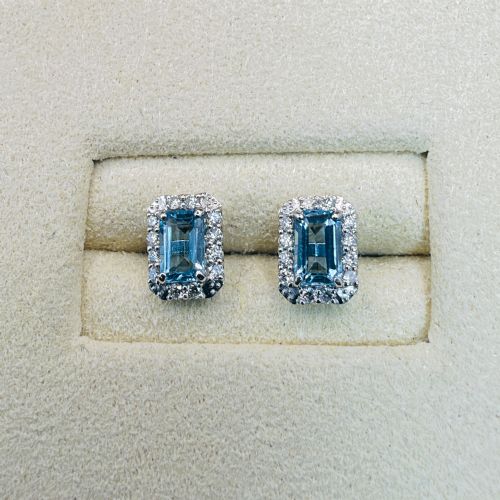
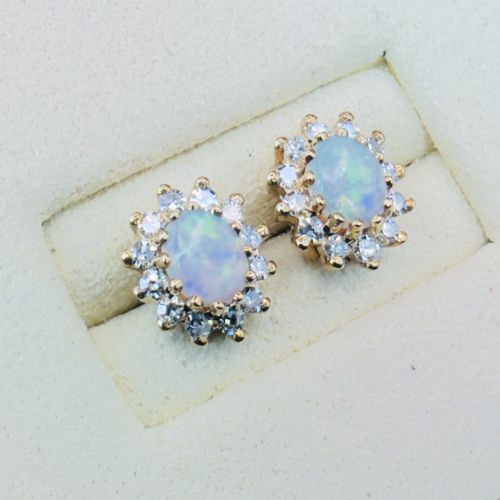
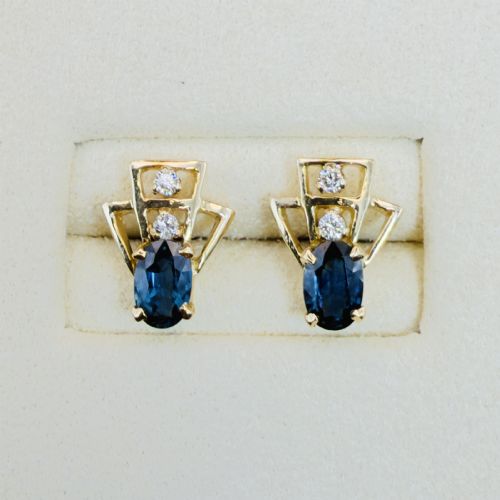
The inventory draws on decades such as the 1920s Art Deco period and the 1950s, capturing shifts in jewellery design from geometric motifs to organic floral silhouettes. Central diamonds frequently pair with coloured stones like sapphires, emeralds and aquamarines, mounted in white gold, yellow gold or platinum.
How they were made
Maker techniques rely heavily on platinum and 18ct white or yellow gold settings to secure central diamonds alongside surrounding gemstones like sapphires and pearls. Claw settings and cluster arrangements predominate, uniting metalwork with stones through traditional bench methods of the period.
Construction methods utilise screw backs, clip-ons and traditional post fittings, reflecting the practical requirements of mid-century and earlier earware design. Silver and 9ct gold also appear in earlier Victorian and Edwardian pieces, showing diverse alloy choices across different decades.
Vintage Diamond Studs Retail Price Guide 2026
Typical asking prices for vintage diamond studs among the pieces listed under this phrase on Sellingantiques today, from the lower quarter to the upper quarter. They describe what is for sale here now, not the wider market.
Some vintage screw backs require a patient twist of the fingers, turning earring attachment into a calming daily ritual.
What varies in quality
Quality differences emerge in the execution of the stone setting, the symmetry of cluster layouts, and the condition of the underlying precious metals. Heavier platinum and 18ct gold mountings demonstrate greater durability compared to lighter 9ct alternatives.
The selection of accompanying stones - such as high-grade emeralds, sapphires or pearls - alongside the cut and clarity of the diamonds themselves determines the overall calibre of each pair. Articulation in floral or geometric cluster designs indicates skilled bench work from the respective era.
Ilias Lalaounis
The Vintage Diamond Studs Glossary
- Cluster
- A cluster setting arranges smaller diamonds or coloured gemstones around a central stone to create a larger visual impact. This style frequently mimics floral or daisy motifs.
- Solitaire
- A mounting holding a single gemstone, typically a diamond, designed to showcase the stone without surrounding ornamentation. This minimalist form appears across multiple decades.
- Old Cut
- A precursor to the modern brilliant cut, featuring a smaller table, higher crown and larger culet. These stones catch candlelight and early electric illumination differently than modern cuts.
- Screw Back
- A fastening mechanism utilising a threaded post and a threaded nut to secure the earring. This design provides added security during wear.
- Platinum
- A dense, durable white metal utilised in jewellery manufacturing for its strength in secure stone settings. It gained popularity during the Edwardian and Art Deco periods.
Vintage Diamond Studs: Frequently Asked Questions
How do I care for vintage diamond studs?
Clean your earrings gently using warm soapy water and a soft brush to remove everyday oils from the setting. Avoid harsh chemical dips, particularly if the piece incorporates softer gemstones or pearls.
Store each pair separately in a lined box to prevent metal scratching and stone abrasion. Regular checks by a jeweller ensure the claw settings remain secure.
Are vintage screw backs difficult to use?
Screw backs require twisting the backing onto a threaded post rather than pushing it straight on. This method provides extra security, which was particularly important for heavier cluster designs.
With a little practice, fastening them becomes straightforward and reliable for daily wear. They offer peace of mind against accidental loss.
How can I tell an Art Deco pair apart?
Art Deco pieces from the 1920s and 1930s typically feature geometric patterns, symmetrical lines, and platinum settings. They often incorporate calibré-cut coloured stones alongside diamonds.
In contrast, 1950s designs lean towards organic floral motifs and softer cluster shapes. Examining the mounting style helps identify the manufacturing era.
Can I wear these studs every day?
Most diamond studs transition easily from daytime wear to evening occasions due to their versatile size and secure fastenings. Platinum and 18ct gold mountings offer the durability needed for regular use.
Take care to remove them before swimming or heavy physical activity to protect older metalwork. Proper maintenance preserves the integrity of the setting over time.