

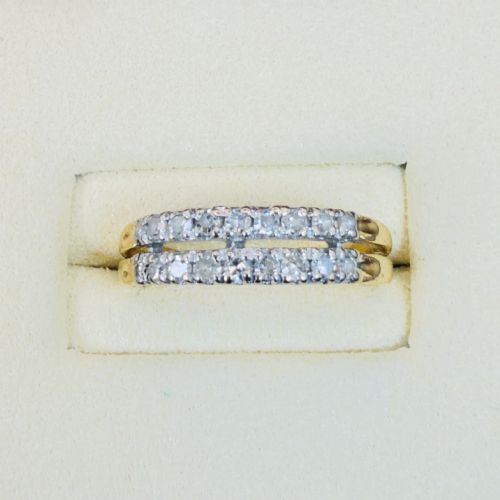
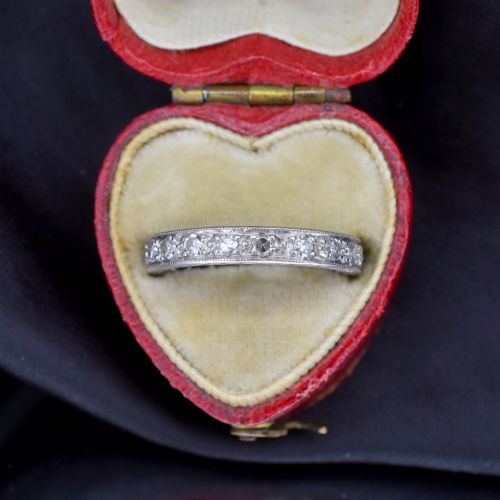
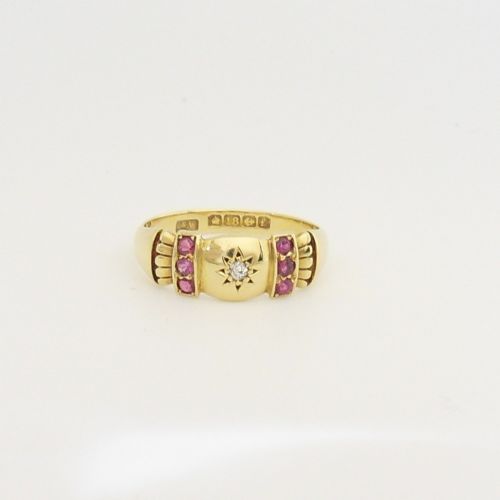
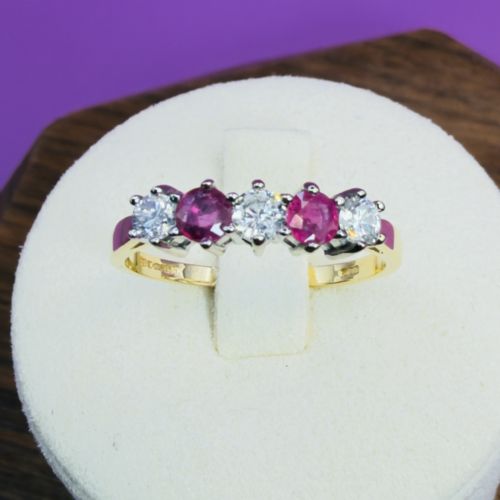


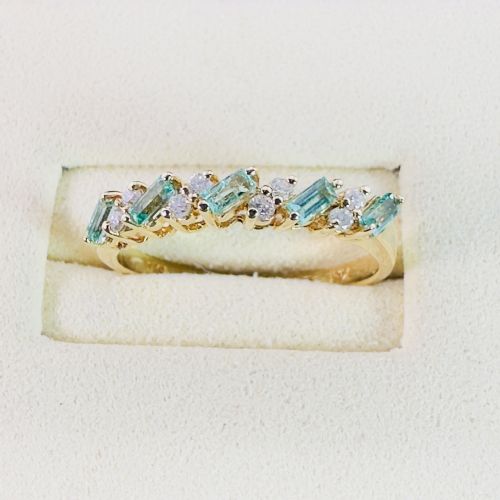


Vintage Diamond Stackable Ring
A vintage diamond stackable ring offers slender geometry and brilliant stones, combining easily with other bands for everyday wear.
Vintage Diamond Stackable Ring
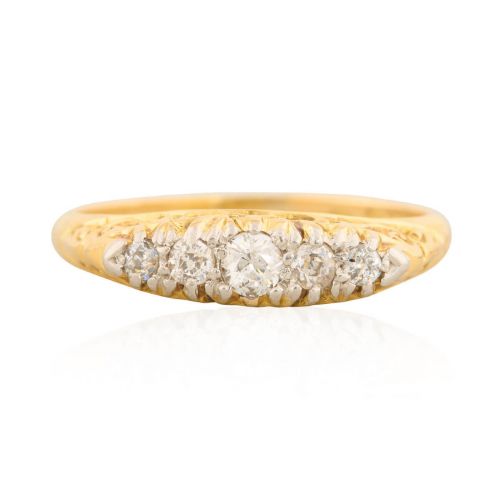
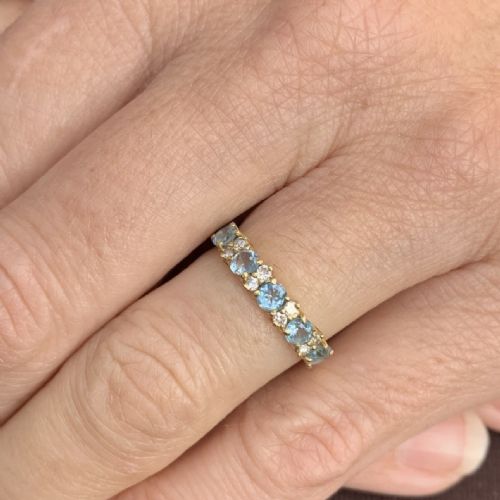
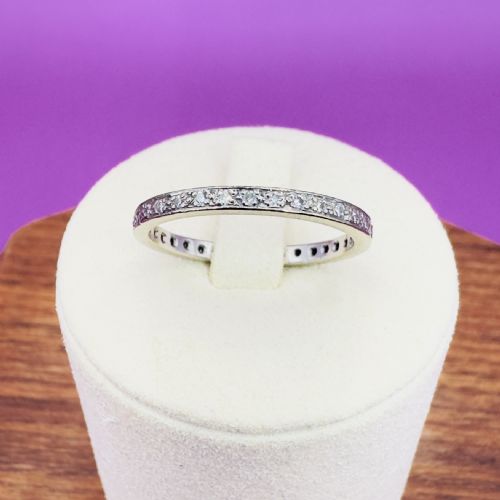
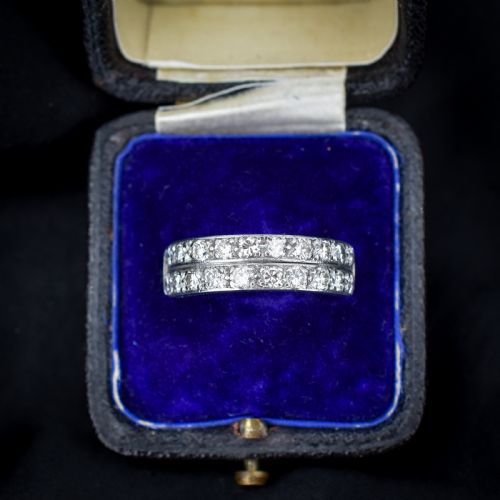
A vintage diamond stackable ring takes many forms, most commonly appearing as half eternity bands, full eternity rings, and multi-stone band rings designed to sit alongside other jewellery. These pieces span from the late nineteenth century through the Edwardian and Art Deco eras to the mid-twentieth century, showing how slender ring profiles developed over decades.
The materials paired with diamonds in these listings include 18ct yellow and white gold, 9ct gold, and 14ct gold, often accented with rubies, sapphires, emeralds, and blue spinels. Buyers frequently encounter five-stone half hoops and diamond band configurations that lend themselves to layering on the finger.
Pieces from the Edwardian period feature delicate milgrain work and silver-topped gold settings, whereas mid-century examples lean towards clean lines in white or yellow gold. This variety lets collectors choose between ornate antique cluster arrangements and streamlined modernist bands.
How they were made
Goldsmiths utilised 18ct gold, 9ct gold, and platinum settings to house diamonds alongside coloured gemstones such as rubies and sapphires. Stones were hand-set into channels, starburst motifs, or claw configurations depending on the prevailing style of the decade.
Manufacturing methods evolved from the intricate hand-pierced gallery work of the Victorian and Edwardian periods to the precise geometric channels seen in Art Deco pieces. Metal smiths balanced durability with delicate appearance to create low-profile bands suitable for stacking.
Vintage Diamond Stackable Ring Retail Price Guide 2026
Typical asking prices for vintage diamond stackable ring among the pieces listed under this phrase on Sellingantiques today, from the lower quarter to the upper quarter. They describe what is for sale here now, not the wider market.
Listings span periods from 1890 through the 1960s, featuring diamonds alongside sapphires, rubies, emeralds, and spinels set in 9ct, 14ct, and 18ct gold.
What varies in quality
Quality rests in the precision of the stone setting and the integrity of the precious metal band, where superior examples maintain crisp claw work and unrubbed channel walls. The choice of materials also elevates a piece, with platinum settings and heavier 18ct gold mounts representing finer manufacturing standards than lighter 9ct alternatives.
The selection and matching of the diamonds and accompanying gems dictate visual harmony, as well-matched stones display uniform brilliance and colour across the entire hoop. Hand-finished details like milgrain edging remain sharp on better-preserved rings, showing minimal smoothing from wear over the decades.
The Vintage Diamond Stackable Ring Glossary
- Half eternity
- A ring set with diamonds or gemstones along only the top half of the band. This design allows for easier resizing and a more comfortable fit against adjacent fingers.
- Milgrain
- A decorative border of tiny metal beads along the edge of a setting. This technique was widely utilised during the Edwardian and Art Deco periods to soften metal lines.
- Half hoop
- A ring style where stones are arranged in a single row across the top arc of the band. It serves as a precursor to modern eternity designs.
- Starburst
- A geometric engraving pattern radiating outward from a central stone to resemble a star. Victorian jewellers frequently employed this motif on band rings.
- Harem ring
- A multi-tiered ring constructed from several interlocking bands that move together as a single unit. These designs often combine different gold colours and gemstone types.
Vintage Diamond Stackable Ring: Frequently Asked Questions
Can I wear these rings every day?
Most vintage diamond stackable rings suit daily wear provided the metal settings remain secure and the band thickness is adequate. Selecting designs with sturdy claw or channel settings helps protect the stones during routine tasks.
Checking the ring periodically for loose stones ensures longevity. Pairing them carefully with other bands prevents undue friction between neighbouring metal edges.
How do I identify an Edwardian ring?
Edwardian rings typically feature platinum or silver-topped gold settings combined with intricate openwork galleries and milgrain detailing. Diamonds in these pieces are often old-cut and set to maximise light capture.
The overall aesthetic prioritises lightness and lace-like delicacy. This contrasts with the heavier yellow gold mounts common in earlier Victorian pieces.
What is the difference between half and full eternity?
A half eternity ring places diamonds only across the top visible arc of the band, leaving plain metal at the back. Full eternity rings continue the unbroken line of stones all the way around the finger.
Half eternity versions offer the practical advantage of easier resizing by a jeweller. Full eternity pieces require precise sizing from the outset because the stone setting cannot be altered.
How do I match a stackable ring with other bands?
Matching stackable rings involves balancing the metal colour, band width, and stone profile so the pieces sit flush against one another. Combining white gold or platinum diamond bands with yellow gold provides a mixed-metal contrast.
Considering the height of the settings prevents lower bands from sliding underneath stone clusters. Slim band profiles allow multiple rings to be worn together without feeling bulky.