
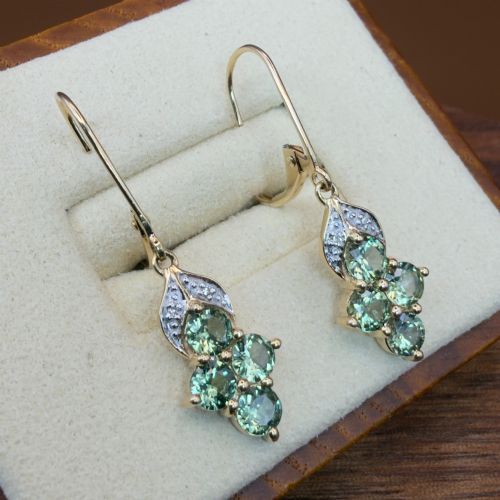
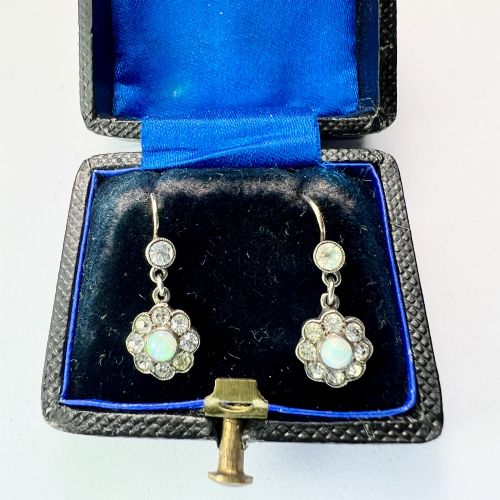


Vintage Diamond Cluster Earrings
Vintage diamond cluster earrings group central stones encircled by smaller gems, offering enduring sparkle across periods from Victorian work to mid-century designs.
Vintage Diamond Cluster Earrings
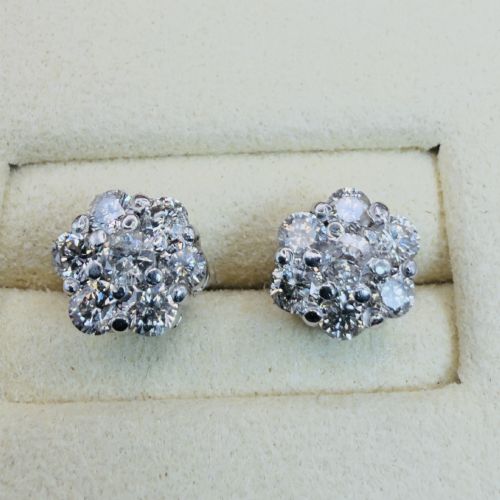
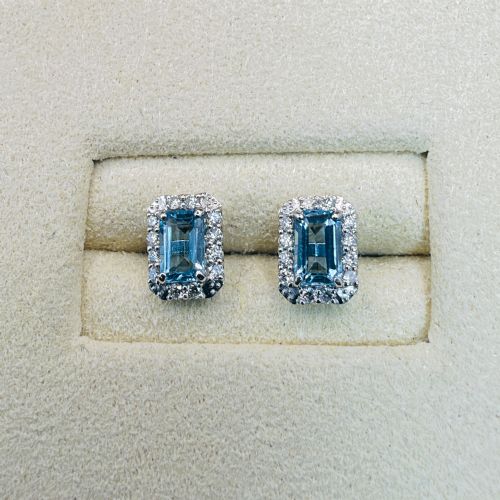
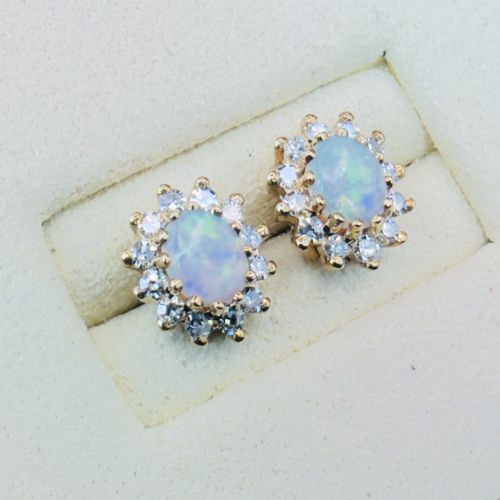
Vintage diamond cluster earrings arrange a central gemstone, such as a diamond, sapphire, emerald or aquamarine, within a framing border of smaller diamonds. These pieces appear frequently across Art Deco, Edwardian, Victorian and mid-century styles, taking the form of close-fitting studs, hinged drops or elaborate hanging clusters.
The layout often follows a floral or daisy motif, concentrating light towards the middle while smaller stones create a wide halo. Buyers encounter these configurations in everyday stud fittings as well as transformable night-and-drop formats designed for evening wear.
Materials and construction methods
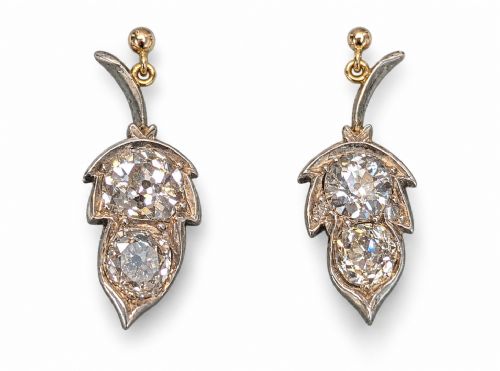
Makers set stones in platinum, 18ct white gold, yellow gold, rose gold and silver, frequently combining silver and gold in earlier pieces to enhance the contrast against the metal. Early twentieth-century workshops often utilised platinum for its strength, allowing delicate millegrain edges and fine wirework around stone clusters.
Gemstones feature historical cuts such as old European, old mine or single cuts alongside emerald, brilliant and cushion cuts. Screw backs, clip-ons, post fittings and hinge backs reflect the changing mechanical fastenings used by jewellers across the Victorian, Edwardian and mid-century decades.
Vintage Diamond Cluster Earrings Retail Price Guide 2026
Typical asking prices for vintage diamond cluster earrings among the pieces listed under this phrase on Sellingantiques today, from the lower quarter to the upper quarter. They describe what is for sale here now, not the wider market.
Some Victorian pieces incorporate delicate human hair behind crystal compartments, proving Victorians loved keeping relatives exceptionally close.
Assessing quality in cluster designs
Quality rests on the symmetry of the stone arrangement, the uniformity of the surrounding halo diamonds and the crispness of any hand-worked millegrain detail. Higher-tier examples maintain tight, even spacing between stones without excessive visible solder or heavy-handed modern repairs.
The choice and saturation of central coloured stones, including sapphires, emeralds and aquamarines, directly influence the visual impact alongside the clarity and colour grade of the supporting diamond cluster.
Julius Cohen, Knoll & Pregizer
The Vintage Diamond Cluster Earrings Glossary
- Cluster
- A gemstone arrangement featuring a prominent central stone surrounded by a ring of smaller accent stones.
- Millegrain
- A decorative technique applying a fine border of tiny raised metal beads along the edge of a setting.
- Old cut
- A diamond facet style hand-cut before the standardisation of modern brilliant cuts, typically displaying smaller tables and higher crowns.
- Halo
- A concentric ring of pavé- or prong-set diamonds encircling a larger centre gemstone.
- Screw back
- A threaded earring post secured with a small screw mechanism rather than a standard friction butterfly.
Vintage Diamond Cluster Earrings: Frequently Asked Questions
How do I wear vintage screw back earrings?
Screw backs feature a threaded post where a small nut turns down towards the earlobe to secure the fitting. This mechanism allows the wearer to adjust the tightness precisely, ensuring heavy cluster designs stay firmly positioned.
For non-pierced ears or older screw mechanisms, take care not to over-tighten the backing against the lobe. Regular cleaning of the threaded post prevents accumulation of cosmetic residue and maintains smooth movement.
What is a night and day earring?
Night and day earrings incorporate removable drop sections that detach from a base stud. This allows the wearer to transform an elaborate evening drop earring into a simple daytime stud.
Historical examples utilise small hinged loops or screw fittings hidden behind the main cluster. This versatility was particularly favoured during the Art Deco period for transitioning between daytime and evening attire.
How can I tell an Edwardian cluster from a mid-century pair?
Edwardian clusters frequently combine platinum and yellow gold, employing delicate millegrain borders and intricate openwork metal galleries. They tend to feature old cut diamonds with distinctive soft sparkle under candlelight.
Mid-century designs often favour 18ct white gold or yellow gold with cleaner geometric lines and brilliant or single cut diamonds. The backings and physical weight of mid-century pieces generally reflect more robust, standardised manufacturing techniques.
Are these earrings suitable for daily wear?
Many cluster earrings function well for daily rotation, provided the settings receive periodic inspection by a jeweller. Stud configurations experience less snagging on clothing than long drop designs.
Owners should remove delicate antique jewellery before sleeping, swimming or participating in physical activities. Storing each pair separately in a lined box prevents stones from scratching neighbouring pieces.