




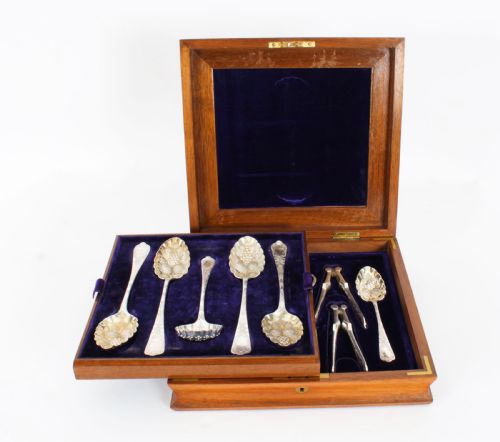

Vintage Dessert Spoons
Vintage dessert spoons bring practical elegance to the table, offering a tactile connection to the dining habits of past decades.
Vintage Dessert Spoons
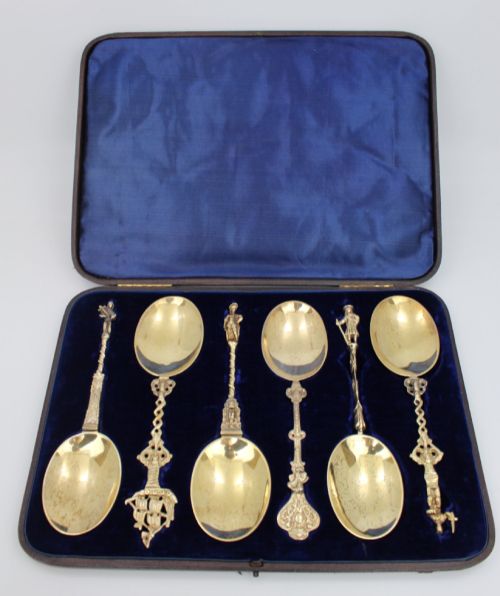
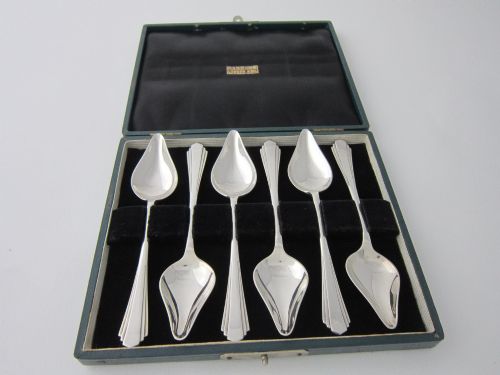
Vintage dessert spoons encompass a variety of silver and silver-plated implements designed for the final course of a meal, appearing frequently within broader cutlery sets and boxed fruit services. These items span periods from the Georgian era through the Victorian period, Art Deco years and mid-century French design, reflecting changing dining customs across centuries.
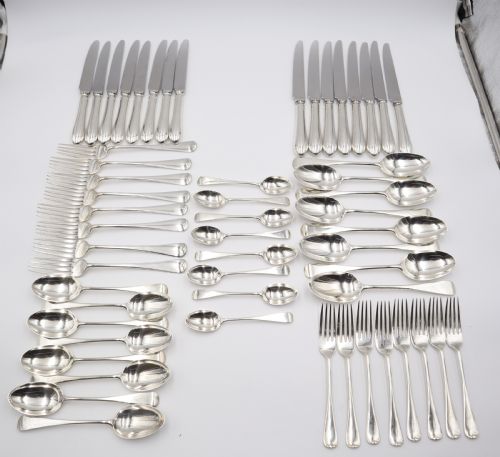
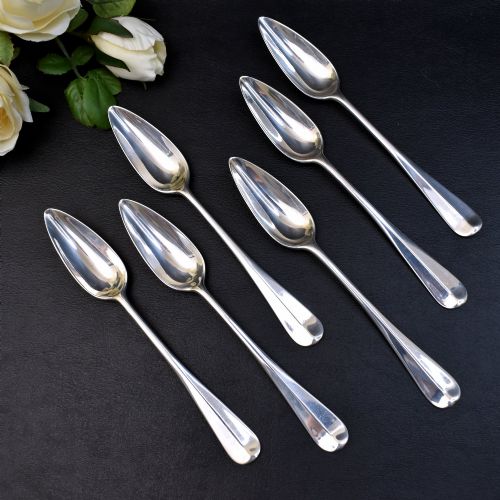
Buyers seeking vintage dessert spoons often encounter individual pairs, boxed sets of six or eight, or complete canteens intended for twelve persons. Alongside standard dessert spoons, related forms such as grapefruit spoons, berry spoons, sugar sifters and fruit knives appear within the available selection.
The materials utilised range from solid sterling silver to silver plate, frequently accompanied by fitted cases lined in velvet, silk, leatherette or fabric. The aesthetic styles stretch from traditional Georgian and Victorian ornamentation to geometric Art Deco and flowing Art Nouveau designs.
How they were made
The manufacture of these spoons relies primarily on working silver and silver plate, shaped through traditional smithing and plating techniques. Many pieces feature intricate engraved details, piercing or applied enamel work, particularly those originating from the Victorian and Art Deco periods.
Fitted presentation boxes employ materials such as leatherette, velvet and silk to protect the cutlery, demonstrating the high standard of presentation applied to sets intended for gifting or formal dining.
Vintage Dessert Spoons Retail Price Guide 2026
Typical asking prices for vintage dessert spoons among the pieces listed under this phrase on Sellingantiques today, from the lower quarter to the upper quarter. They describe what is for sale here now, not the wider market.
Listings feature sterling silver and silver plate alongside fitted presentation cases lined in velvet, silk and leatherette.
What varies in quality
Quality in these items is determined by the weight and purity of the metal, distinguishing solid sterling silver pieces from silver-plated alternatives. Maker attribution also plays a significant role, with pieces bearing marks from established silversmiths commanding particular attention.
The crispness of the engraving and the preservation of original fitted boxes, complete with intact velvet or silk linings, indicate the level of care a set has received over time.
Hamilton & Inches·Tiffany·Georg Jensen·Christofle·Hukin & Heath
The Vintage Dessert Spoons Glossary
- Sterling silver
- An alloy containing 92.5 percent silver by mass, representing the standard for quality British and international cutlery.
- Silver plate
- A base metal coated with a thin layer of pure silver, offering the visual appeal of solid silver at a different scale of production.
- Hallmark
- A series of official marks stamped on precious metal items indicating the maker, standard of purity, assay office and year of production.
- Canteen
- A fitted box, chest or cabinet designed specifically to store a complete set of cutlery securely.
- Grapefruit spoon
- A specialised spoon featuring a pointed or serrated tip designed for sectioning citrus fruit during dining.
Vintage Dessert Spoons: Frequently Asked Questions
How do I clean vintage silver spoons?
Silver spoons require gentle cleaning with a specialised silver cloth or mild polish to preserve the original surface and any delicate engraving. Avoid harsh chemical dips that can strip the natural patina accumulated over decades.
Storing the spoons in a tarnish-resistant cloth or a fitted wooden canteen helps maintain their appearance between uses and protects them from atmospheric moisture.
Are vintage spoons safe for daily use?
Most solid sterling silver and silver-plated dessert spoons remain robust enough for regular dining use, provided they receive careful hand washing rather than machine cleaning. Their construction is well-suited to handling desserts and soft foods.
Pieces featuring delicate additions like enamel work or those contained in antique presentation boxes benefit from more sparing, occasional use to ensure their long-term preservation.
How do I identify the age of a spoon?
Examining the hallmarks stamped on the reverse of the handle reveals specific assay office symbols and date letters that pinpoint the exact year of manufacture. Stylistic indicators, such as the geometric lines of Art Deco or the ornate engraving typical of Victorian pieces, offer further clues.
Comparing the form and weight against known periods helps confirm whether a piece originates from the Georgian era or the mid-twentieth century.
What is the difference between dessert and serving spoons?
Dessert spoons are proportioned for individual dining at the table, designed specifically to accompany the final course of a meal. They are generally smaller than main course implements but larger than teaspoons.
Serving spoons, including berry spoons and sugar sifters, are larger utensils intended for transferring portions from a communal bowl or dish to an individual plate.