



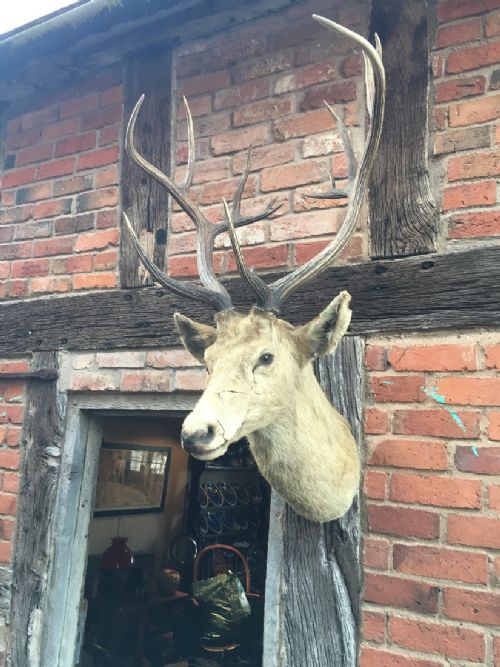

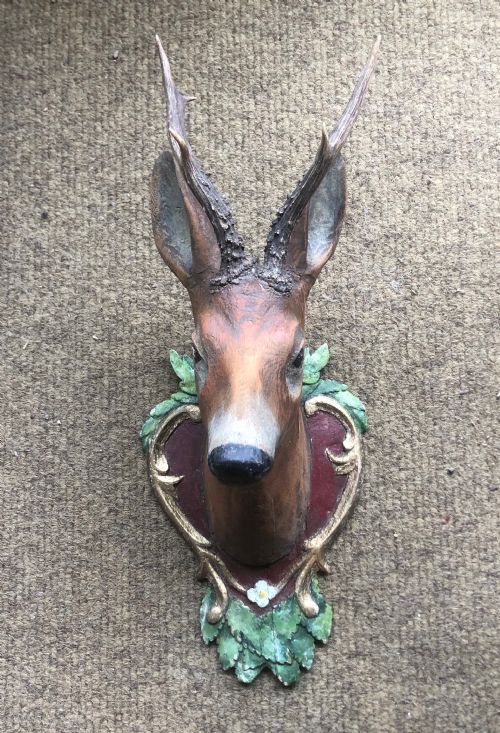


Vintage Deer Taxidermy
Vintage deer taxidermy brings the weight and history of the nineteenth and early twentieth centuries straight into a room.
Vintage Deer Taxidermy
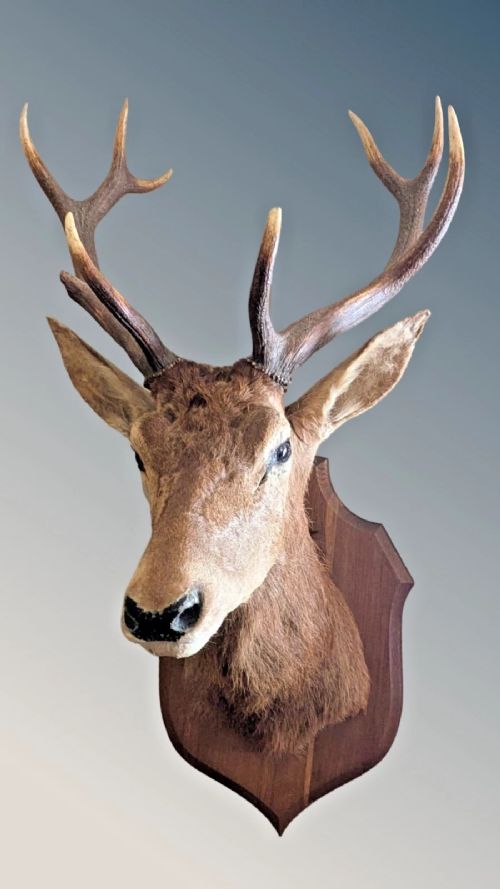
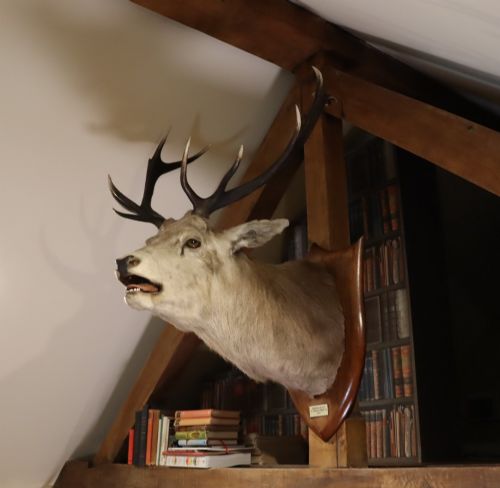
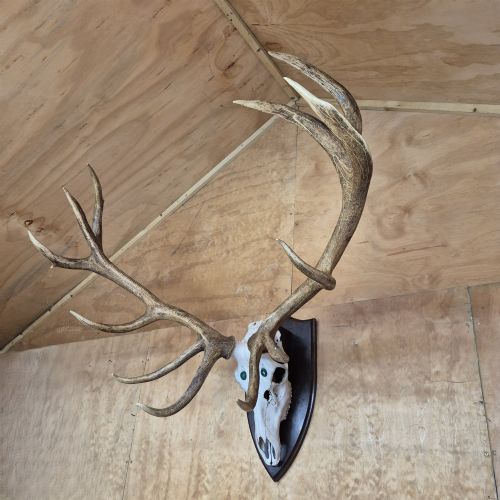
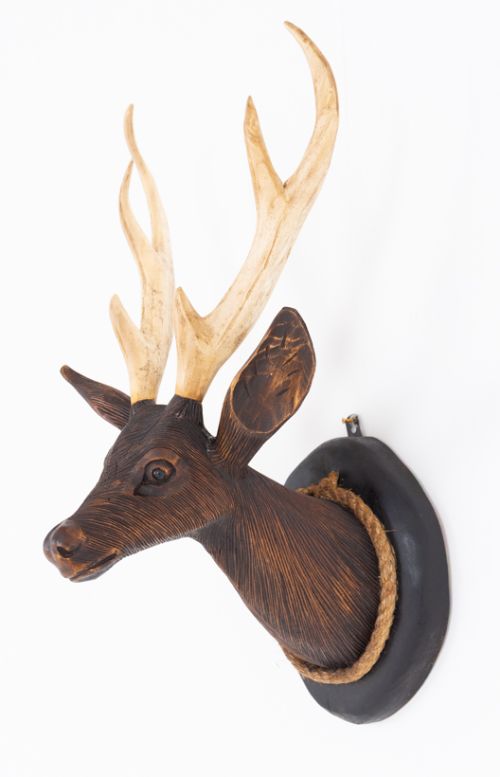
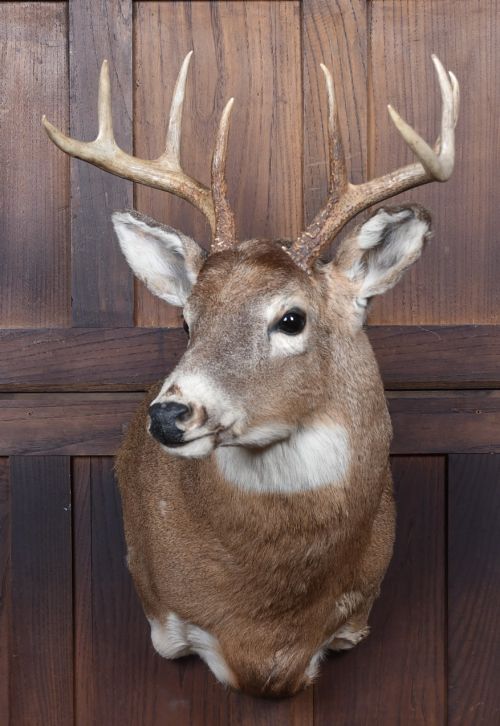
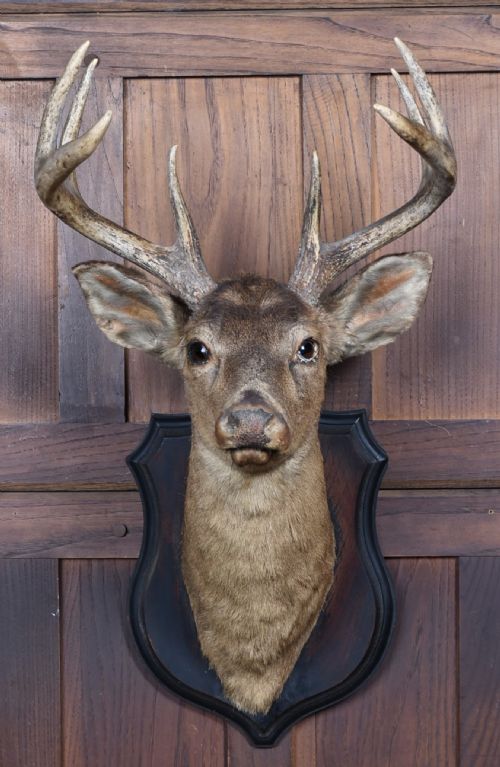
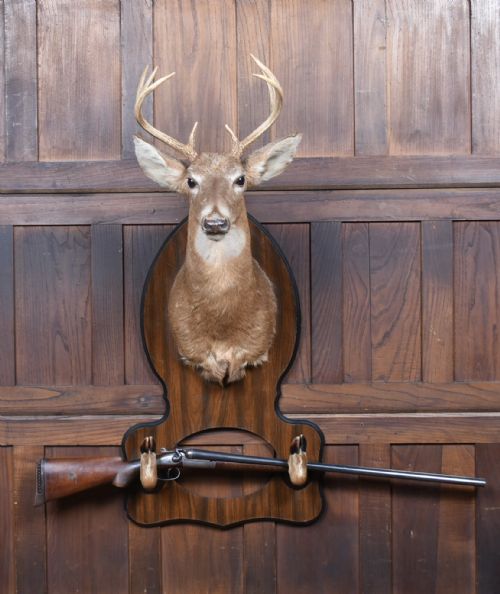
When you search for vintage deer taxidermy, you encounter preserved stags' heads, mounted antlers, and functional pieces like coat racks and table lamps that span the Victorian, Edwardian, and Black Forest styles. These items range from Scottish red deer mounts dated to the nineteen-thirties down to carved oak shields and folk art figures from the late nineteenth century.
The selection on this page centres heavily on wall mounts and trophy heads, alongside utilitarian objects such as deer hoof table lamps and double inkwells. Most pieces originate from British and continental traditions, reflecting nineteenth-century lodge aesthetics and early twentieth-century country house tastes.
How they were made
Preparation relied upon traditional preservation techniques applied to deer hide, bone, and natural antlers, often mounted onto shaped wooden shields made of oak or carved wood. Glass eyes were commonly inserted to restore a lifelike gaze to the animal heads.
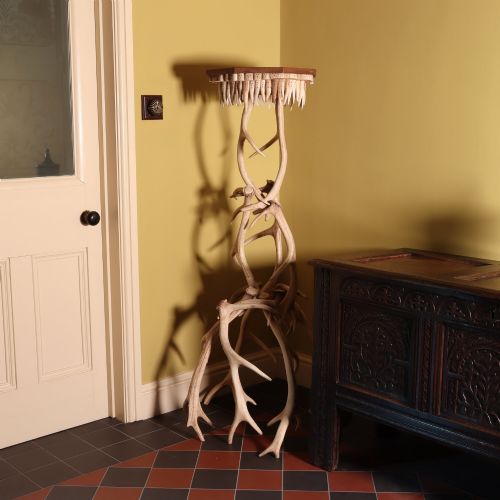
Makers utilised carved wood for decorative shields and Black Forest style flourishes, integrating natural materials directly into furniture and lighting objects such as antler torchiere lamps.
Vintage Deer Taxidermy Retail Price Guide 2026
Typical asking prices for vintage deer taxidermy among the pieces listed under this phrase on Sellingantiques today, from the lower quarter to the upper quarter. They describe what is for sale here now, not the wider market.
Listings span the nineteenth century, nineteen-twentieth century transitions, Edwardian era, and the nineteen-thirties.
What varies in quality
The distinction between ordinary and exceptional pieces lies in the anatomical accuracy of the taxidermy work and the symmetry or point count of the antlers, such as twelve-point royal sets. Superior examples retain firm hide condition and secure taxidermy mounting.
Carved wooden elements also dictate standard, where deeply carved Black Forest style shields or detailed oak work show greater artisan involvement than plain backing boards.
Peter Spicer & Sons
The Vintage Deer Taxidermy Glossary
- Taxidermy
- The art of preparing, stuffing, and mounting the skins of animals with lifelike effect. In these listings, it refers primarily to mounted stags' heads and deer parts.
- Antler
- The bony, branching horn growth shed and regrown annually by deer. These form the core sculptural element of many wall mounts and lamps.
- Black Forest
- A nineteenth-century decorative style originating from the wooded mountain region in Germany, known for deeply carved wood furnishings and animal motifs.
- Torchiere
- A floor lamp or standing light fixture directing illumination upwards. Antler torchiere pieces incorporate natural horn structures into the lighting stem.
Vintage Deer Taxidermy: Frequently Asked Questions
How do I hang a heavy deer head?
Wall mounts require secure fixings into structural wall studs or heavy-duty masonry anchors due to the substantial weight of the wood shield and skull.
Ensure the hanging wire or bracket on the back is rated for the specific weight of the nineteenth or twentieth-century piece before mounting.
Where should I place vintage taxidermy?
Keep mounted heads and antlers away from direct sunlight and strong heat sources to prevent the deer hide and bone from drying out over time.
Traditional spaces like libraries, hallways, and studies suit the Highland lodge aesthetic common to these pieces.
How do I clean old antlers?
Dust natural bone and antlers gently using a soft, dry brush or a microfiber cloth to remove settled particles without damaging the surface.
Avoid using liquid cleaners or household polishes, which can stain the horn or degrade the historic materials.
What does a point count mean?
The point count refers to the total number of distinct tips or tines branching off the deer antlers. Higher counts, such as twelve points, indicate more mature stags.