






Vintage Decanter Trays
These vintage decanter trays bring together silver plate, mahogany, and crystal glass to serve drinks with period elegance.
Vintage Decanter Trays
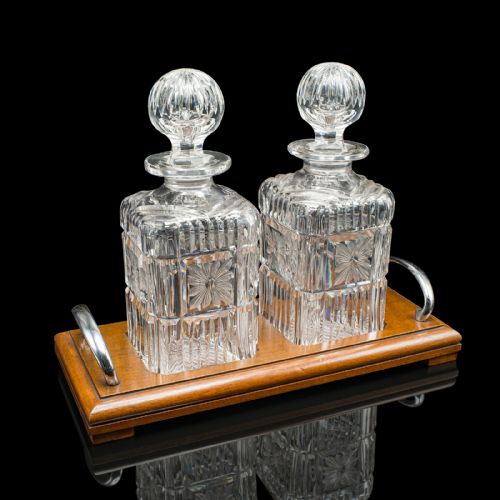
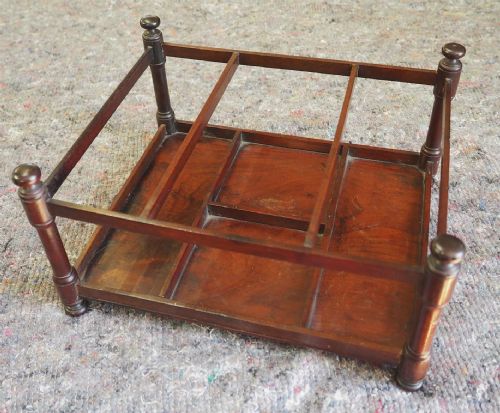
Vintage decanter trays encompass serving vessels, gallery trays, and bottle coasters designed to hold and present glassware. The selections available on this page range from Georgian mahogany holders and Regency glass drinks trays to Edwardian silver-plated oval gallery trays.
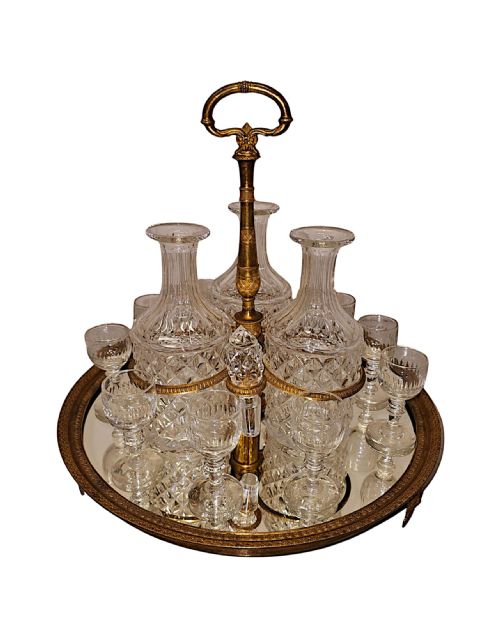
Buyers will encounter various forms across different eras, including 19th-century French ormolu cave à liqueur tantalus sets, Art Deco Czech glass decanter sets, and traditional British silver-plate and wood combinations. These pieces serve both a practical function for holding decanters and glasses and a decorative role in home entertaining.
How they were made
Makers utilised traditional cabinet-making and metalworking techniques, combining hardwoods such as mahogany and rosewood with sterling silver and silver plate. Many items incorporate cut glass and crystal components, often paired with metal mounts and galleries.
Decorative elements involve detailed metal casting, such as ormolu mounts, alongside enamel work and engraved glass. The construction relies on sturdy joining methods for wooden bases and secure gallery surrounds to retain bottles securely.
Vintage Decanter Trays Retail Price Guide 2026
Typical asking prices for vintage decanter trays among the pieces listed under this phrase on Sellingantiques today, from the lower quarter to the upper quarter. They describe what is for sale here now, not the wider market.
Some antique decanter sets include little glass tags labelled for your port, sherry, or brandy, saving guests from accidental mix-ups.
What varies in quality
Quality depends on the weight and gauge of the metal used, whether sterling silver or silver plate over a solid base, alongside the fineness of the glass cutting and enamel work. Superior items display crisp casting in mounts and robust joinery in wooden frames.
The distinction between standard production pieces and finer examples rests on the integration of materials, such as matched crystal sets paired with heavy silver or ormolu mounts, and the preservation of original finishes across the wood and metal.
Mappin and Webb·Mein of Kelso·Salviati·Moser
The Vintage Decanter Trays Glossary
- Gallery tray
- A serving tray featuring a low, pierced or solid metal railing around its edge designed to keep decanters and glasses secure.
- Wine coaster
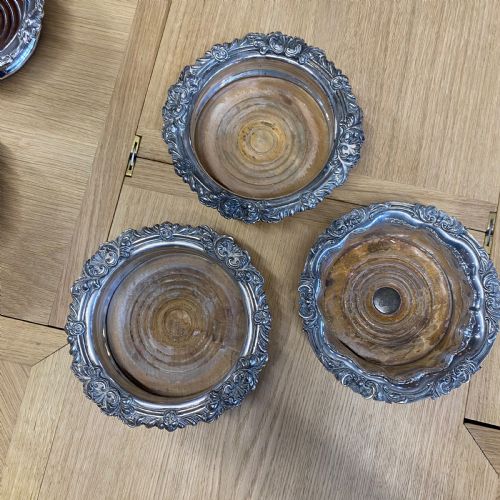
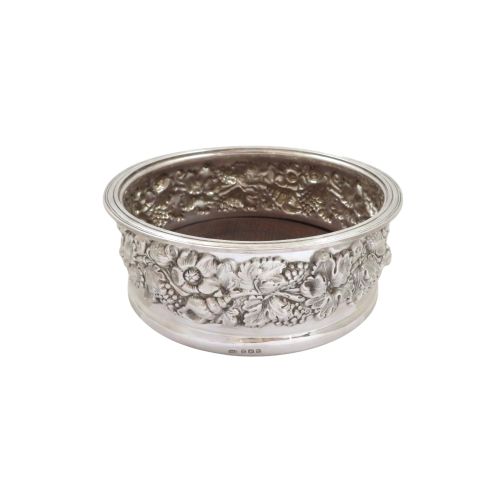
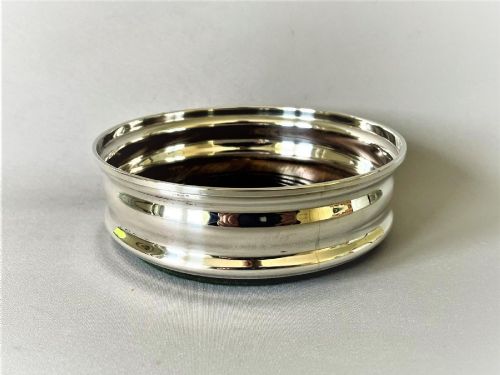
- A small, flat-bottomed tray or stand, frequently made of wood with a silver-plate rim, used to hold a wine bottle on the dining table.
- Ormolu
- Gilded bronze or brass applied as a decorative mount or fitting, frequently seen on French 19th-century luxury wares.
- Cave à liqueur
- A fitted box or stand, often featuring ormolu and cut glass, housing a set of decanters and liqueur glasses.
- Wine funnel
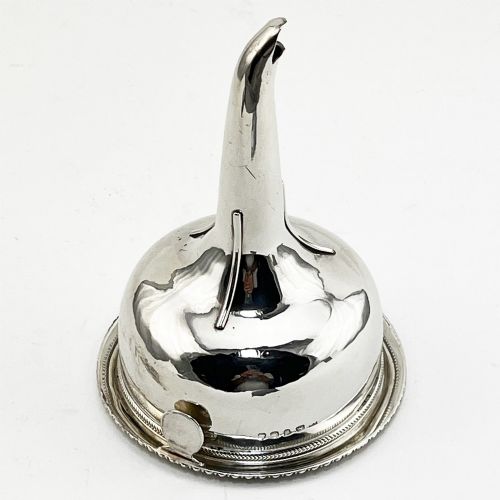
- A specialised funnel, often in sterling silver, used in past centuries for decanting wine while filtering sediment.
Vintage Decanter Trays: Frequently Asked Questions
What are decanter trays made of?
These trays combine materials such as sterling silver, silver plate, mahogany, rosewood, and ormolu. Glass and crystal components are frequently integrated into the sets.
Items span various periods, reflecting changing material preferences from Georgian wood to Edwardian plated galleries and Art Deco glass.
How do I style a tray at home?
Arrange a matching set of decanters and small glasses centrally on the tray to create a functional display on a sideboard or drinks trolley. Ensure the size of the tray matches the scale of the glassware.
Allow enough space around each bottle so the piece remains balanced and easy to lift during entertaining.
What is a wine coaster?
A wine coaster is a small stand designed to hold a single bottle, protecting table surfaces from condensation and drips. They often feature a wooden base surrounded by a silver-plated rim.
Many examples include wheels or felt-lined bases to allow smooth movement across the dining table.
How do I date a silver tray?
Dating relies on hallmarks stamped into the metal, stylistic details of the gallery, and the construction methods used for handles and rims. Edwardian and Victorian pieces often show distinct decorative motifs.
Comparing the manufacturing style and materials helps place items within periods such as the Regency or 19th century.