



Vintage Dark Wood Shelving
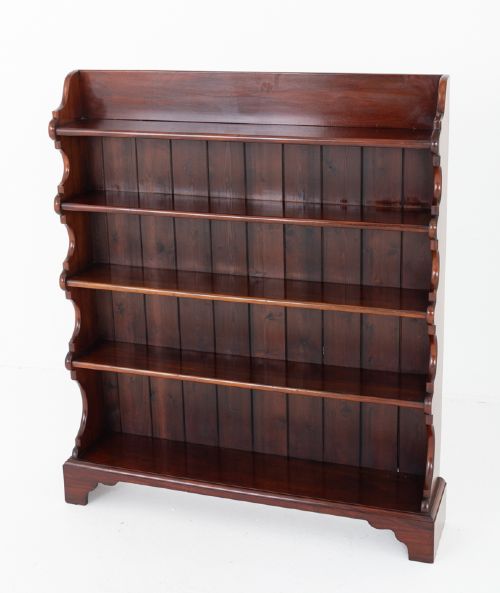
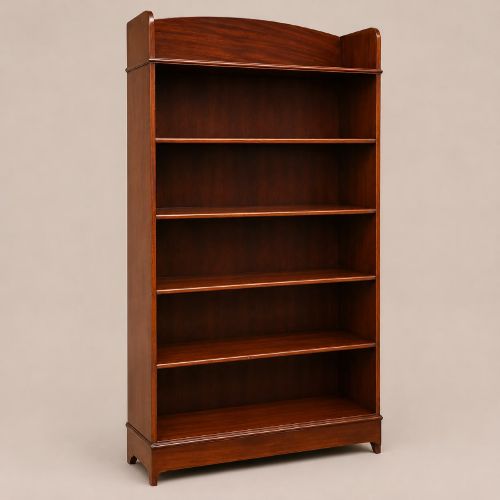
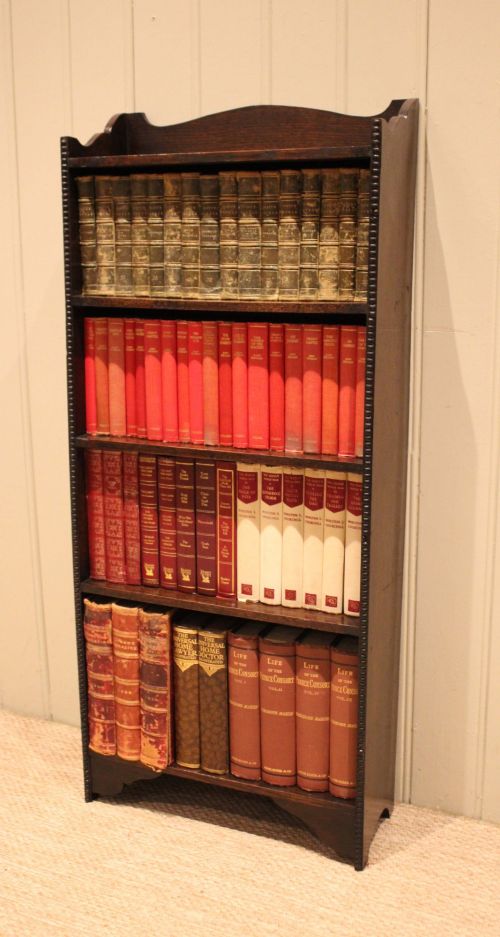
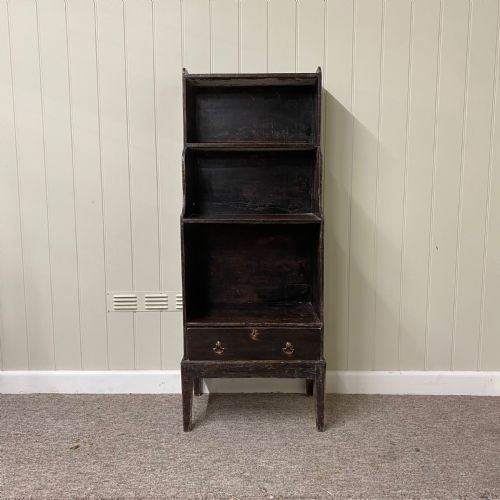
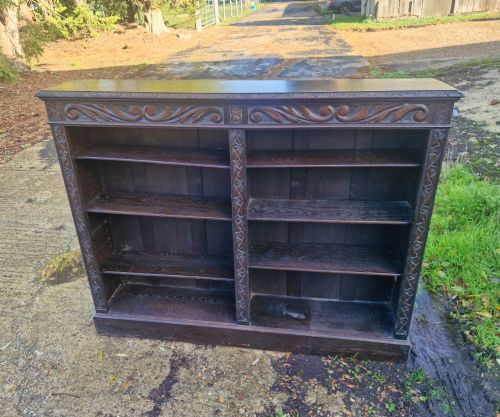
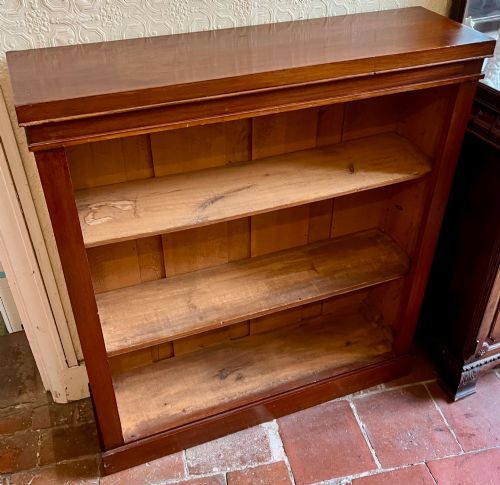
Vintage dark wood shelving brings together open bookcases, hanging shelves, and tiered whatnots in rich mahogany, oak, and walnut.
Vintage Dark Wood Shelving
Vintage dark wood shelving covers open bookcases, wall shelves, dressers, and tiered whatnots spanning the nineteenth and twentieth centuries. These pieces serve primarily to hold books and display objects while anchoring a room with dark timbers.
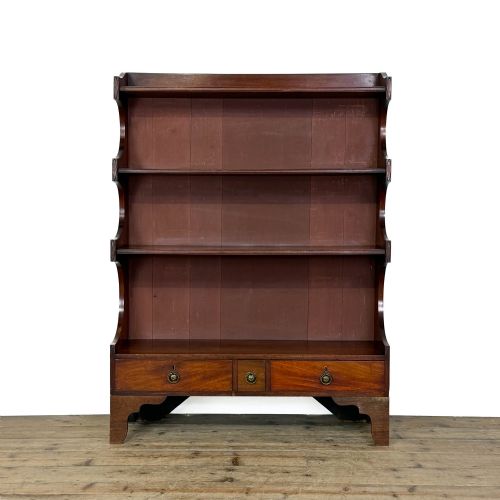
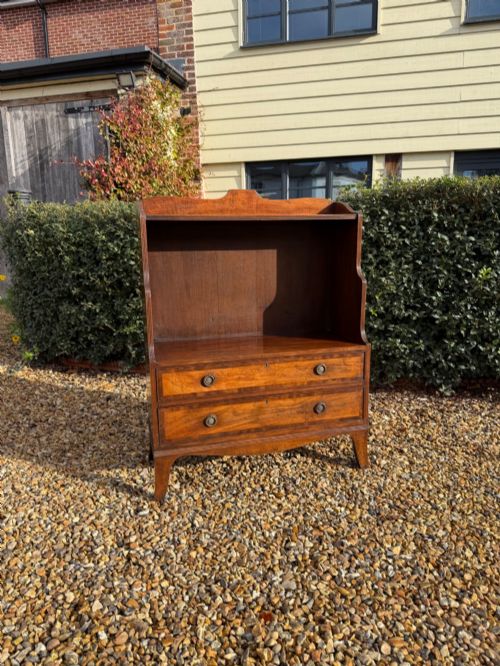
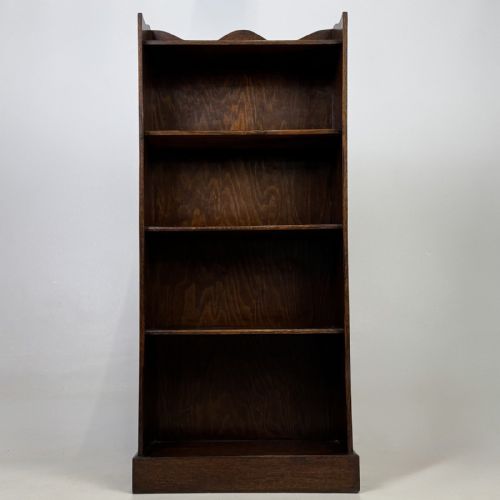
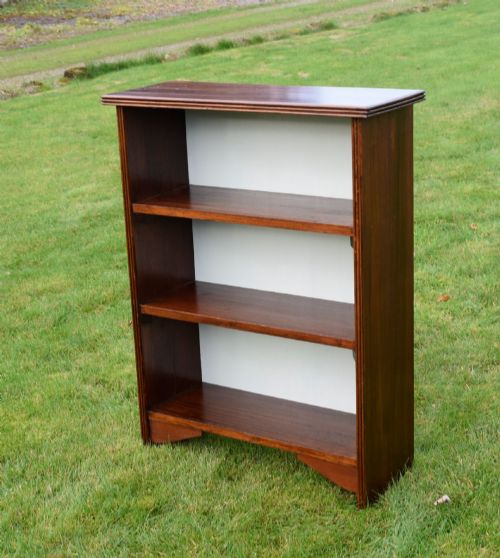
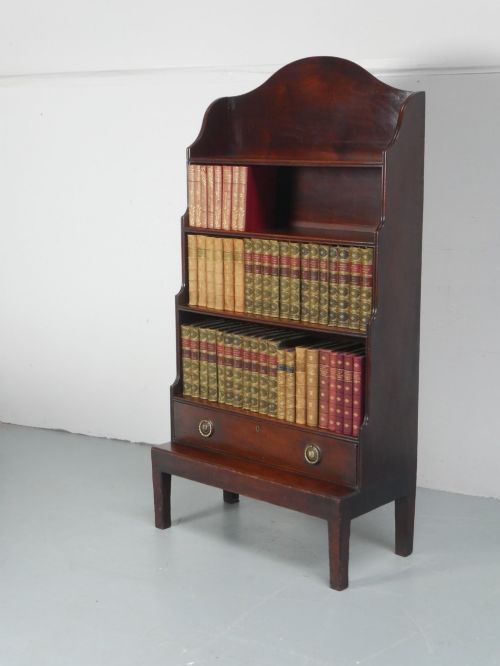
The selection on this page relies heavily on early twentieth-century oak open bookcases and Edwardian mahogany pieces. Buyers also encounter Regency waterfall bookcases, Victorian library shelving, and occasional French or Anglo-Indian examples.
Form follows function closely across these categories, ranging from narrow standing bookcases with raised galleries to broad breakfront designs and corner étagères. Adjustable shelves and glazed display cabinets appear frequently within the larger formats.
Materials and construction
Mahogany, oak, and walnut form the structural core of these pieces, paired occasionally with rosewood, pine, and Indian hardwood. Timber selection dictated the weight and grain pattern, with dark finishes emphasising the natural depth of the wood.
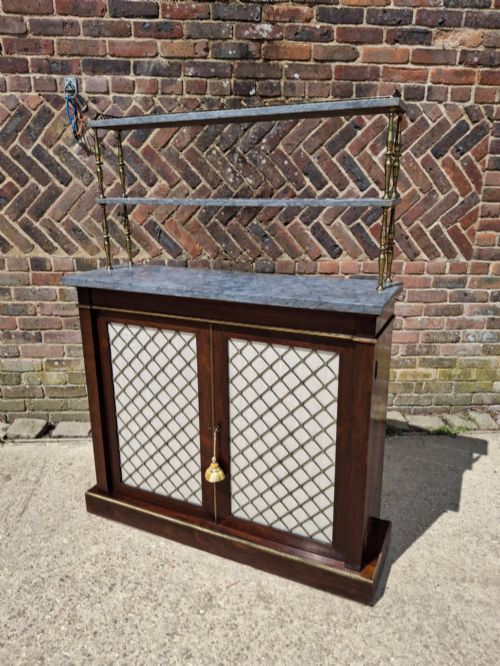
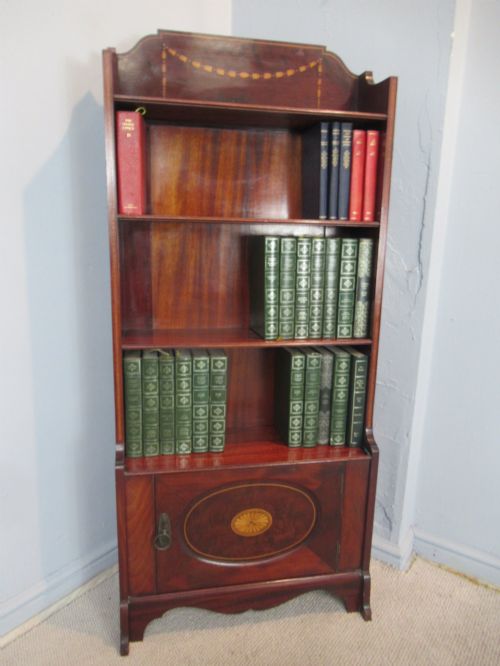
Metal and brass components appear as structural accents, hinges, or decorative details, while glass panels feature in display cabinets and enclosed sections. Fretwork, inlay work, and carved dentil cornices provide surface ornamentation on specific styles.
Vintage Dark Wood Shelving Retail Price Guide 2026
Typical asking prices for vintage dark wood shelving among the pieces listed under this phrase on Sellingantiques today, from the lower quarter to the upper quarter. They describe what is for sale here now, not the wider market.
Some Victorian corner whatnots feature pierced fretwork delicate enough to make dusting an exercise in meditative patience.
Distinctions in quality
Quality rests in timber selection and joinery execution, where dense grain patterns and secure structural assembly separate standard utility pieces from finer items. The presence of integrated galleries, beaded edges, or fine fretwork indicates careful workshop attention.
Proportion and utility drive the distinction between simple storage items and refined architectural furniture. Slim profiles, adjustable shelving systems, and balanced proportions reflect deliberate design choices by makers working in various historical styles.
The Vintage Dark Wood Shelving Glossary
- Whatnot
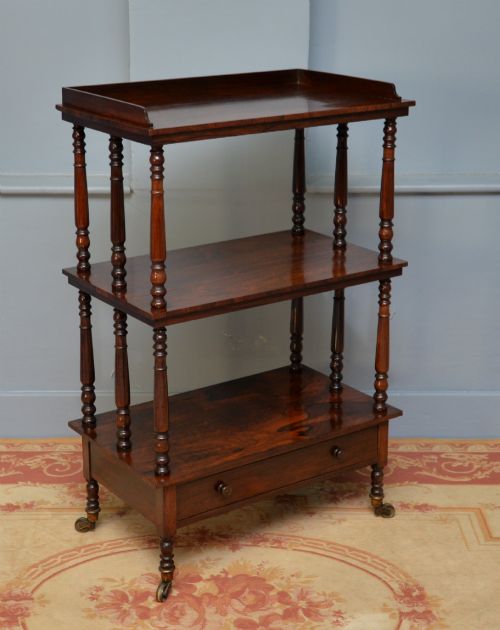
- An open set of multi-tiered shelves used for displaying small objects and ornaments. These pieces typically feature three or more tiers supported by slender uprights.
- Gallery
- A raised ornamental border running along the top edge of a shelf or bookcase. This feature prevents items from sliding off the back or sides.
- Breakfront
- A piece of furniture where the central section projects forward from the flanking sections. This configuration adds depth and architectural rhythm to large bookcases.
- Étagère
- A piece of furniture consisting of a set of open shelves for displaying ornaments. The term often applies to French and Anglo-Indian designs.
- Waterfall bookcase
- A set of open shelves where each tier steps back progressively from the one below it. This style gained popularity during the Regency period.
Vintage Dark Wood Shelving: Frequently Asked Questions
How do I choose the right size bookcase?
Measure your available wall space and consider the depth of the shelves relative to your books or display items.
Narrow and tall formats fit tight spaces while providing substantial vertical storage capacity.
Are the shelves adjustable?
Many of the larger bookcases include adjustable shelf systems supported by pegs or ratchets.
Shorter and simpler open bookcases often feature fixed shelving built directly into the frame.
What is a whatnot used for?
Whatnots serve as display units for decorative objects, porcelain, and small books.
Their tiered open structure allows items to be viewed from multiple angles within a room.
How do I care for dark wood surfaces?
Dust the wood regularly with a soft, dry cloth to prevent the accumulation of grit.
Avoid placing pieces in direct sunlight or near heat sources to protect the finish.