



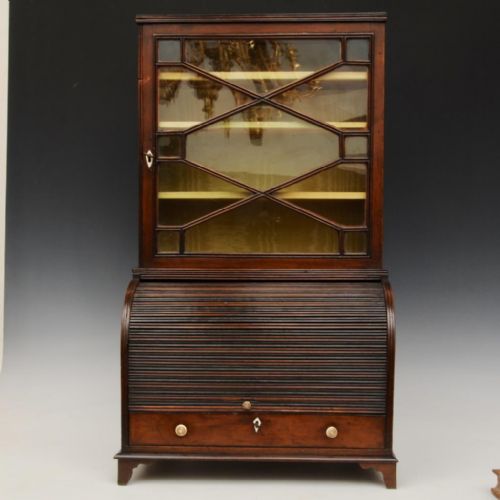


Vintage Cylinder Cabinet
These vintage cylinder cabinets offer clever rolling fronts that conceal writing surfaces and storage, bringing ingenious nineteenth-century mechanisms and rich timbers into modern rooms.
Vintage Cylinder Cabinet
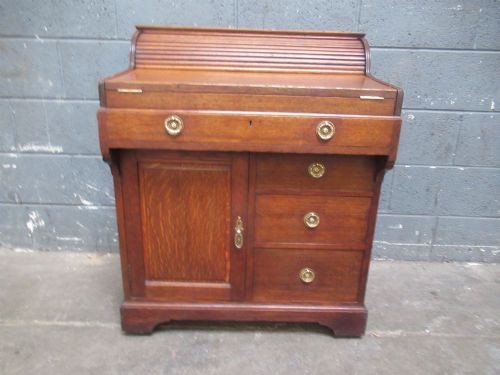
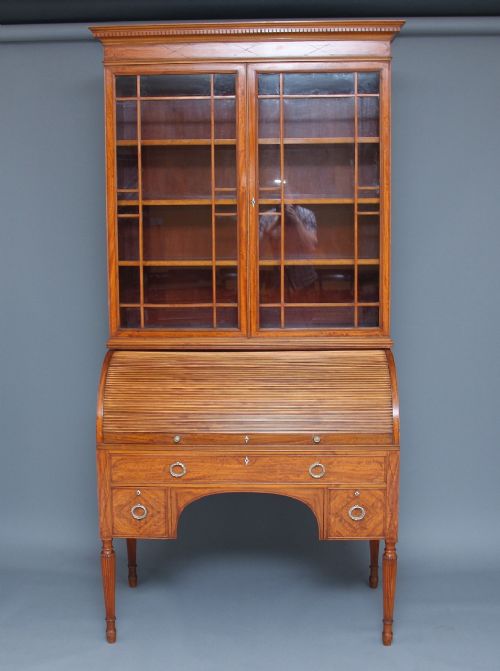
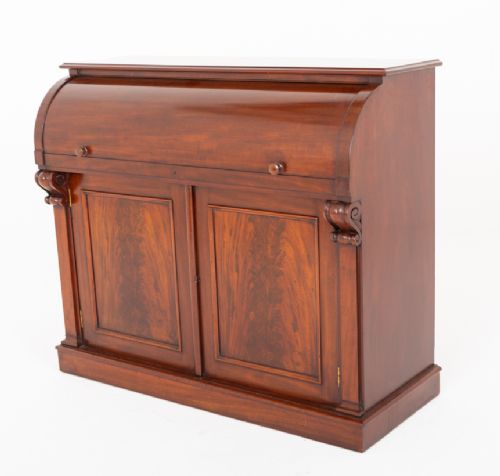
When you search for a vintage cylinder cabinet, you are looking at nineteenth-century furniture defined by a curved, quarter-circle wooden shutter that slides back to reveal fitted interiors of small drawers and pigeonholes. The pieces available span the Georgian, Regency, and Victorian eras up to the Edwardian period, encompassing everything from tall bureau bookcases to compact bedside cabinets and pot cupboards.
You are most likely to meet mahogany variants on this page, alongside flame mahogany veneer, satinwood, walnut, and oak. Some examples incorporate marble tops or glass doors above the writing section, while others take an entirely cylindrical form for bedside use.
The functions vary significantly according to the original purpose of the item, stretching from grand library pieces with glazed upper bookcases to miniature furniture and small bedside stands. Desk forms predominate, offering pull-out writing slides alongside the signature rolling shutter.
How they were made
Cabinet makers constructed the signature rolling shutter from narrow vertical slats of timber glued to a strong fabric backing, allowing the curved surface to glide smoothly within rebated tracks. Mahogany and satinwood served as the primary timbers, often enhanced by flame mahogany veneers that created striking grain patterns across the curved front.
Additional materials played structural and decorative roles, with brass handles and fittings appearing alongside marble tops on specific bedside and cabinet forms. Solid oak and walnut also feature in later Edwardian iterations, demonstrating the continued evolution of timber selection by workshop joiners.
Vintage Cylinder Cabinet Retail Price Guide 2026
Typical asking prices for vintage cylinder cabinet among the pieces listed under this phrase on Sellingantiques today, from the lower quarter to the upper quarter. They describe what is for sale here now, not the wider market.
Listings feature items spanning the 1800s through the Edwardian period, utilising mahogany, satinwood, walnut, marble, and brass.
What varies in quality
The smoothness of the rolling cylinder mechanism dictates much of the functional standard, requiring precise alignment of the internal tracks and slats so the shutter operates without binding. Superior pieces display seamless movement where the curved front disappears completely into the body of the desk.
Timber selection and veneer matching set the visual tier, with continuous grain patterns across the cylinder front indicating higher craftsmanship. Finer examples also feature intricate satinwood or mahogany interior fitments with well-dovetailed miniature drawers rather than plain secondary woods.
Edwards & Roberts
The Vintage Cylinder Cabinet Glossary
- Cylinder
- A quarter-circle wooden shutter that slides in curved grooves to cover the writing surface of a desk or cabinet. This mechanism provides secure closure without the bulk of a folding slope.
- Tambour
- A flexible shutter made of narrow vertical wooden strips glued to canvas, functioning similarly to a cylinder front. It appears on Georgian and later cabinets.
- Veneer
- A thin layer of figured wood, such as flame mahogany, applied over a secondary timber base to create decorative surfaces. High-grade veneer work requires careful book-matching across panels.
- Bureau bookcase
- A tall cabinet combining a sloping or cylindrical desk section below with glazed shelving doors above. These pieces served as combined writing desks and library storage.
- Bedside cabinet
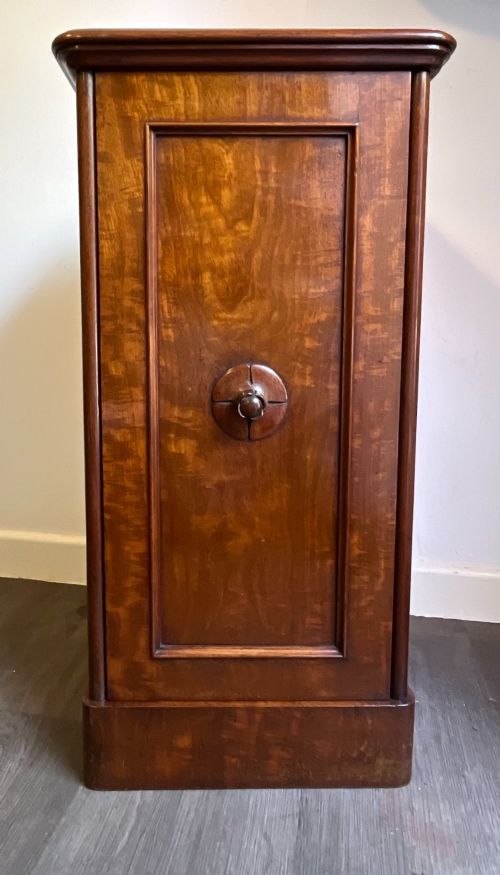
- A small bedside cupboard or pot cupboard, sometimes built with a cylindrical body or a marble top. These compact pieces functioned as practical bedroom storage.
Vintage Cylinder Cabinet: Frequently Asked Questions
What is a cylinder cabinet?
A cylinder cabinet is a nineteenth-century storage piece featuring a curved wooden shutter that rolls backward into the body of the furniture. This action opens up a fitted desk surface complete with small drawers and pigeonholes.
Such designs allowed owners to leave their papers undisturbed while keeping the writing area securely enclosed when not in use.
How do I tell Victorian from Georgian pieces?
Georgian and Regency examples tend to display crisp architectural proportions and understated timber figurations, often utilising straight grain mahogany. Victorian and Edwardian pieces frequently incorporate richer flame veneers, heavier carvings, or contrasting satinwood inlays.
The specific combination of secondary woods, brass hardware styles, and overall structural heft helps distinguish between the earlier and later nineteenth-century eras.
Were these cabinets used as desks?
Many cylinder cabinets incorporated dedicated writing surfaces alongside their enclosed storage compartments. Pull-out ledges or drop-front writing slides allowed owners to compose letters before sliding the curved shutter back down.
Other variations, such as bedside cabinets and pot cupboards, focused purely on concealed bedroom storage rather than writing tasks.
How do I care for mahogany veneer?
Mahogany veneer benefits from stable room environments away from direct sunlight and excessive heat sources, which can cause the timber to dry and warp. Regular dusting with a soft, dry cloth preserves the polished finish without the need for heavy waxes.
Maintaining moderate indoor humidity ensures the wooden slats of the cylinder mechanism continue to glide smoothly within their tracks.