

Vintage Cut Glass Fixture
A vintage cut glass fixture brings refracted light and heavy metal framing into a room through chandeliers, wall lights, and pendants.
Vintage Cut Glass Fixture
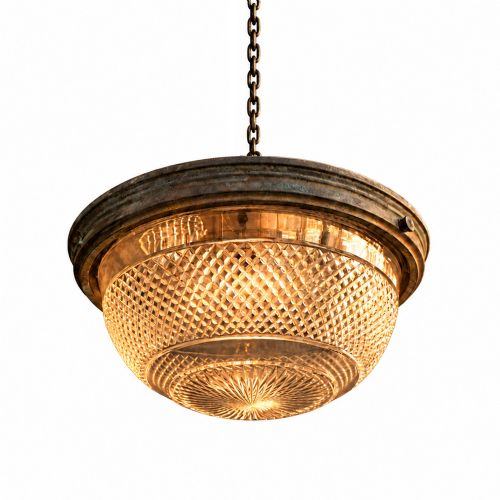
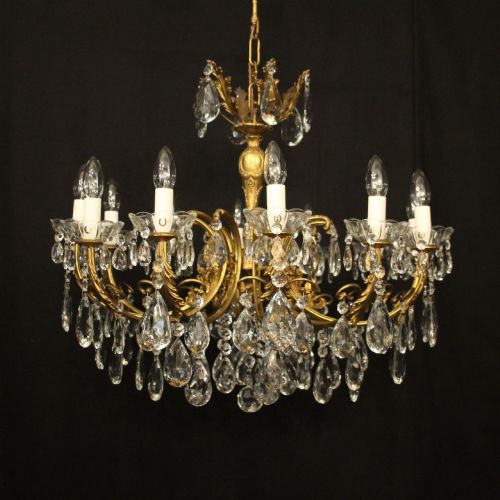
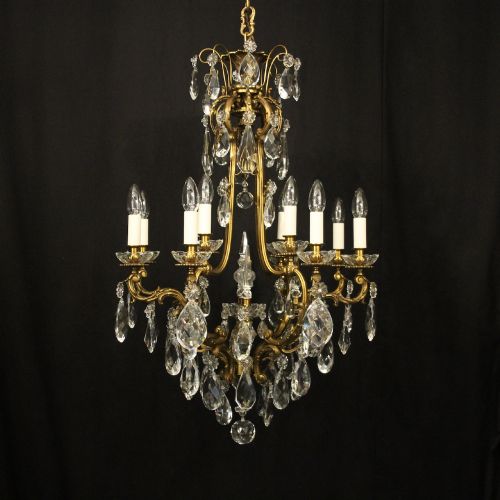
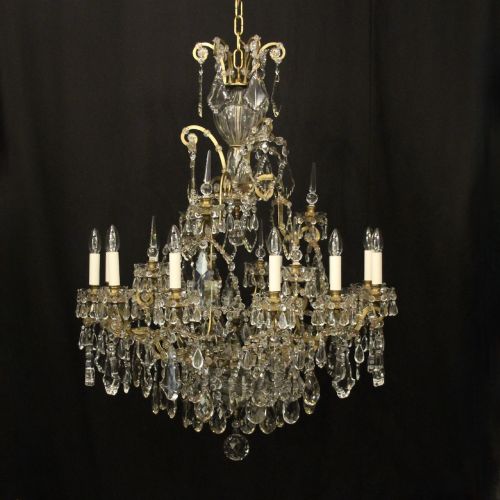
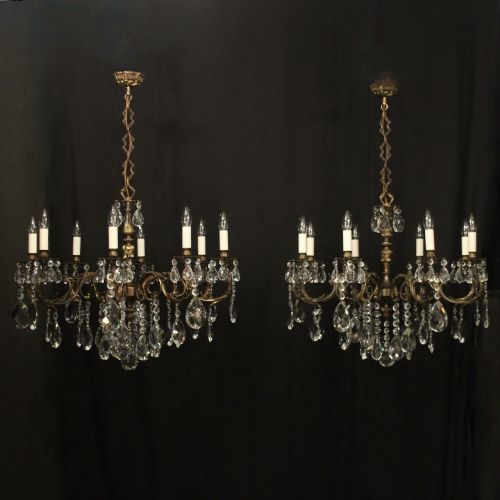
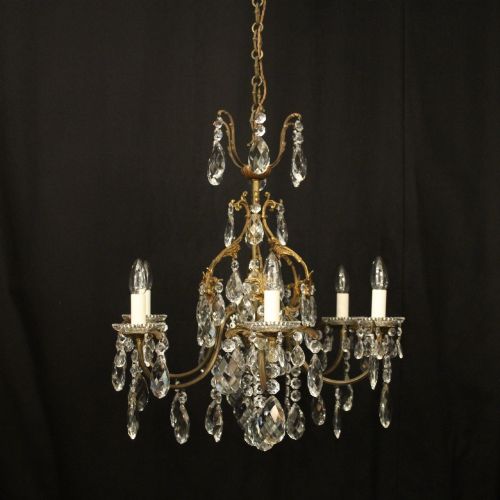
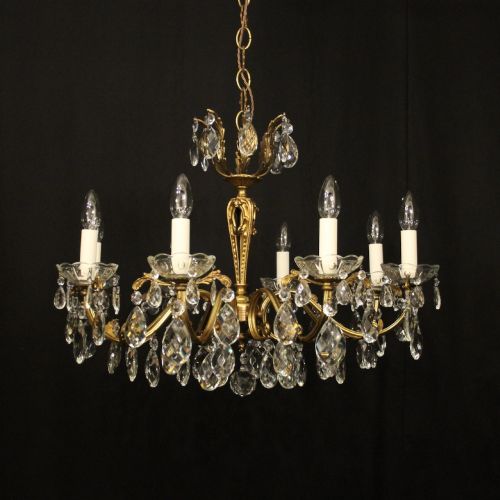
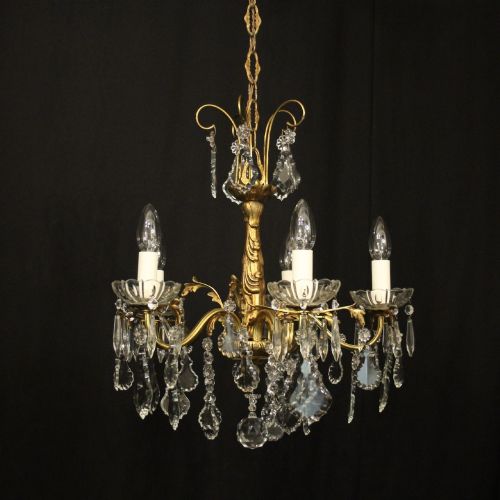
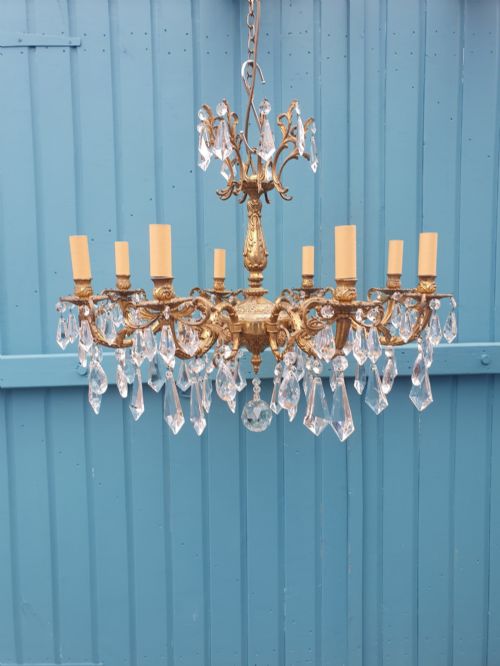
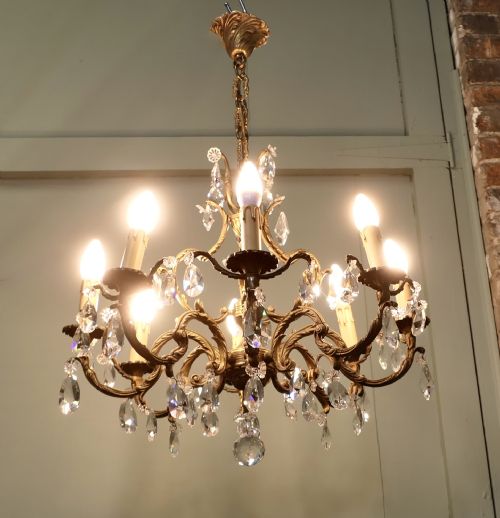
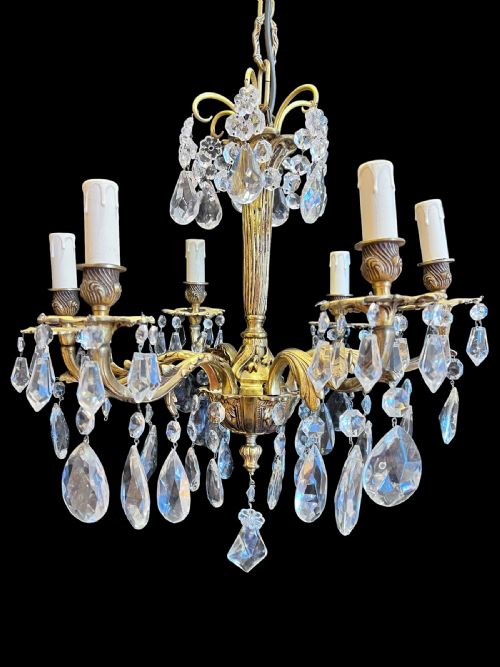
A vintage cut glass fixture encompasses hanging chandeliers, wall sconces, flush plafonniers, and hall lanterns sourced from the nineteenth and early twentieth centuries. When searching for a vintage cut glass fixture, buyers encounter numerous French designs alongside Edwardian and Italian examples.
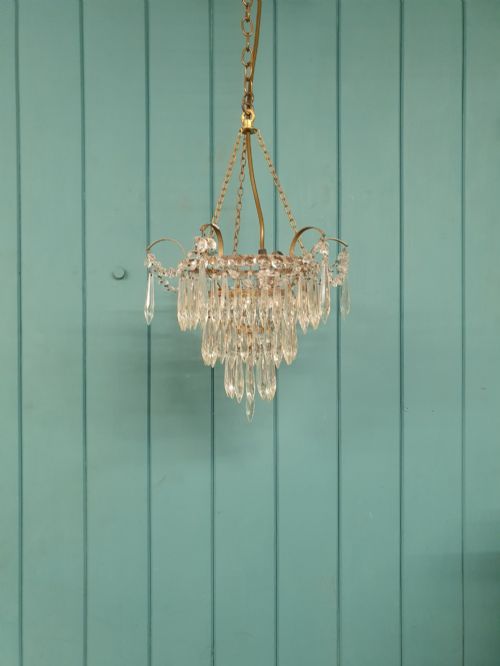
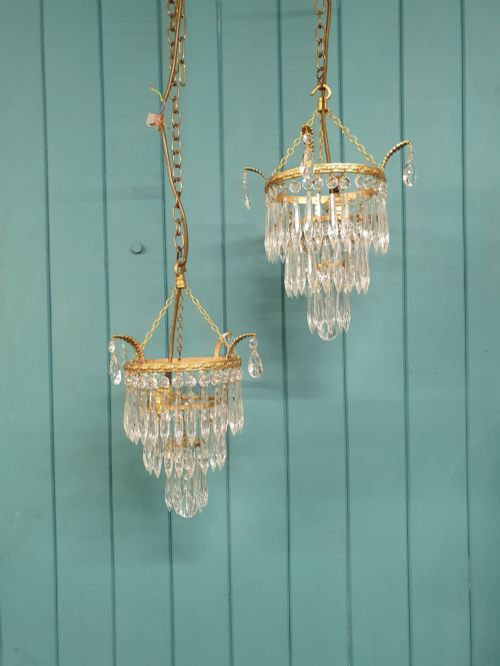
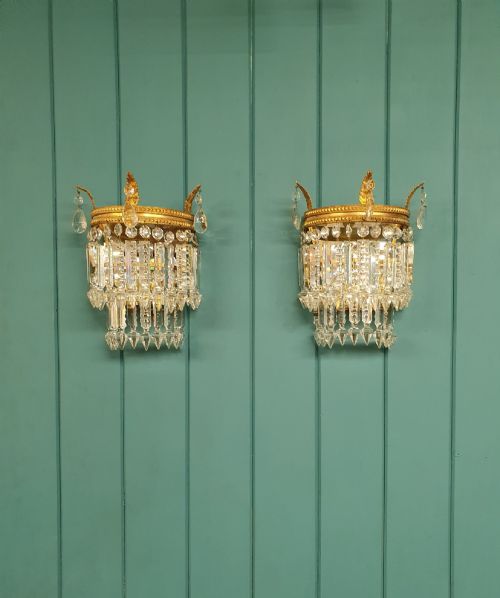
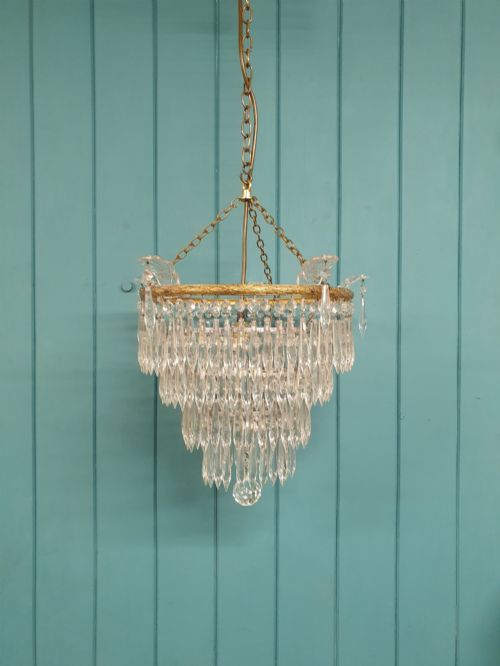
The assortment on this page relies heavily on items produced during the 1920s and 1930s, accompanied by earlier Victorian and Edwardian specimens. Common forms include multi-tiered spike chandeliers, basket chandeliers, tent and bag designs, and matching pairs of wall lights.
These fixtures serve primary functional illumination while casting prismatic patterns across walls and ceilings. Their forms range from small six-inch spike drops up to large multi-arm ballroom centerpieces.
Materials and construction methods
Metal frames form the structural backbone of every vintage cut glass fixture, utilising cast brass, gilded bronze, or ormolu to support the weight of the glass components. These metal bodies often feature decorative cast details such as leaf motifs or lion masks.
Hanging elements consist of crystal, cut glass, and moulded glass drops suspended by wire pins from the metal frameworks. Lustres, beads, and prisms are assembled by hand to create tent, bag, and basket configurations.
Vintage Cut Glass Fixture Retail Price Guide 2026
Typical asking prices for vintage cut glass fixture among the pieces listed under this phrase on Sellingantiques today, from the lower quarter to the upper quarter. They describe what is for sale here now, not the wider market.
Listings feature items spanning the nineteenth century, Edwardian period, and the 1910s, 1920s, 1930s, and 1950s.
Distinctions in manufacture and assembly
Quality separates fixtures by the depth and precision of the facets cut into the glass drops, which dictate how sharply light refracts through the room. Heavier metal castings and substantial frames provide greater structural stability for multi-armed chandeliers.
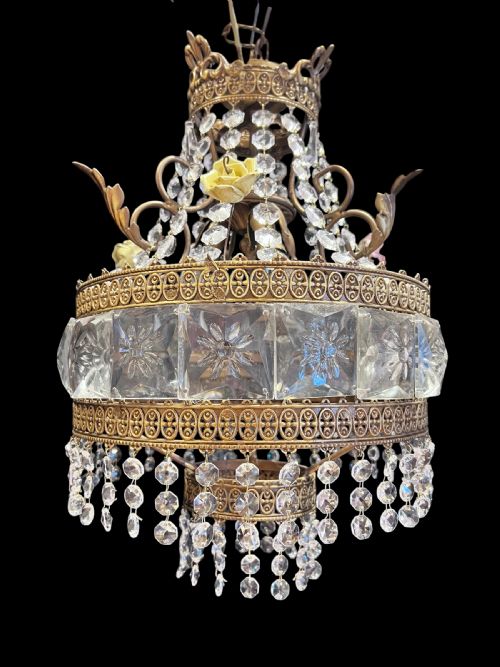
The complexity of the tier arrangement and the integration of secondary decorative elements, such as porcelain flowers or silver gilding, distinguish standard utilitarian lighting from grander salon pieces.
The Vintage Cut Glass Fixture Glossary
- Plafonnier
- A ceiling light fixture that sits flush or very close to the ceiling surface. These often feature glass bowls or mounted crystal drops held in brass frames.
- Tent and bag chandelier
- A lighting design where glass beads form an upper triangular tent shape above a gathered bag-like arrangement of drops below. This style creates dense clusters of prismatic glass.
- Lustre
- A cut glass pendant or hanging prism suspended from a chandelier or wall light. Lustres catch and scatter ambient light.
- Ormolu
- A metallic coating of finely ground gold-mercury amalgam applied to bronze objects. This technique gives metal frames a rich golden finish.
- Spike chandelier
- A vertical hanging light featuring an elongated central drop or spike pointing downward from the lowest tier. These range from small compact versions to multi-tiered installations.
Vintage Cut Glass Fixture: Frequently Asked Questions
How do I hang a heavy chandelier safely?
Hanging a heavy brass and crystal fixture requires securing the primary weight directly to a ceiling joist or structural timber using a rated metal hook and box. Professional electrical installation ensures the junction box supports the combined weight of the metal frame and glass components.
Smaller ceiling lights and wall brackets utilise standard mounting plates suited to partition or lath and plaster walls. Ensuring adequate load distribution protects both the vintage metalwork and the ceiling structure.
What periods do these glass fixtures span?
The lighting pieces span from the nineteenth century through the Edwardian era and into the interwar period of the 1920s and 1930s. Victorian and mid-nineteenth-century items often display heavier cast frames and candle-form sockets.
Later Edwardian and 1930s examples introduce varied spike, tent, and basket profiles influenced by French revival styles. Each era utilises distinct metal casting techniques and glass-cutting patterns.
How are crystal and cut glass cleaned?
Cleaning involves wiping individual glass drops and metal components with a soft cloth dampened in a mild solution of warm water and gentle soap. Dismantling the hanging lustres allows thorough cleaning without risking damage to the brass or gilded frames.
Harsh chemical cleaners should be avoided because they strip the gilt finish from bronze and brass surfaces. Keeping the glass free from dust preserves its reflective qualities.
Are these fixtures wired for modern electricity?
Many surviving fixtures retain period wiring or earlier adaptations that require inspection and rewiring by a qualified electrician to meet current safety standards. Rewiring allows older candle sockets and internal channels to accommodate standard modern bulbs.
Evaluating the internal wiring during installation ensures the vintage brass and bronze frames remain safely grounded. Professional conversion preserves the exterior appearance while updating the functional mechanics.