

Vintage Cut Glass Chandelier
A vintage cut glass chandelier catches the daylight and scatters prisms across the room before a single bulb is even lit.
Vintage Cut Glass Chandelier
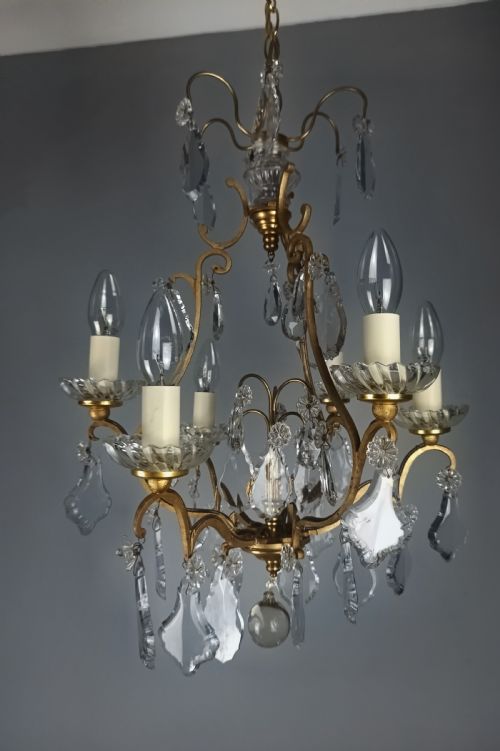
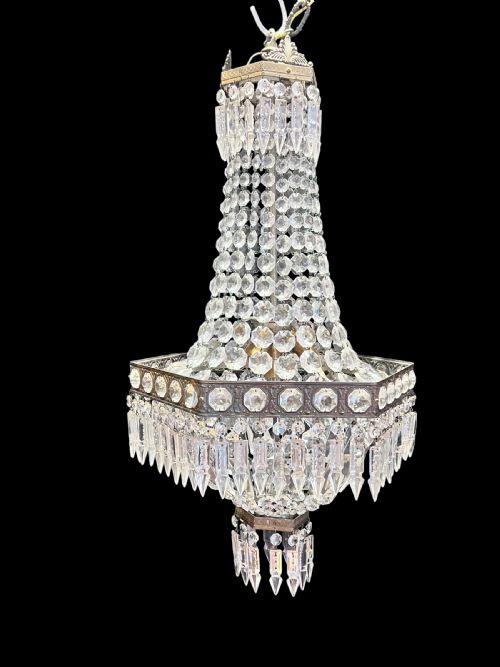
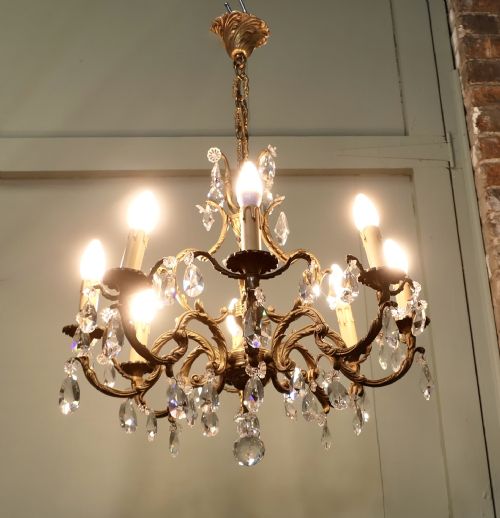
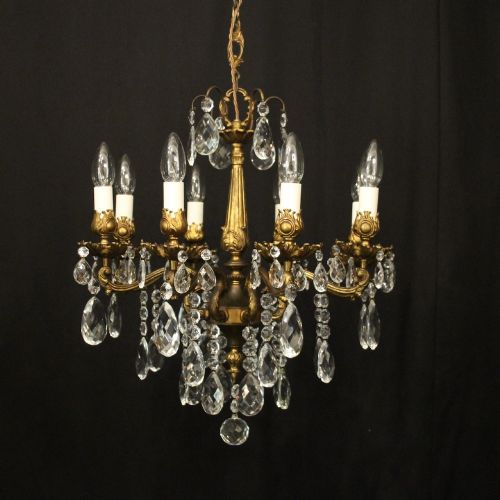
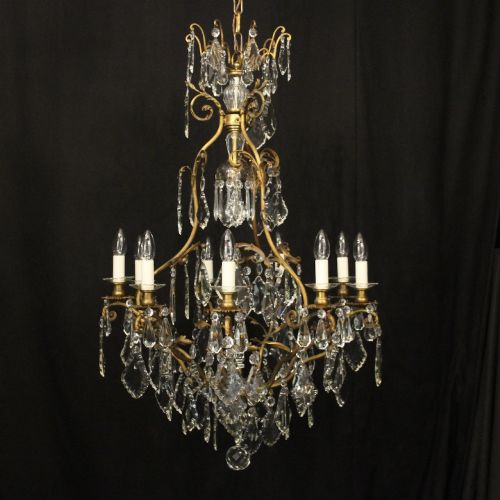
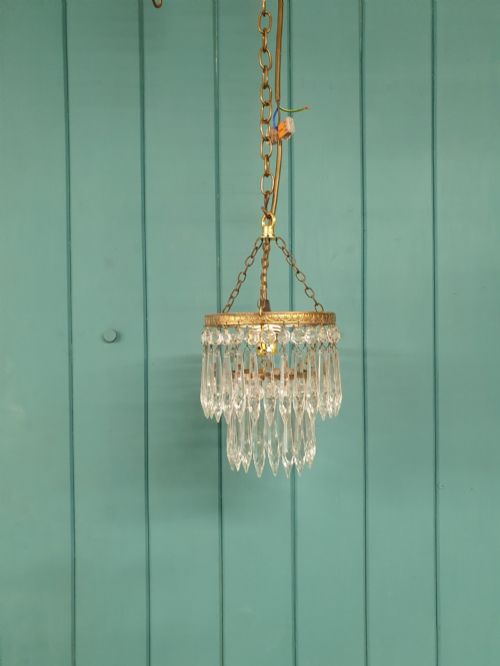
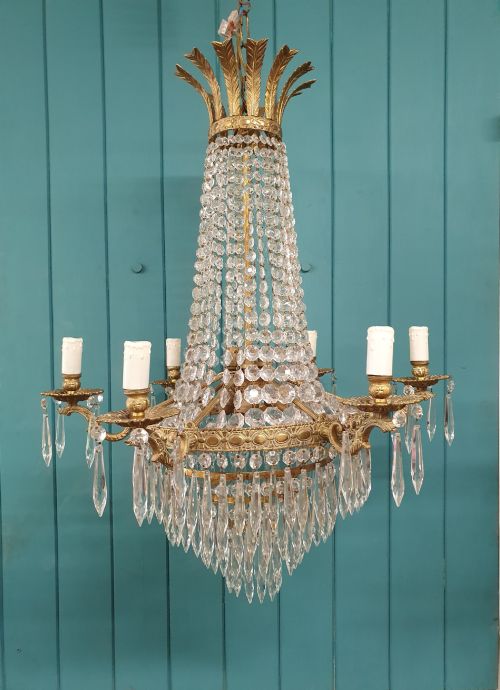
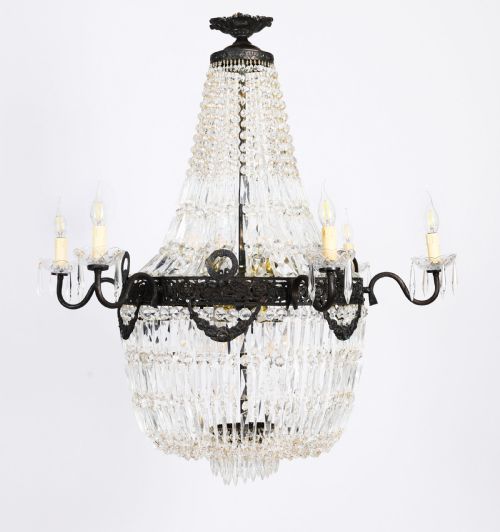
A vintage cut glass chandelier is a ceiling light designed to refract light through faceted crystal, glass, lustres, and prisms. When buyers search this phrase, they encounter hanging fixtures ranging from compact Edwardian bag lights to grand French and Italian multi-arm tent chandeliers.
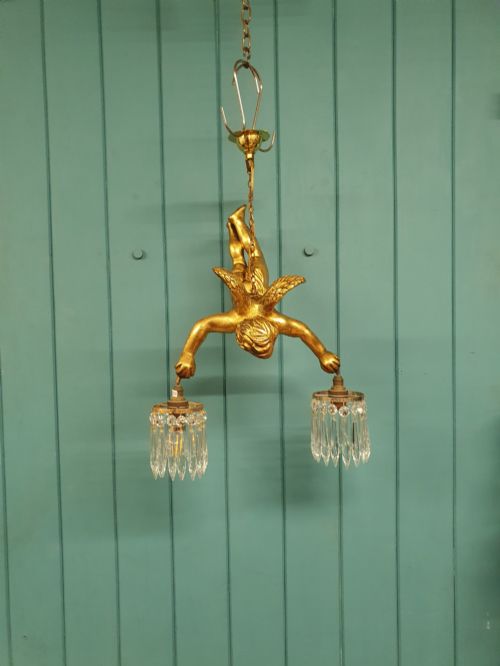
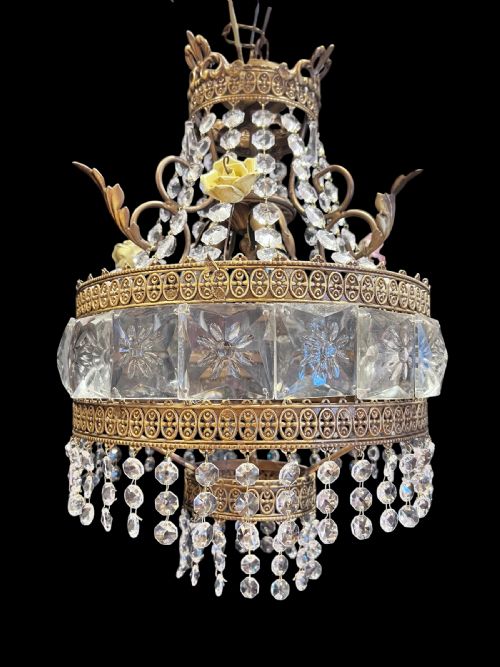
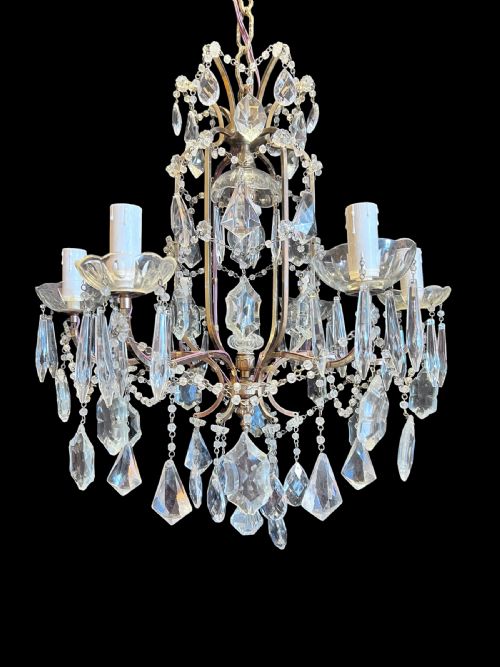
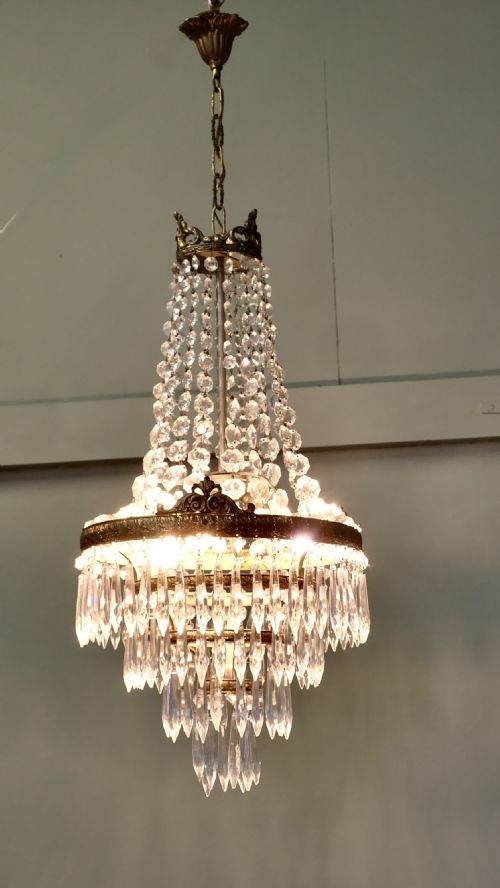
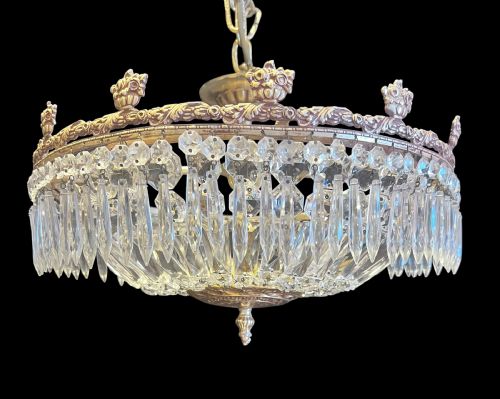
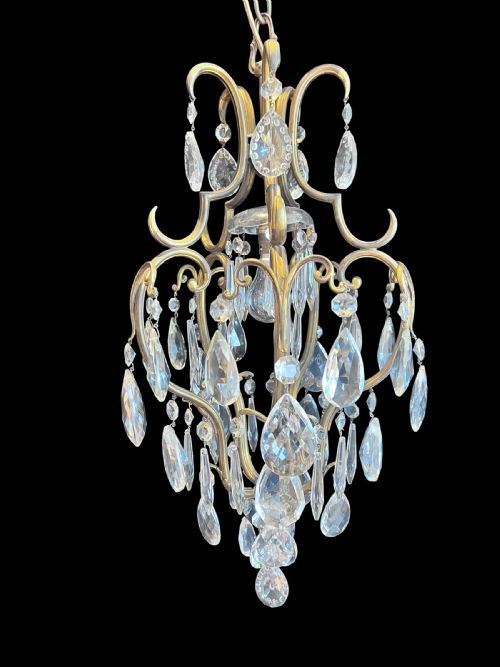
The pieces on this page span the nineteenth century through the early twentieth century, taking forms such as birdcages, waterfalls, domes, and tapered bags. Brass, bronze, and gilt metal frames support these glass configurations, often decorated with leaf motifs, lion masks, or porcelain flowers.
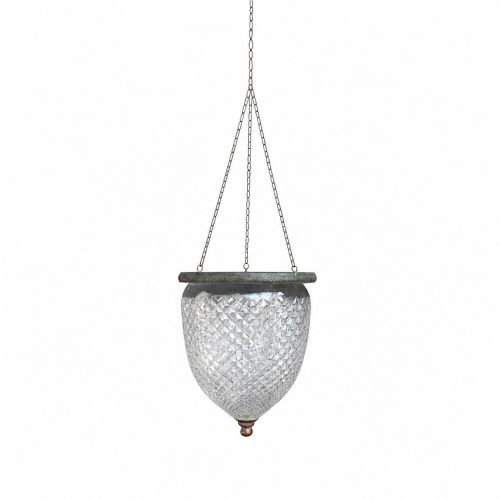
French and Italian designs dominate the selection, alongside English pieces like acorn plafonniers and hall lanterns. Smaller ceiling lights and plafonNIeRs appear alongside large ballroom fixtures, showing the wide variety of scales produced in these periods.
Materials and Construction
Makers built the structural framework of these fixtures using brass, bronze, gilt metal, and silver-gilt settings. These metallic mounts hold the weight of numerous glass and crystal components while providing decorative frames with leaf work, gilding, or cast details.
The decorative hanging elements consist of cut glass, cut crystal, prisms, lustres, and beads wired together to form tents, cascades, and bag shapes. Individual drops and spikes hang from the metal armature to catch and scatter illumination throughout the space.
Materials span brass, bronze, gilt metal, glass, crystal, cut glass, and cut crystal across various lighting forms.
Assessing Quality and Execution
Quality in these chandeliers rests on the clarity of the glass and the crispness of the cutting on the individual prisms and lustres. Finer pieces display sharp facets that refract light cleanly, whereas simpler examples utilise plain moulded glass without hand-cut edges.
The complexity of the brass or gilt metal framework also distinguishes finer examples from standard production. Elaborate casting, such as detailed leaf decoration, lion masks, or heavy cast brass mounts, separates ambitious multi-arm fixtures from basic ceiling lights.
The Vintage Cut Glass Chandelier Glossary
- Lustre
- A cut glass or crystal pendant hung from a chandelier to reflect light. These drops come in various shapes including spears, beads, and teardrops.
- Tent and bag chandelier
- A lighting form featuring an upper conical section of strings of beads known as a tent, dropping down into a gathered lower basket or bag of crystals.
- Plafonnier
- A ceiling-mounted light fitting that sits flush or very close to the ceiling surface rather than hanging on a long chain.
- Spike
- A central upright glass spire or spike rising from the middle of the chandelier frame, commonly found on Edwardian brass and cut glass pieces.
- Birdcage chandelier
- A fixture shaped like an open metal framework cage, frequently gilded, holding internal candle arms and draped with crystal swags.
Vintage Cut Glass Chandelier: Frequently Asked Questions
How do I hang a heavy chandelier safely?
These fixtures require direct support from a ceiling joist or a suitable metal bracket capable of holding the combined weight of the metal frame and glass components. Professional installation ensures the electrical wiring and ceiling anchors are secure.
Smaller pieces like hall lanterns or compact bag chandeliers demand the same structural care as larger multi-arm ballroom fixtures to prevent movement.
What periods do these chandeliers come from?
The lighting on this page dates from the nineteenth century and the early twentieth century, including Victorian, Edwardian, and 1920s or 1930s examples. Styles range from French Empire and Rococo Revival to simpler English domestic designs.
Design characteristics and metal casting techniques help identify the era of manufacture, distinguishing nineteenth-century brass frames from Edwardian and later pieces.
How should I clean a cut glass chandelier?
Cleaning involves wiping individual glass drops and crystal prisms with a mild soapy solution while the fixture remains supported in place. Removing dust regularly keeps the glass facets sharp and bright.
Harsh chemical cleaners can damage the gilt metal or brass surfaces behind the glass, so care must be taken around the metallic framework.
Are these chandeliers wired for modern ceilings?
Many vintage fixtures retain older internal components or require rewiring to meet modern electrical safety standards before installation. A qualified electrician can adapt the internal lamp holders safely.
Adapting the wiring preserves the original brass and crystal exterior while ensuring compatibility with standard domestic power supplies.