



Vintage Curule Chair
A vintage curule chair brings classical X-frame authority to a room, offering a sculptural seating silhouette rooted in ancient forms.
Vintage Curule Chair
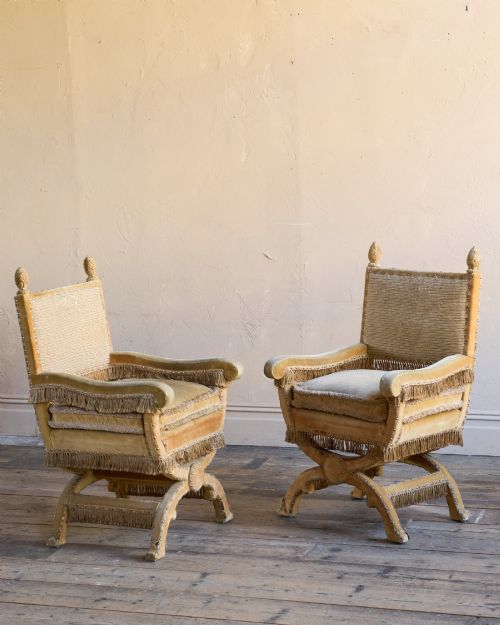
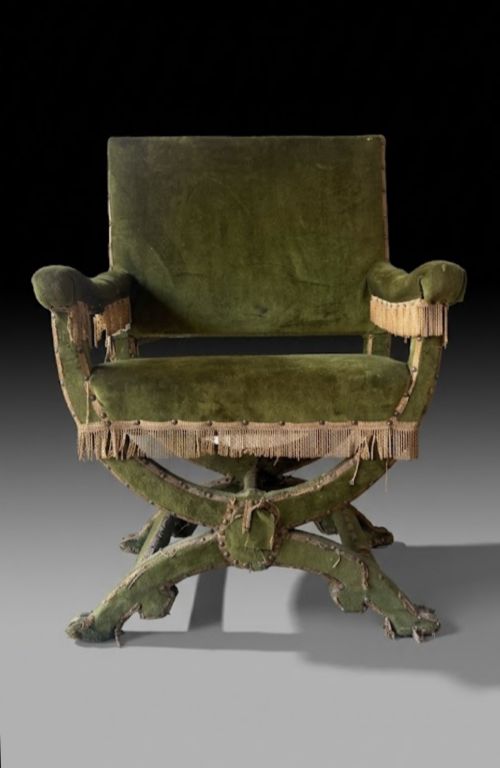
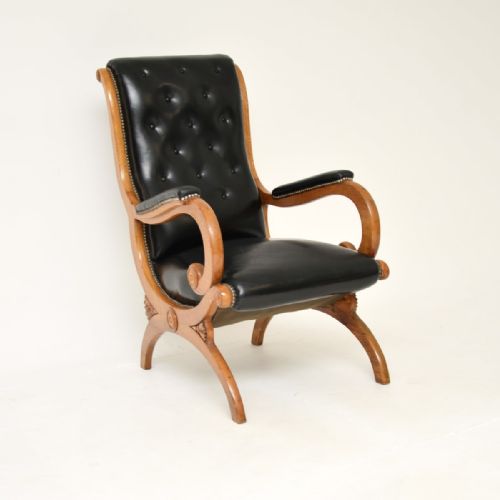
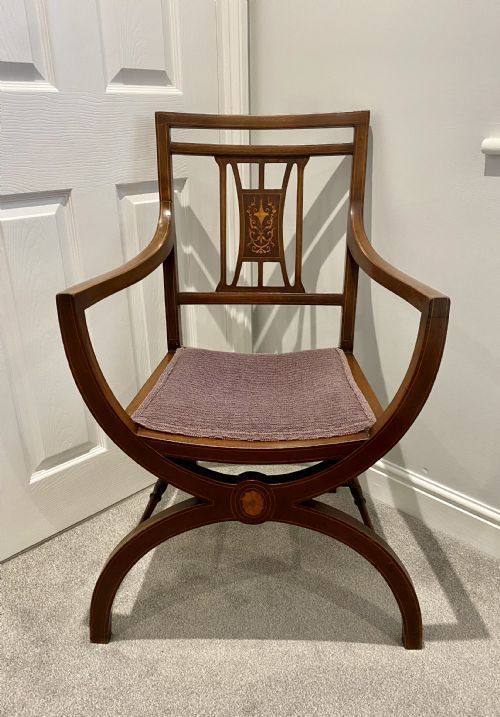
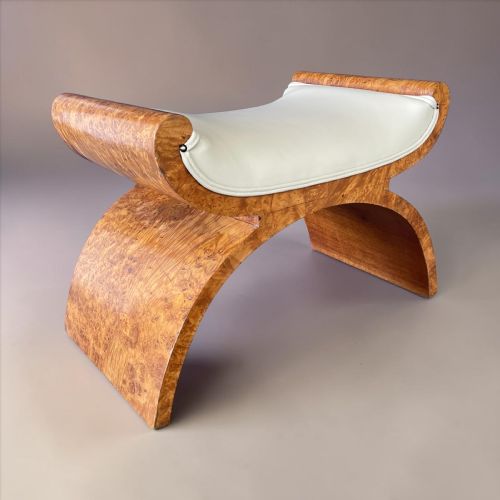
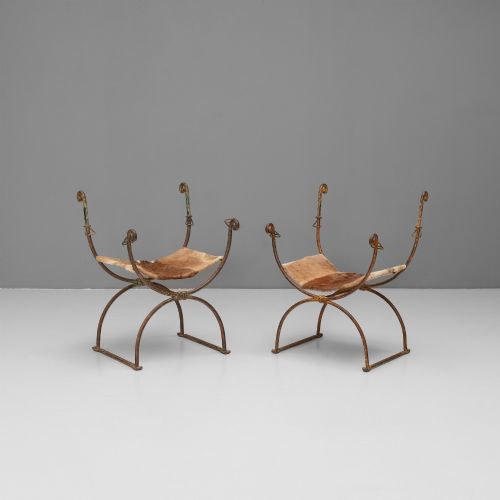
When you search for a vintage curule chair, you are exploring a lineage of cross-frame seating that spans centuries, from 18th-century Venetian gondola chairs to 1930s Art Deco examples. These pieces draw on classical X-frame geometry, appearing as armchairs, side chairs, stools, and desk chairs across this page.
The versions you are most likely to encounter here belong to the 19th century, often carrying stylistic revivals such as Renaissance, Gothic, or Spanish motifs. Walnut, oak, and mahogany form the structural core of these items, frequently paired with leather, fabric, or textile upholstery.
How they were made
Cabinetmakers constructed these frames from hardwoods like walnut, oak, and mahogany, utilising carved and joined members to achieve the characteristic intersecting X-shape. Brass details and painted wood finishes occasionally accent the timber framework.
Upholstered elements rely on traditional textiles, leather, and fabric inserts fitted to the curved X-frame supports.
Vintage Curule Chair Retail Price Guide 2026
Typical asking prices for vintage curule chair among the pieces listed under this phrase on Sellingantiques today, from the lower quarter to the upper quarter. They describe what is for sale here now, not the wider market.
What separates the fine examples
Quality rests in the crispness of the timber carving and the architectural balance of the cross-frame construction. Finer examples display harmonious proportions and seamless joinery where the intersecting members meet.
The integrity of the materials, from dense walnut or oak to period-appropriate leather and textile upholstery, dictates the distinction between standard production and superior craftsmanship.
Harry and Lou Epstein·White, Allom & Co.
The Vintage Curule Chair Glossary
- Curule chair
- An ancient Roman magistrate seat design featuring intersecting curved legs that form an X-shape. This structural silhouette defines the entire category.
- X-frame
- A seating support structure formed by two diagonal members crossing in the centre. It provides both rigid support and a distinctive profile.
- Savonarola chair
- A specific type of X-frame wooden armchair featuring multiple intersecting slats, popular during the Renaissance. It forms a notable sub-group within these listings.
- Gondola chair
- A curved-back chair type originating in Venice, often associated with the 18th-century pieces seen here. The design echoes the sweeping lines of Venetian watercraft.
Vintage Curule Chair: Frequently Asked Questions
What is a curule chair?
A curule chair is a seat defined by its intersecting X-shaped frame, originating from ancient Roman folding stools.
Over the centuries, cabinetmakers adapted this classical architecture into fixed armchairs, desk chairs, and stools.
How old are these chairs?
The pieces listed span from the 18th century through the 19th century, the Edwardian era, and into 1930.
Nineteenth-century examples dominate the selection, often incorporating Renaissance or Gothic revival styles.
Where do X-frame chairs work best?
These chairs function effectively as accent seating in studies, libraries, or living rooms where a strong architectural silhouette is required.
Desk chairs and stools also offer practical seating options for smaller spaces.
What materials were used?
Cabinetmakers utilised hardwoods such as walnut, oak, and mahogany to build the structural X-frames.
Upholstery typically consists of leather, fabric, or textiles, sometimes complemented by brass or painted wood finishes.