


Vintage Cufflinks
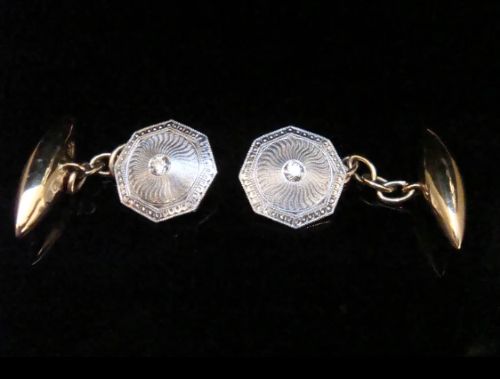
Vintage cufflinks are small, fastened accessories for shirt cuffs, bringing together precious metals, enamel and gemstones from eras like the Victorian period and Art Deco.
Vintage Cufflinks
When someone searches for vintage cufflinks, they encounter fastened fasteners worn through shirt buttonholes, historically termed double-sided or chain-linked attachments for men's cuffs. These items span Victorian, Edwardian, and Art Deco periods, carrying distinct regional designs from English workshops and French makers.
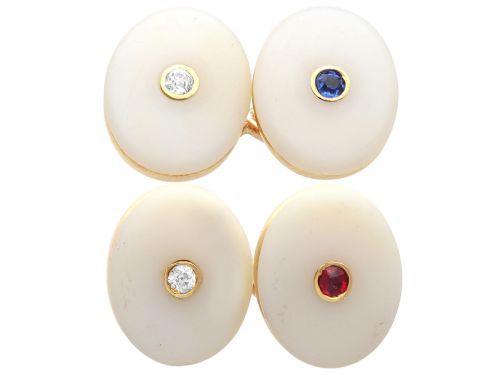
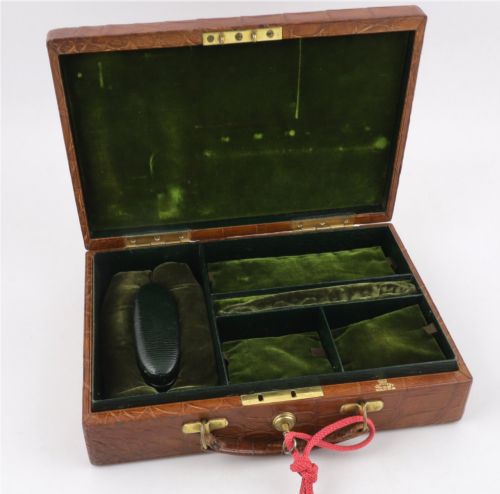
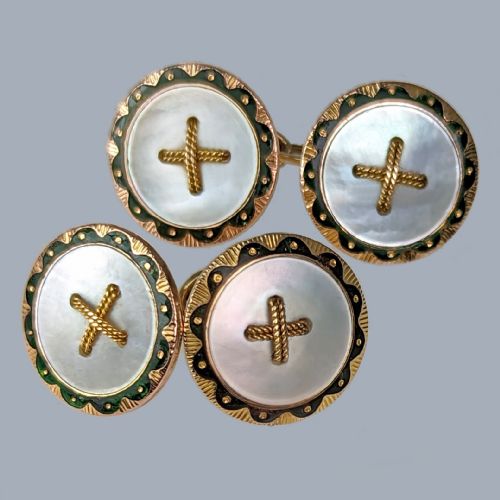
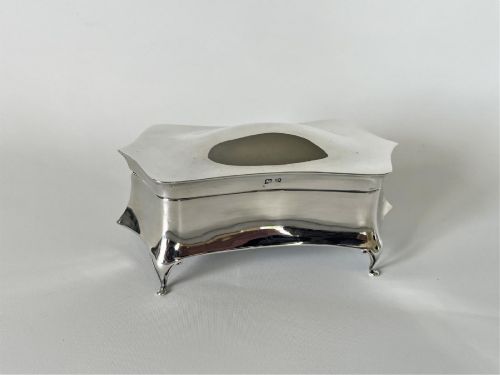
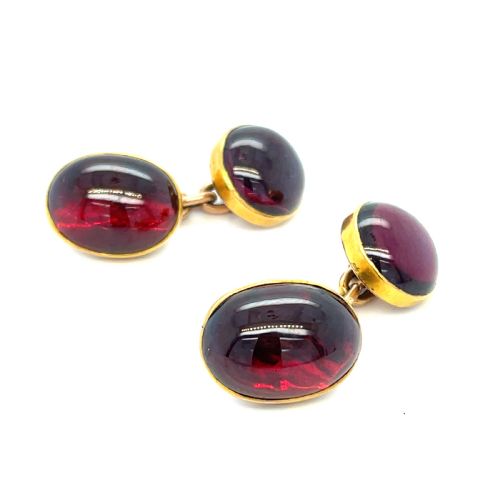
The version most commonly met on this page is the Art Deco enamel pair from the nineteen-thirties, alongside Edwardian and Victorian gold creations set with diamonds, garnets, or mother of pearl. Alongside the primary cuff fastenings, related storage objects such as leather trinket boxes and tortoiseshell stud cases appear frequently in the selection.
Materials and construction
Metals form the structural foundation, ranging from yellow, white and rose nine-carat and eighteen-carat gold to silver, platinum, brass and base alloys. Goldsmiths employed solid casting, belt motif engraving, and intricate chain links to secure the two faces of each toggle.
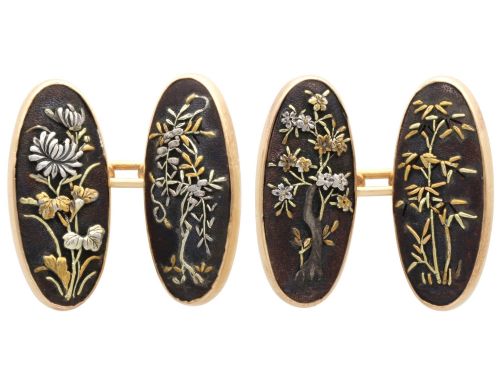
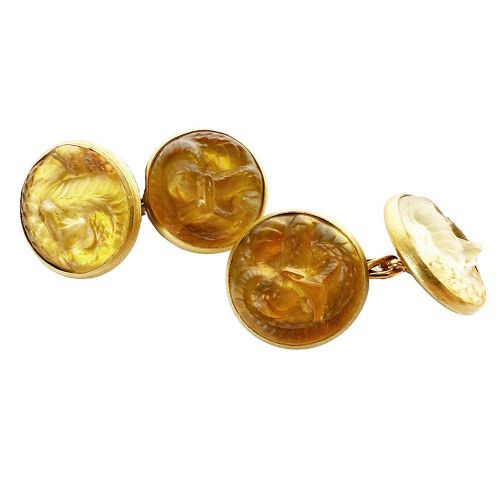
Surface decoration relies heavily on coloured enamel work, glass serpent moulding, shakudo, and gypsy-set gemstones including diamonds, sapphires, rubies, agate and cabochon garnets. Fine details often incorporate hand-carved mother of pearl, tortoise shell, and reverse-painted Essex crystals.
Elks Lodge members once fastened their cuffs with miniature painted dogs tucked safely beneath clear crystal domes.
Distinctions in quality
Quality rests upon the integrity of the materials and the precision of the metalwork, distinguishing solid eighteen-carat gold and platinum settings from lighter nine-carat or plated alternatives. Superior examples display crisp hallmarks, robust chain or toggle connections, and undamaged enamel surfaces free from chipping or restoration.
The artistic merit of the design elevates certain items, such as signed French Art Nouveau plant motifs or geometric modernist patterns attributed to specific factories. Hand-cut gemstones, old-cut diamonds, and matched sets with accompanying original leather cases command greater attention than mismatched or plain utilitarian components.
Solomon Blanckensee Son·R Lalique·Payton Pepper Co·Taye Kenning Spencer Ltd·J C Vickery
The Vintage Cufflinks Glossary
- Shakudo
- A Japanese alloy of copper and gold treated to develop a dark purple-black patina, often used for detailed ornamental plaques.
- Essex crystal
- A technique where a rock crystal cabochon is reverse-carved and painted with a miniature subject that appears three-dimensional.
- Cabochon
- A gemstone shaped and polished with a smooth, rounded domed surface rather than faceted edges.
- Hallmark
- An official stamp applied by an assay office indicating the purity of the metal and the year of manufacture.
- Japonisme
- The influence of Japanese art and design on Western decorative arts during the late nineteenth century.
Vintage Cufflinks: Frequently Asked Questions
What are vintage cufflinks made of?
These accessories utilise precious metals including nine-carat and eighteen-carat yellow, white, and rose gold, alongside silver, platinum, and brass. Surfaces are frequently enhanced with vitreous enamel, carved mother of pearl, tortoiseshell, and various gemstones.
Stones set into the faces include diamonds, rubies, sapphires, garnets, and banded agate. Certain pairs incorporate specialist materials like glass or hand-painted Essex crystals.
How do you date vintage cufflinks?
Dating relies on stylistic clues, such as geometric Art Deco patterns, organic Art Nouveau motifs, or heavy Victorian gold work. Assay office hallmarks stamped onto the metal provide definitive markers for specific years and towns of manufacture.
Changes in mechanical fastenings and the introduction of particular alloys also help narrow down the period. Original fitted presentation boxes sometimes bear retailer stamps that corroborate the era.
How were antique cufflinks worn?
They were designed for men's formal shirts with double cuffs or buttonholes requiring a fastening link. The wearer pushed the toggle or chain through the stacked fabric layers to secure the cuff together.
Double-sided variants displayed decorative faces on both the outer and inner sides of the wrist. Single-faced versions featured a decorative front surface paired with a plain metal bar, post, or swivel toggle at the back.
Are vintage cufflinks suitable for daily wear?
Solid gold and silver pairs constructed with robust chain links or sturdy swivel mechanisms withstand regular use well. Solid metal components and secure stone settings require minimal maintenance beyond gentle cleaning.
Delicate items featuring fragile glass, thin enamel work, or antique mother of pearl demand greater care to prevent impact damage. Storing them in dedicated leather trinket or stud boxes protects the surfaces when not on the wrist.