



Vintage Cuff Links
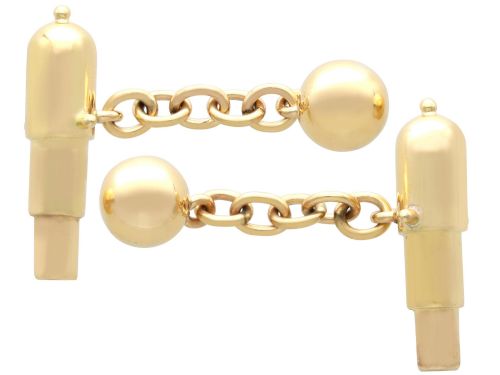
Vintage cuff links bring tailored detail to a cuff, offering small-scale expressions of period design from the Edwardian years through to the mid century.
Vintage Cuff Links
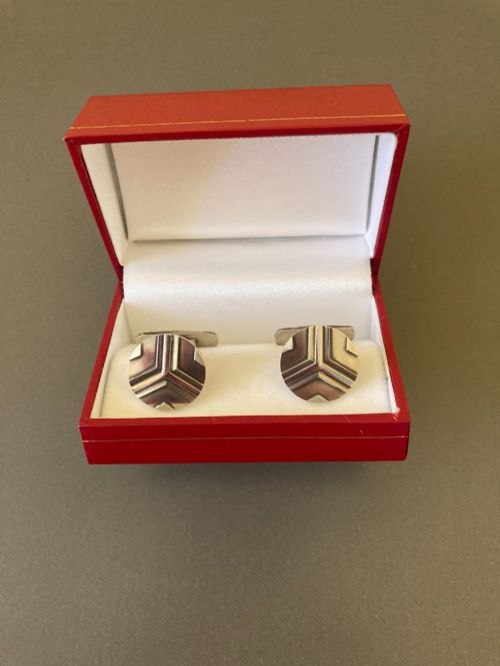
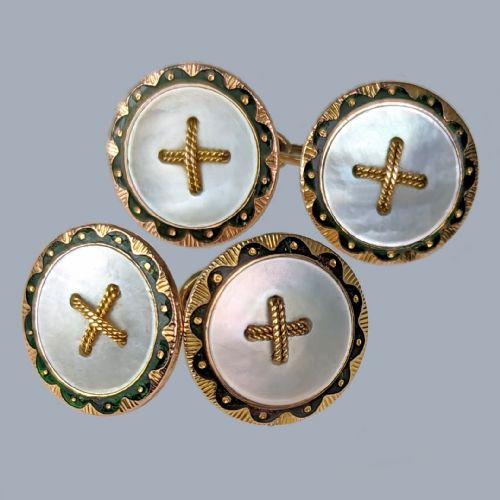
When searching for vintage cuff links, buyers encounter fastening hardware spanning late Victorian belt motifs, Edwardian mother of pearl, and geometric Art Deco enamel. The selection draws heavily upon mid century production, alongside earlier precious metal examples stamped with regional hallmarks.
Most pieces met in this collection reflect formal menswear traditions, employing heavy gold, silver, or platinum settings. Alongside plain or engine-turned metalwork, numerous variants incorporate gemstones including diamonds, sapphires, and emeralds.
Makers ranged from individual Birmingham silversmiths to major European houses, producing everything from simple chain-linked ovals to complex novelty subjects. The form persists as a functional fastening that records shifts in twentieth century ornamental style.
Materials and construction
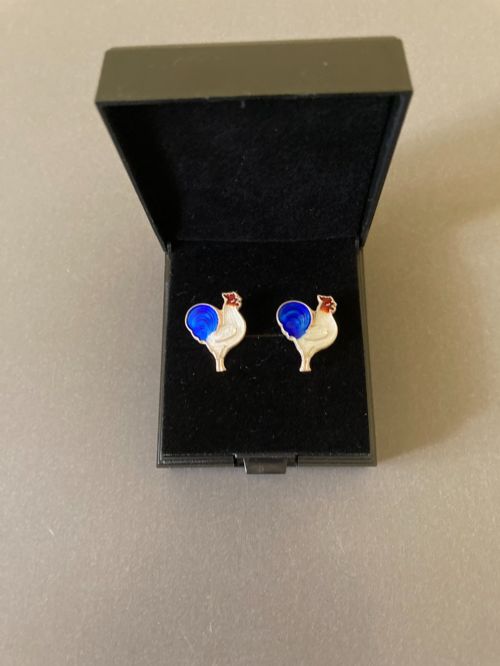
Metals form the structural backbone of these fasteners, utilising solid 9ct and 18ct yellow or rose gold, alongside platinum, sterling silver, and silver plate. Precious components are frequently paired with vitreous enamel to create saturated colour fields or geometric modernist patterns.
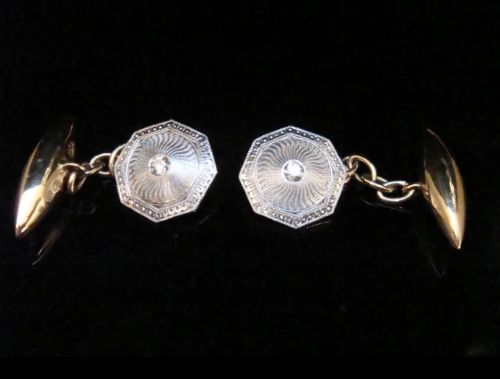
Surface decoration relies on traditional bench techniques such as engine turning, hand engraving, and pierced filigree settings. Gemstones including diamonds, rubies, and onyx are flush-set, bezel-set, or mounted in multi-stone clusters to catch the light at the wrist.
Vintage Cuff Links Retail Price Guide 2026
Typical asking prices for vintage cuff links among the pieces listed under this phrase on Sellingantiques today, from the lower quarter to the upper quarter. They describe what is for sale here now, not the wider market.
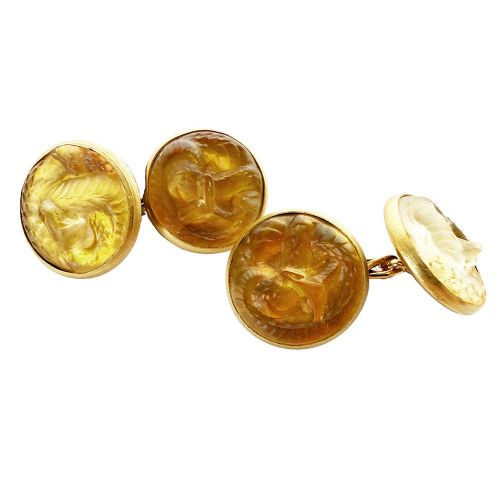
Elks and Jaguars make unexpected appearances at the cuff, proving gentlemen historically enjoyed wearing their clubs and cars on their sleeves.
Factors of distinction
Quality rests on the weight and purity of the metal used, separating solid high-karat gold or platinum mountings from lighter plated alternatives. Substantial construction ensures the hinge mechanisms and connecting chains endure regular wear without structural failure.
Artistic execution and maker attribution elevate certain examples above standard utility pieces. Crispness in engine-turned engraving, the depth of guilloché enamel work, and clear hallmarks indicating specific assay offices provide concrete measures of superior craftsmanship.
Solomon Blanckensee Son·R Lalique·Taye Kenning Spencer Ltd·Henry Griffiths·Roy King·Kutchinsky
The Vintage Cuff Links Glossary
- Hallmark
- An official stamp struck into precious metal indicating the purity, maker, and assay office of origin. These marks provide definitive evidence for dating British pieces.
- Engine turned
- A mechanical method of engraving precise geometric patterns into metal surfaces using a rose engine lathe. This technique creates a textured light-reflecting background common on mid century designs.
- Guilloché
- Enamelling applied over an engine-turned metal ground so the patterned lines show through translucent colour. It appears frequently on Art Deco coloured panels.
- Essex crystal
- A convex rock crystal carved and painted on the flat reverse side to create a three-dimensional miniature image. Subjects often include sporting motifs or lodge insignia.
- Filigree
- Ornamental work consisting of fine wire soldered together in open transparent patterns. This delicate technique appears in pierced metal settings framing gemstones.
Vintage Cuff Links: Frequently Asked Questions
How do I date vintage cuff links?
Dating relies primarily on official hallmarks stamped into the metal, which indicate specific assay years and maker marks. Stylistic cues such as Edwardian foliate engraving or Art Deco geometric enamel also point to distinct periods of manufacture.
Changes in preferred materials, from early rose gold to mid century platinum and white gold, further narrow the decade of production.
Are these fasteners suitable for daily wear?
Solid gold and platinum examples designed with sturdy swivel bars or fixed chain links withstand regular use well. Pieces featuring delicate enamel or surface gemstones require more care to avoid scratching.
Checking the integrity of connecting hinges and loops ensures the fasteners remain secure on a shirt cuff throughout the day.
What styles dominate this selection?
Art Deco geometry and modernist enamel work form a significant portion of the available inventory. Edwardian mother of pearl and Victorian engraved gold motifs represent the earlier end of the timeline.
Mid century modernist designs, novelty subjects, and engine-turned textures complete the range of prevailing aesthetics.
How were different precious metals utilised?
Yellow and rose gold dominated nineteenth century and early twentieth century production, often featuring warm tones and engraved patterns. Platinum and white gold emerged strongly during the Art Deco era to provide a neutral backdrop for diamonds and emeralds.
Sterling silver and silver plate offered more accessible alternatives, frequently paired with black onyx or vibrant enamel panels.