



Vintage Crystal Scent Flask
These vintage crystal scent flask designs are pocket-sized vessels of perfume that bring tactile luxury and period craftsmanship directly to your dressing table.
Vintage Crystal Scent Flask
When you search for a vintage crystal scent flask, you uncover a portable container designed to hold liquid fragrance securely during travel or daily toilet use. These items combine functional glass reservoirs with decorative metal mounts and lids, spanning periods from the Victorian era through the Edwardian years and into the geometric lines of Art Deco.
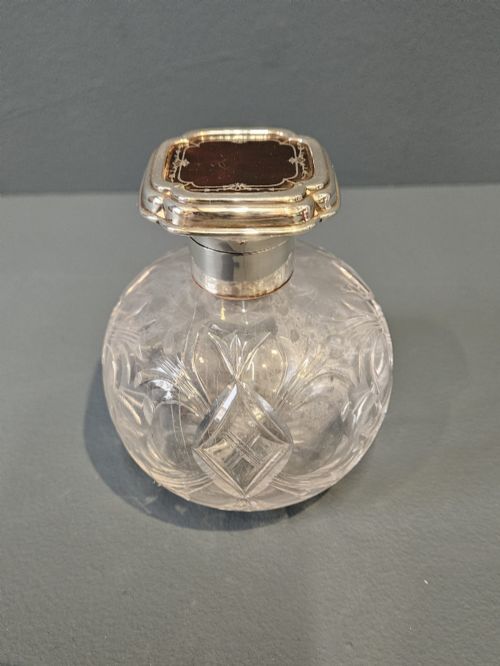
The pieces you meet on this page most frequently pair heavy cut glass or moulded glass bodies with sterling silver collars, hinged lids, or screw caps. Examples range from simple faceted Victorian cut glass cylinders to French Belle Epoque guilloche enamel creations and stylised Art Deco blue or clear glass flasks.
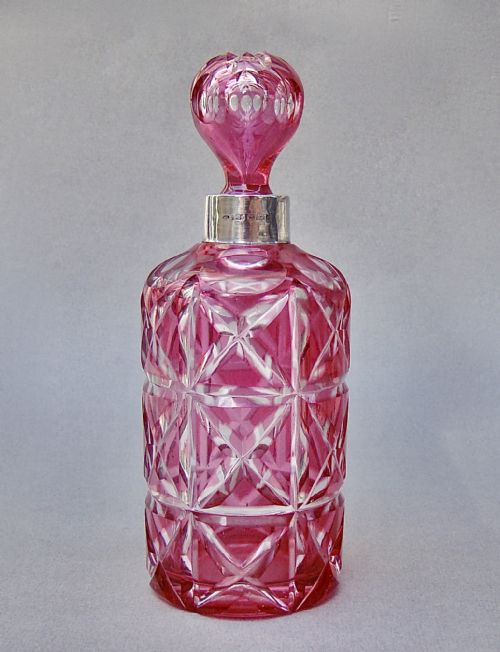
Makers and designers from Britain and continental Europe shaped these objects, incorporating materials such as tortoiseshell, cranberry glass, and green overlay. Collectors encounter everything from unpretentious nineteenth-century silver-topped dispensers to signed modernist works by renowned glass artists.
How they were made
Makers produced the glass bodies of a vintage crystal scent flask using techniques of heavy cutting, moulding, or blowing. Artisans shaped coloured glass layers, such as cranberry or green overlay, before cutting deep facets into the exterior to catch the light.
Silversmiths and metalworkers then fitted these glass reservoirs with sterling silver collars, hinged tops, or screw-down caps. Many lids incorporated decorative elements like inset tortoiseshell or translucent guilloche enamel applied over engine-turned metal bases.
Vintage Crystal Scent Flask Retail Price Guide 2026
Typical asking prices for vintage crystal scent flask among the pieces listed under this phrase on Sellingantiques today, from the lower quarter to the upper quarter. They describe what is for sale here now, not the wider market.
Listings feature items from the 1880s through the Art Deco period of the 1930s, incorporating cut glass, sterling silver, and enamel.
What varies in quality
The calibre of a vintage crystal scent flask rests on the clarity and depth of the glass cutting alongside the integrity of the metal mounts. Superior pieces display crisp, sharp facets on the crystal and heavy, solid sterling silver fittings that retain clear hallmarks and secure hinges.
Harold Bushell & Co·Karl Palda·Rene Lalique·Barnsley & Co·S. Morden & Co
The Vintage Crystal Scent Flask Glossary
- Guilloche enamel
- A decorative technique where translucent enamel is layered over mechanically engraved metal. This process creates geometric patterns that show through the glossy coloured coating on bottle caps.
- Overlay glass
- Glass formed with two or more distinct layers of different colours. The outer layer is partially cut away to reveal the contrasting glass beneath.
- Sterling silver
- An alloy of silver containing 92.15 percent pure silver and 7.85 percent other metals, usually copper. This standard material forms the collars and lids found on many period bottles.
- Cranberry glass
- A rich red glass coloured using gold chloride during the melting process. It appears frequently in Victorian and Edwardian dressing table wares.
- Cut crystal
- Glass containing lead oxide that is faceted by grinding on a stone wheel. The lead content increases the refractive index and weight of the vessel.
Vintage Crystal Scent Flask: Frequently Asked Questions
How were scent bottles used?
These vessels held liquid perfume for personal grooming or travel, with secure stoppers and metal lids designed to prevent evaporation.
Ladies carried them in handbags or displayed them upon dressing tables as functional ornaments.
How do I date a scent flask?
Silver components often bear assay office hallmarks, date letters, and maker marks that reveal the exact year of manufacture.
Stylistic markers such as Victorian ornamentation, Edwardian floral motifs, or Art Deco geometry also help determine the period.
Are the inner stoppers usually present?
Many surviving examples retain their original glass or crystal inner stoppers beneath the outer metal cap, though some do not.
Buyers should examine specific descriptions to verify whether an inner stopper accompanies the flask.
How should I display them?
Place these bottles on mirrored trays or glass shelves where light can pass through the cut crystal and coloured glass.
Keep them away from direct, prolonged sunlight to protect any sensitive enamel or organic lid materials like tortoiseshell.