





Vintage Crystal Prisms
Vintage crystal prisms catch the light across chandeliers and wall lights, bringing reflective sparkle and period elegance to a room.
Vintage Crystal Prisms
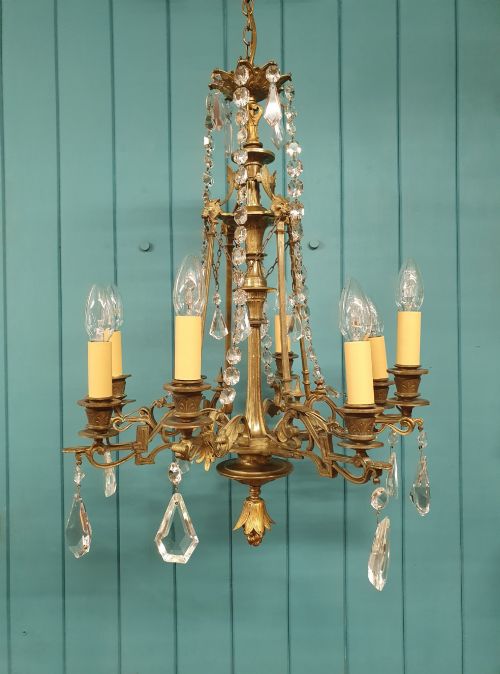
Vintage crystal prisms appear primarily as hanging components on chandeliers, wall lights, ceiling lights, and table lustres spanning the Victorian, Edwardian, and Art Deco periods. These glass and cut crystal elements refract light and enhance illumination across various lighting fixtures.
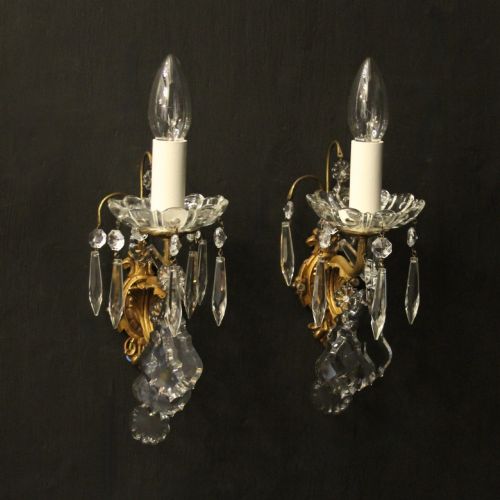
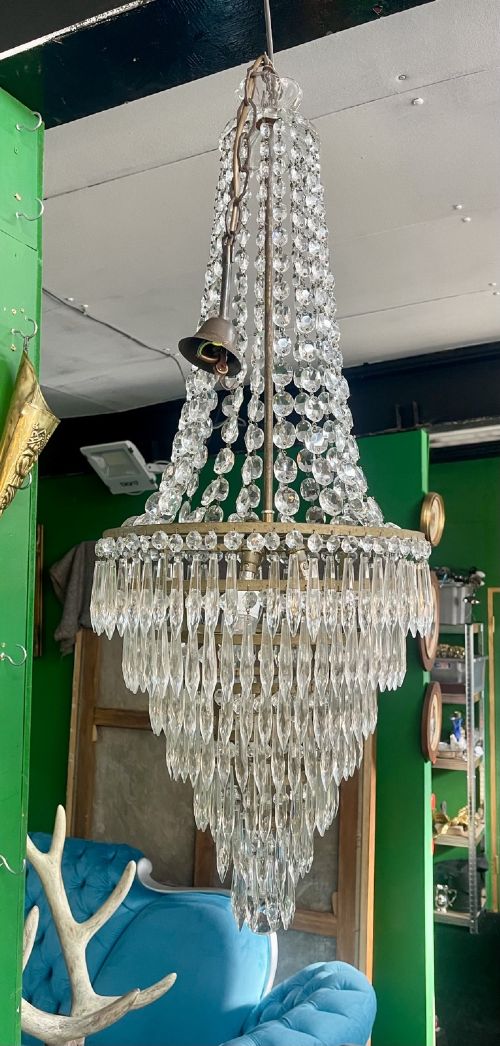
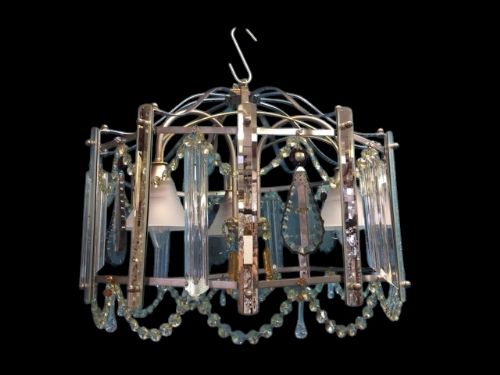
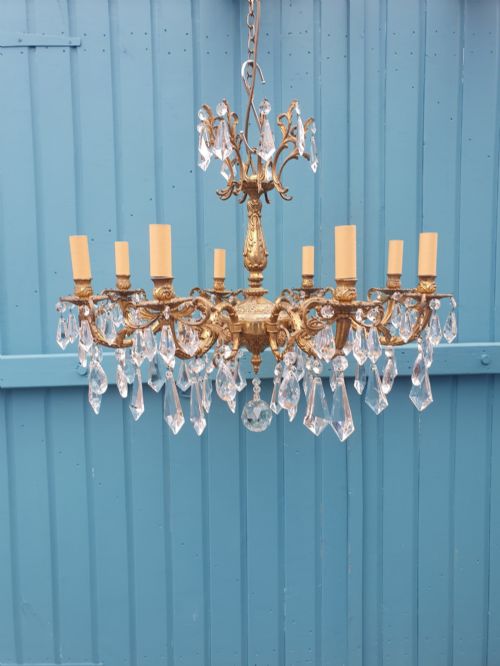
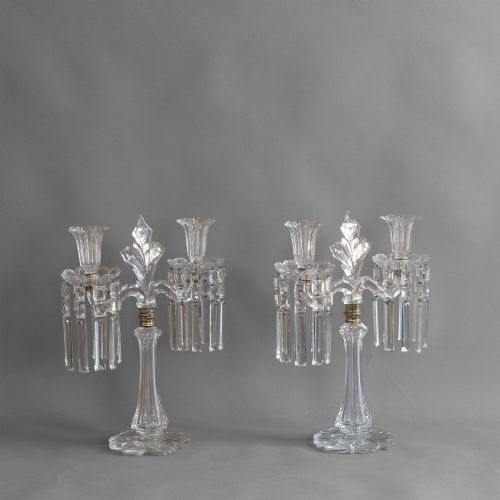
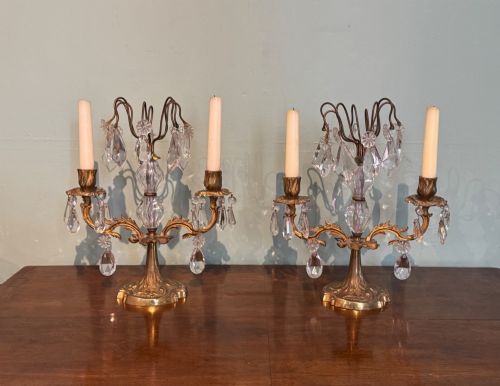
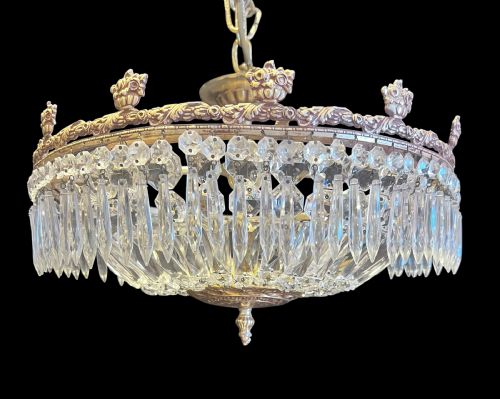
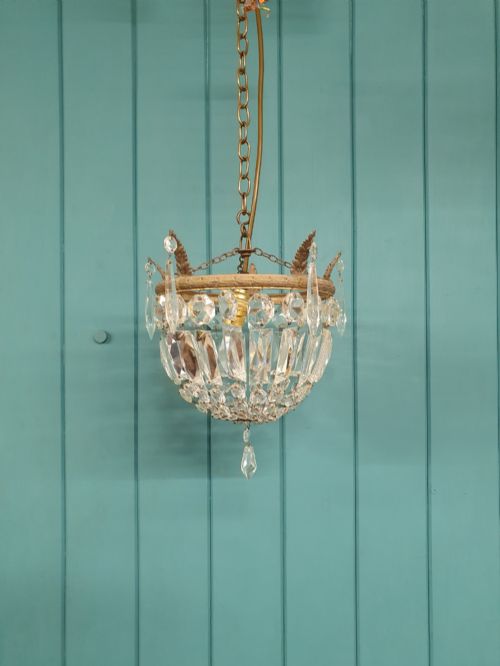
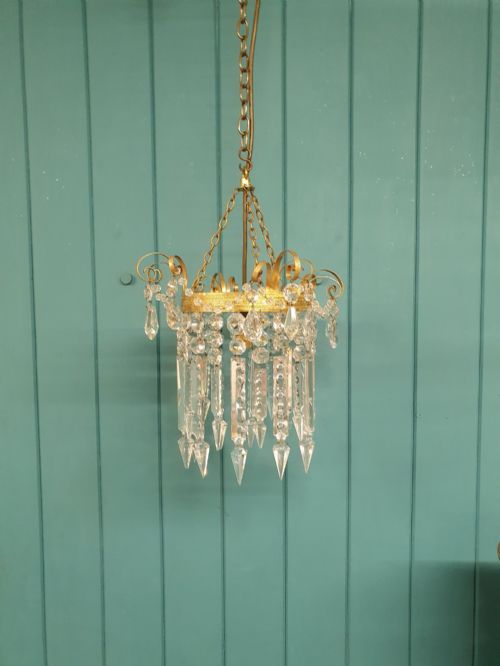
The selection ranges from small pendant and bag chandeliers to large multi-arm French Empire style chandeliers and gilded bronze wall lights. Buyers encounter specific forms such as spike chandeliers, waterfall designs, and paired mantel lustres fitted with storm shades.
Origins stretch from English basket chandeliers to French chateau and rococo revival styles in brass, gilt metal, and cut glass. Pieces frequently incorporate distinct drop types, including coffin prisms, oblong drips, and blue centre beads.
How they were made
Metalwork frames rely on brass, gilt brass, and gilt metal, shaped into arms, frames, and wall brackets to support the glass components. Master metalworkers cast or form these structures, sometimes incorporating detailed cast motifs like lion masks.
Glass and crystal elements undergo precision cutting and polishing to create facets that maximise light refraction. These individual cut-glass drops, swags, and prisms are then suspended from the metal frames using wire loops or pins.
Vintage Crystal Prisms Retail Price Guide 2026
Typical asking prices for vintage crystal prisms among the pieces listed under this phrase on Sellingantiques today, from the lower quarter to the upper quarter. They describe what is for sale here now, not the wider market.
Listings feature items spanning the 19th century, Victorian, Edwardian, 1920, and 1930 periods in brass, glass, and gilt metal.
What varies in quality
The clarity and depth of the cut glass or crystal determine how effectively the piece refracts light and creates dispersion. Superior examples feature sharp facet edges and heavy, high-lead crystal that produces brilliant flashes when illuminated.
The refinement of the metal armature and mounting hardware distinguishes finer fixtures from simpler ones. Expert casting in brass, ormolu, and gilded bronze provides intricate detail and a stable foundation for complex multi-tier arrangements.
The Vintage Crystal Prisms Glossary
- Prism
- A cut glass hanging component designed to refract light. Prisms come in various geometric shapes including coffin and spike forms.
- Lustre
- A decorative tabletop candlestick or candelabrum hung with glass drops. Lustres often feature green glass or storm shades.
- Waterfall
- A tiered chandelier style where crystal drops cascade in overlapping rows. This design creates a dense sheet of reflective glass.
- Bag chandelier
- A lighting fixture featuring a flattened basket or bag shape formed by numerous small glass beads and drops. They direct light downward while sparkling across the curved profile.
- Candelabra
- A branched candlestick holder designed for multiple candles. Antique versions frequently incorporate hanging crystal drops and gilt metal arms.
Vintage Crystal Prisms: Frequently Asked Questions
How do I clean vintage crystal prisms?
Remove the prisms gently from the fixture if possible to clean them individually in warm soapy water. Dry each piece thoroughly with a lint-free cloth to restore its reflective brilliance.
Avoid using harsh chemical cleaners on the surrounding brass or gilt metal frames. Wipe the metal components gently with a soft, dry cloth to preserve their original finish.
What rooms suit crystal prism lighting?
Dining rooms and living spaces benefit greatly from the ambient, sparkling light cast by large multi-arm chandeliers. They serve as a central focal point that complements period interior design.
Smaller wall lights and table lustres provide accent illumination in hallways or bedrooms. Their reflective drops add warmth and character to more intimate spaces.
How do I date a crystal chandelier?
Examine the metal casting techniques, frame materials, and the specific cut of the glass prisms. Victorian and Edwardian pieces often display distinct brass work and traditional drop shapes like coffin prisms.
Art Deco examples lean towards geometric arrangements and simpler metal frames. Comparing the wiring, fixings, and overall style helps narrow down the period of manufacture.